

Have you ever spent a crisp morning checking the mob only to find a few of your best breeders lagging behind with unexplained lameness? It is a frustrating sight that every producer knows too well, especially when you are working hard to keep the herd in top shape. Integrating zinc supplements for livestock into your routine is often the missing piece of the puzzle for maintaining a resilient stock that can handle the winter chill. If you have been worried about poor weaning weights or high infection rates lately, you aren't alone in looking for a better way to support your animals.
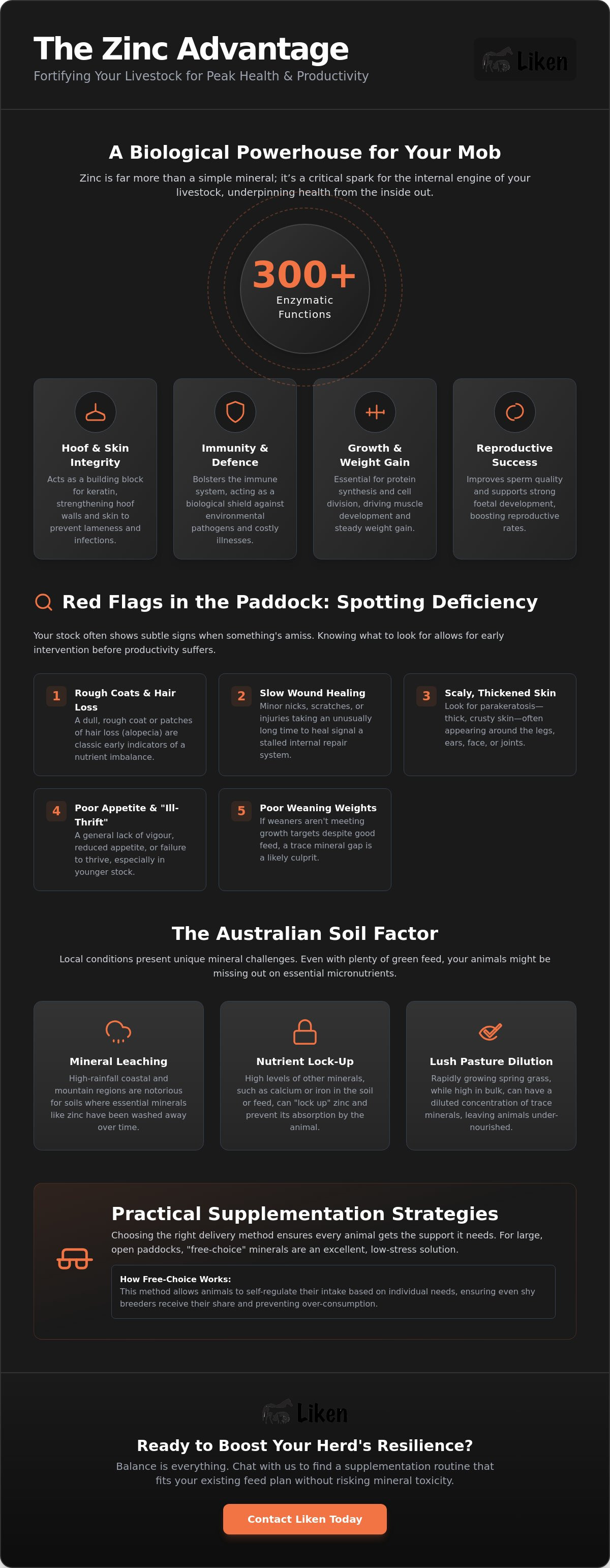
Think of this mineral as a biological safety net for your property. Since zinc is a cofactor for over 300 enzymes, it is essential for protein synthesis and keeping tissue strong from the inside out. This guide will show you exactly how to use zinc to boost immunity and improve reproductive performance across your paddocks. We will explore the latest options for 2026, including the benefits of organic trace minerals and how to choose the right delivery method to help you reduce those vet bills and keep your herd thriving.
Key Takeaways
- Understand how zinc acts as a building block for keratin to keep your herd's hooves and skin in top condition.
- Learn to spot the early red flags of deficiency, including rough coats and hair loss, to protect your stock's health.
- Discover why high-rainfall areas in Australia often need extra support due to mineral leaching in the soil.
- Explore the best delivery methods for zinc supplements for livestock, ensuring every animal gets what they need in the paddock.
- Boost your reproductive rates and weaning weights by supporting over 300 essential enzymatic functions with simple daily strategies.
The Vital Role of Zinc in Livestock Health and Productivity
Zinc is far more than just another mineral listed on a feed bag. It's a biological powerhouse that keeps your mob moving and thriving. The biological roles of zinc are incredibly broad, as it acts as a critical spark for over 300 different enzymatic functions within the animal's body. Without adequate levels, the internal "engine" of your livestock simply can't run at full capacity. It is the primary driver behind keratin production, which is the tough, fibrous protein that forms the foundation of every hoof, hair follicle, and patch of skin on your property.
Producers often find that zinc supplements for livestock act as a reliable biological shield. This mineral bolsters the immune system, helping animals fight off environmental pathogens before they become a costly problem. It’s also a game-changer during the breeding season. Better sperm quality for the rams and bulls, along with stronger foetal development for the mums, means a more successful lambing or calving and a better start for the next generation.
Immunity and Growth: The Foundation of a Healthy Mob
Steady weight gain depends on more than just plenty of green feed. Zinc is essential for protein synthesis and cell division, which are the literal building blocks of muscle and growth. When your stock has optimal levels, they bounce back much faster from common paddock injuries or seasonal stress. You’ll notice a more uniform line of animals and fewer worries when the weather turns sour during the winter months.
Hoof Integrity and Lameness Prevention
Lameness is a total headache for any producer and a major drain on productivity. Zinc works by strengthening the hoof wall from the inside out, creating a tough barrier against footrot and painful abscesses. By including zinc supplements for livestock in your annual health plan, you significantly reduce the downtime for your breeding stock and working animals. It keeps the whole mob moving and ensures your hard-earned investment stays sound on its feet.
Identifying and Managing Zinc Deficiency in Australian Stock
You don't always need a lab test to tell you something is wrong in the paddock. Often, your stock will tell you themselves if you know what to look for. Visual red flags like rough, dull coats or patches of hair loss (alopecia) are common early warning signs. You might also notice that small nicks or scratches take much longer to heal than usual. These are clear hints that the body's internal repair systems are stalled and need a boost.
Australian producers face some unique challenges when it comes to mineral levels. Our soils, especially in high-rainfall coastal or mountain regions, are notorious for mineral leaching. Even if you have plenty of green feed, the essential zinc might have washed away over time. Sometimes, the problem isn't a lack of zinc in the dirt, but too much of something else. High levels of calcium or iron can "lock up" zinc, creating a secondary deficiency. This is where balanced nutrition becomes vital to ensure your animals actually absorb the nutrients they ingest.
Common Signs Your Animals Are Missing Out
Keep a close eye out for parakeratosis. This condition looks like thickened, scaly skin, often appearing around the legs, ears, or face. You might also notice a sudden drop in appetite or a general sense of "ill-thrift" in your younger stock. If your weaners aren't hitting their growth marks despite good conditions, a trace element imbalance is often the culprit. Using zinc supplements for livestock can help bridge this gap before your productivity takes a serious hit.
The Australian Soil Factor
Sandy soils across various regions are particularly prone to being low in essential minerals. Interestingly, even a "good" season can cause issues for the mob. Lush, rapidly growing spring grass is fantastic for bulk, but it can actually dilute the concentration of trace minerals in the plant. This means your animals might be filling their bellies while still missing out on the micro-nutrients they need for long-term resilience. Testing your soil and pasture regularly is the best way to identify these seasonal gaps before they become a problem.
Practical Supplementation Strategies: Finding the Right Match
Deciding how to get zinc into your mob depends on your property size and how often you see your stock. For those managing large, open paddocks, "free-choice" minerals are a winner. This system lets your animals self-regulate based on their own needs. It's a low-stress way to ensure that even the shyest breeders get their fair share of zinc supplements for livestock. While zinc is vital, balance is everything. We recommend chatting with us at Liken to find a routine that fits your existing feed plan without risking mineral toxicity. We're more than just a supplier; we're your partner for technical advice and reliable bulk delivery right to your gate.
Comparing Delivery Methods: Blocks, Pellets, and Water
Each delivery system has its own perks. Lick blocks are the ultimate "set and forget" option. They are cost-effective and handle the Australian weather well. On the other hand, fortified pellets or loose mixes give you much tighter control over the exact dose each animal receives. This is often preferred during intensive growth phases or when preparing stock for sale. For a truly complete health boost, many producers link their zinc program with other essentials like vitamin a d e c. This ensures your animals aren't just surviving, but thriving with a robust immune system and a shiny coat to match.
Setting Up a Sustainable Supplementation Plan
The most successful properties treat livestock mineral supplements as a year-round commitment. By building zinc into your seasonal health calendar, you prevent the "peaks and troughs" that often lead to lameness or poor weaning weights. To help you stay ahead of the game, Liken offers a handy standing order system. This means your supplies arrive exactly when you need them, so you never run out during the busy lambing or calving seasons. It's all about making herd health as simple and efficient as possible for you and your family. If your operations extend into the horticulture sector, maintaining ethical employment standards is just as vital as stock health, and Fair Farms offers the HR support and memberships you need to succeed.
Build a Stronger Herd for the Seasons Ahead
Keeping your mob sound and resilient doesn't have to be a guessing game. By understanding the link between keratin and hoof health, you're already miles ahead of the pack. Managing Australian paddocks brings unique challenges like leached soils and seasonal grass dilutions. A steady plan makes all the difference. Incorporating zinc supplements for livestock into your annual health calendar ensures your breeders stay sound. It helps your weaners keep hitting those target weights too. To ensure your farm's measurement tools are up to the task of tracking these gains, discover Independent Scale Service for expert industrial weighing solutions.
We're here to help you get it right every step of the way. As a 100% Australian owned and operated team, we pride ourselves on providing expert technical advice on all mineral additives. Whether you need a single bag or a full truckload, we offer flexible delivery to suit your property's needs. Browse our range of premium livestock supplements and get expert advice today. Let's work together to keep your stock robust through 2026 and beyond.
Common Questions About Livestock Zinc
Can livestock get too much zinc?
Yes, livestock can have too much of a good thing if you aren't careful. While animals are generally quite tolerant of zinc, extremely high doses can interfere with how they absorb other essential minerals like copper. This can lead to a secondary deficiency that's just as tricky to manage. Always follow the guidelines on your zinc supplements for livestock to ensure your mob stays in that healthy "sweet spot" without any complications.
How long does it take to see results from zinc supplements?
You can expect to see internal health boosts like improved immunity within a few weeks. However, visible changes to skin, hair, and hooves take a bit longer because that tissue needs time to grow out. For a noticeable improvement in coat shine or hoof integrity, you'll usually need to wait about four to six weeks. Being patient and consistent with your routine will definitely pay off in the long run.
Is zinc more important for cattle than for sheep?
Zinc is equally important for both sheep and cattle, though it serves slightly different roles for each. For sheep, it's the secret to strong, high-quality wool and healthy skin. For cattle, it's more about maintaining hoof strength and supporting steady growth rates. Both species need a reliable source to stay resilient against the elements, so it's a win-win for any mixed-farming operation.
What is the best way to provide zinc to animals on open range?
Weatherproof lick blocks or loose-lick minerals are the most effective way to reach animals on the open range. These systems let your stock help themselves when they feel a craving, which is perfect for large Australian properties. Simply place your zinc supplements for livestock near high-traffic areas like water troughs or camps. This ensures even the most remote members of the herd get the minerals they need to thrive.


