

Pig grower feed in Australia for pigs weighing 30 to 60 kilograms can be offered ad lib, with clean, fresh water always available. Choose packaged or bulk feed based on how much you need and how you’ll store it.
It’s natural to weigh convenience against how much feed your pigs use. Choose an option that suits their growth stage and your day-to-day setup, with feed and water easy to access.
This guide covers what to consider when choosing grower feed, how to manage ad lib feeding and fresh water, and when packaged or bulk buying may suit your setup. Use these points to compare options and plan for your pigs’ needs.
Key Takeaways
- Choose grower feed suited to pigs weighing 30 to 60 kilograms, and use the feeding guidance for the feed you select.
- Make feed available ad lib and keep clean, fresh water accessible at all times.
- Compare packaged and bulk buying by considering how much feed you use and how you’ll store it.
- Once you’ve settled your feed needs, explore Liken’s ADVANCE offering as a next step.
Grower feed for pigs weighing 30-60 kilograms
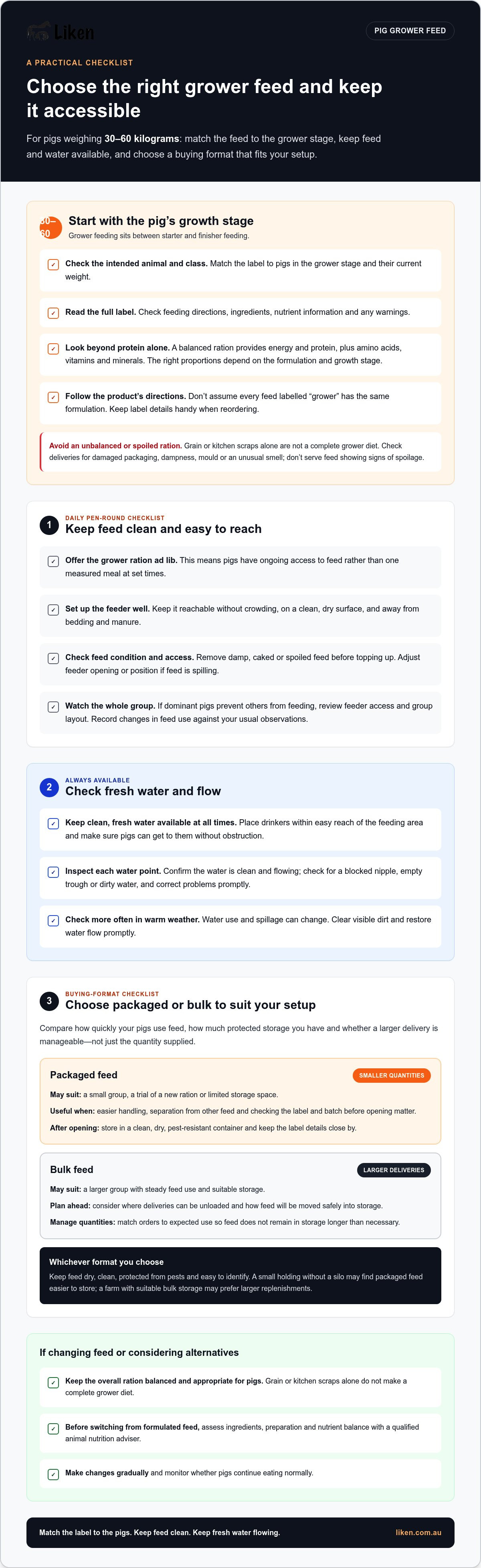
For pigs in the 30-60 kilogram range, choose feed formulated for the grower stage and intended for pigs. This stage sits between starter and finisher feeding, so a bag marked for another class may not suit. Check the label for the intended animal, feeding directions, ingredients and any warnings. In Australia, requirements can depend on the product and claims made on its label. Use the product’s directions, rather than assuming every feed labelled “grower” has the same formulation.
What nutrients should Australian grower pig feed contain? A balanced ration provides energy and protein, along with amino acids, vitamins and minerals to support growth. The right proportions depend on the formulation and the pigs’ stage, so compare the label’s nutrient information and feeding directions. Don’t choose a ration by protein alone: energy and other nutrients also matter for a balanced diet.
Can Australian grower pigs safely eat homemade or alternative feeds? Alternative ingredients are suitable only if the overall ration remains balanced and appropriate for pigs. Grain or kitchen scraps alone do not make a complete grower diet. Before switching from formulated feed, assess the ingredients, preparation and nutrient balance with a qualified animal nutrition adviser. Make changes gradually and monitor whether pigs continue eating normally.
What are the risks of poor-quality or incorrectly formulated grower pig feed? An unbalanced ration can leave nutritional gaps, while spoiled or contaminated ingredients can make feed unsafe. Poor palatability may also reduce intake. Check each delivery for damaged packaging, dampness, mould or an unusual smell. Store feed somewhere clean and dry, and don’t serve a batch that shows signs of spoilage.
To choose a feed, match the pig class stated on the label to your animals’ current weight, then follow the feeding directions. Keep the label details handy when reordering, so you don’t accidentally switch to a formulation that isn’t suited to the grower stage.
Ad lib feeding and fresh water
Ad lib feeding means pigs have ongoing access to feed rather than receiving one measured meal at set times. Use a feeder they can reach without crowding, positioned on a clean, dry surface. Fill it with their grower ration and keep bedding and manure out. Check the feeder during daily pen rounds. Remove damp, caked or spoiled feed before topping it up, so the ration stays clean.
Keep clean, fresh water available at all times. Place drinkers within easy reach of the feeding area and observe each pig using them. A blocked nipple, empty trough or dirty water can interrupt access, so inspect water points as part of routine checks. Clear visible dirt and restore water flow promptly. In warm weather, check more often, as water use and spillage can change.
Check feed levels and the feeder itself, not just whether feed remains. If feed spills onto the floor, adjust the feeder opening or position to reduce waste. If dominant pigs prevent others from feeding, review feeder access and the group layout. Record changes in feed use and compare them with your usual observations. This can help you spot problems with access, feed condition or equipment early.
Keep feeding and watering points easy to inspect. A simple routine is to check feed condition, feeder access and water flow during each daily pen round. Clean equipment when it becomes soiled, and refill it before pigs run out. For practical planning around animal feed supply options, consider how your feeding setup affects storage and replenishment.
Riverina advises keeping clean, fresh water available to pigs at all times. When checking drinkers, confirm the water is clean and flowing, and correct any problems promptly. Make sure pigs can reach the water point without obstruction, and include its condition in routine checks of feeder access and feed cleanliness.
Packaged and bulk purchasing
Packaged feed can suit a small group of pigs, a trial of a new ration or limited storage space. Smaller quantities are easier to handle and keep separate from other feed. They also make it easier to check the label and batch before opening. Once opened, store feed in a clean, dry, pest-resistant container and keep the label details close by.
Bulk purchasing may suit a larger group with steady feed use and suitable storage. Plan where deliveries can be unloaded and how feed will be moved safely into storage. A silo or dedicated feed area should stay dry, clean and protected from pests. Match order quantities to expected use so feed doesn’t remain in storage longer than necessary.
Compare options against your setup, not just the quantity supplied. Estimate how quickly your pigs use feed, how much protected storage you have and whether you can manage a larger delivery. For example, a small holding without a silo may find packaged feed easier to store. A farm with suitable bulk storage may prefer larger replenishments.
- Choose packaged feed when manageable quantities and simple storage are priorities.
- Consider bulk when regular use and suitable storage make larger deliveries practical.
- Keep feed dry, protected and easy to identify, whichever format you choose.
Ready to plan your order? Explore feed purchasing options and choose a format that fits your storage and feeding routine.
Liken: ADVANCE
Liken offers ADVANCE, which you can consider as part of your feed planning. Match any product to the animal and feeding stage stated on its label, as the brand name alone doesn’t establish suitability for grower pigs. When sourcing pig feed, compare options against your pigs’ weight range, feed requirements and storage setup.
Liken is an online retailer of animal feed and supplements, with delivery options from single bags to full truckloads. Digital standing orders can help organise regular supply. These options may suit your operation once you’ve worked out the quantity and delivery format you need.
Visit liken.com.au to explore its offerings.
Plan your next feed order
Before ordering, note what you need the next delivery to achieve and how it will fit your routine. Record the feed you currently use, the amount on hand and your preferred delivery format. This gives you a clear starting point for comparing options and planning replenishment.
When choosing pig grower feed in Australia, consider the feed’s intended use, its label and your storage arrangements. Liken offers ADVANCE, COBBER and ENDURO. Check the stated use of any feed you consider to make sure it’s suitable for your pigs.
Keep your notes handy as your feed requirements change. To discuss your feed needs, contact Liken about pig grower feed. You’re well placed to make your next decision with confidence.
Frequently Asked Questions
What is grower pig feed and what age or weight is it for in Australia?
Grower pig feed is a formulated ration for pigs in the grower stage; choose by weight and the feed label, not age alone. For pig grower feed in Australia, the article’s stated range is pigs weighing 30-60 kilograms. If pigs in one pen vary in size, use each animal’s current weight to decide whether the grower-stage label fits.
What are the best commercial grower pig feed brands in Australia?
There isn’t one best brand for every pig, so prioritise commercial feed clearly labelled for pigs and the grower stage. Compare feeding directions and nutrition information, then choose a ration that suits your pigs and feeding setup. Don’t assume an animal feed is suitable for pigs unless its label identifies pigs as the intended animal.


