

Could a small oversight in your feed mix be the silent thief stealing your livestock's health during a dry spell? It's a worry many of us share when the grass loses its colour and the summer heat sets in. You want the best for your animals, but trying to decode complex supplement labels can feel like a full-time job. It's completely normal to feel a bit lost when deciding which nutrients really matter for your pets or your herd.
In this guide, you'll discover how vitamin a d e c works as a "Power Four" team to protect your animals and boost productivity in the Aussie paddock. We'll clear up the confusion between fat-soluble and water-soluble vitamins so you can supplement with confidence. With the global feed market moving toward precision nutrition, getting these levels right is more important than ever. You'll learn how to spot early deficiency signs and follow a simple plan to keep your stock thriving through every season.
Key Takeaways
- Understand how the synergy of vitamin a d e c protects your animals from environmental stress and boosts their natural immunity.
- Learn the vital difference between fat-soluble and water-soluble vitamins to make sure your stock are actually absorbing their supplements.
- Identify early red flags like night blindness or weak bone structure before they lead to serious stock losses in the dry season.
- Discover how to tailor your supplement plan to your specific paddock conditions for better productivity and healthier pets.
Table of Contents
-
The Power Four: Why Vitamin A, D, E, and C are Essential for Your Animals
-
Spotting the Signs: How Vitamin Deficiencies Impact Livestock and Pets
-
Optimising Nutrition in the Paddock: Practical Steps for Healthy Stock
The Power Four: Why Vitamin A, D, E, and C are Essential for Your Animals
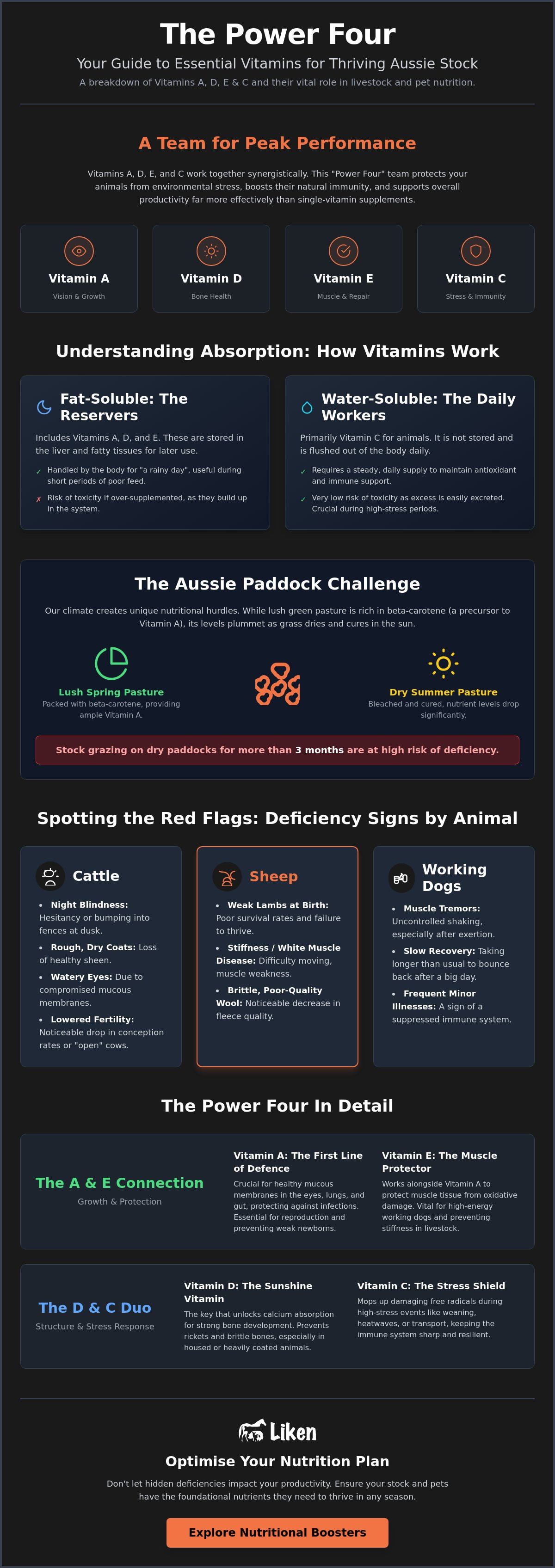
Think of the "Power Four" as the foundational bricks of your animal's health. While every nutrient plays a part, the combination of vitamin a d e c is what keeps the engine running smoothly. These vitamins are vital for everything from clear vision and strong bones to a robust immune system that can handle the stress of transport or changing weather. Understanding this animal nutrition overview helps you see how these pieces fit together. When these nutrients are combined, they improve each other’s absorption and effectiveness, creating a synergy that single-vitamin supplements often miss.
Fat-Soluble vs. Water-Soluble: Understanding the Difference
Not all vitamins are handled by the body in the same way. Vitamins A, D, and E are fat-soluble. This means they are stored in the liver and fatty tissues for a rainy day. While this storage is handy during short periods of poor feed, it also means there is a real risk of toxicity if you over-supplement. You can't just keep piling them on without a clear plan. On the flip side, Vitamin C is water-soluble. It doesn't stick around long and is flushed out of the system daily. Because of this, your pets and livestock need a steady supply to keep their antioxidant levels high, especially when they are under the pump.
The Aussie Factor: When Pasture Isn’t Enough
Our unique climate creates specific challenges for animal health. During a lush spring, green grass is packed with beta-carotene, which the body turns into Vitamin A. But as soon as that grass turns brown and "cures" in the summer sun, those levels plummet. Stock grazing on dry, bleached paddocks for more than three months often run dangerously low on these essentials. This is where high-quality animal supplements can bridge the gap. They ensure your stock don't hit a nutrition wall before the autumn break arrives, keeping growth rates steady and reproductive health on track.
Spotting the Signs: How Vitamin Deficiencies Impact Livestock and Pets
Identifying a nutrient gap isn't always easy. By the time you see physical changes, your animals might have been struggling for weeks. A lack of vitamin a d e c can manifest in subtle ways, from a dull coat to a slight drop in weight gain. For those managing herds, vitamin deficiencies in cattle often start with "night blindness." This happens when Vitamin A levels get so low that cattle struggle to navigate in low light, often bumping into fences or trees at dusk. If you notice your stock acting jumpy or hesitant as the sun goes down, it is a major red flag.
Different animals show their struggle in unique ways. Here is a quick reference for what to look out for in the paddock and the home:
-
Cattle: Rough, dry coats; watery eyes; and a noticeable drop in fertility or "open" cows.
-
Sheep: Weak lambs at birth; stiffness or "white muscle disease"; and brittle, poor-quality wool.
-
Working Dogs: Muscle tremors; slow recovery after a big day of work; and frequent minor illnesses.
Growth and Reproduction: The A and E Connection
Vitamin A is the heavy lifter for healthy mucous membranes. These linings are the first line of defence against infections in the eyes, lungs, and gut. Without it, calves and lambs are often born weak or may fail to thrive entirely. Vitamin E works alongside it to protect muscle tissue from oxidative damage. This is especially vital for high-energy working dogs.
Immunity and Bone Health: The D and C Duo
We often call Vitamin D the sunshine vitamin. While most Aussie stock get plenty of sun, those in intensive housing or with very thick winter coats might miss out. Vitamin D is the key that unlocks calcium absorption. Without it, you risk rickets or brittle bones in growing animals. Vitamin C steps in during high-stress moments like weaning, extreme heatwaves, or long transport hauls. It mops up free radicals and keeps the immune system sharp when the animal is under pressure. If you're noticing these signs in your backyard or the back paddock, it might be time to explore our range of nutritional boosters to get things back on track.
Optimising Nutrition in the Paddock: Practical Steps for Healthy Stock
Getting the right balance of vitamin a d e c into your animals shouldn't be a headache. It's about matching the delivery method to your specific setup. If you're running a big mob on dry summer pasture, a simple lick block might be the easiest way to provide a steady stream of minerals. For animals under immediate stress, a liquid supplement in the water trough can offer a faster boost. Regular paddock assessments are your best tool. Walk your fences and check your stock frequently. Catching a dull coat or a slow grower early saves you a fortune in the long run.
Choosing the Right Supplement for Your Mob
Effortless Nutrition Management with Standing Orders
Consistency is the secret to high productivity. You never want to run out of essential vitamins right when the season turns. Setting up a digital standing order takes the stress out of the peak season. Whether you need a few bags of working dog food or full truckloads of grain, bulk animal feed delivery makes it easy. We bring the supplies directly to your gate. This keeps your nutrition plan on track without you having to constantly check the shed. It's a simple way to stay organised and keep your animals thriving year-round.
Ready to Boost Your Paddock’s Potential?
Keeping your animals in top shape doesn't have to be a guessing game. By understanding the synergy of vitamin a d e c, you've taken the first step toward a more resilient and productive property. You now know how to spot those early red flags like night blindness or dull coats before they impact your bottom line. Whether it is protecting your stock from the harsh Aussie summer or ensuring your working dogs recover faster after a long shift, a solid nutrition plan makes all the difference.
We are here to help you get the balance just right. Our team offers technical expertise on all additives and supplements to ensure your animals get exactly what they need without the waste. We operate 100% online for fast, national delivery right to your gate. You can order anything from a single bag for your backyard pets to full truckloads for the station. Browse our range of premium supplements and animal feed today and give your animals the support they deserve. Here is to a healthy, thriving season ahead!
Common Questions About Animal Vitamins
Can animals get too much vitamin A, D, or E?
Yes, animals can definitely get too much of these specific nutrients because they are fat-soluble. Unlike water-soluble vitamins that flush out of the system daily, vitamins A, D, and E are stored in the liver and fatty tissues for long periods. If you over-supplement for too long, these levels can build up to toxic amounts. This is why it is vital to follow a balanced feeding plan rather than just guessing the dose.
How do I know if my sheep have a vitamin A deficiency?
You will usually notice the first signs of a problem during a long dry spell when there is no green pick in the paddock. The most common red flag is "night blindness" where sheep seem lost at dusk or start bumping into fences. You might also see watery eyes, a dull and brittle fleece, or a sudden drop in lambing percentages. If your ewes are dropping weak lambs that fail to thrive, a lack of Vitamin A is often the culprit.
Does vitamin C really help animals during heat stress?
Vitamin C is a fantastic tool for helping your animals cope with those scorching Aussie summer days. During extreme heat, an animal's body produces free radicals that cause oxidative stress and weaken their natural defences. Extra Vitamin C helps mop up these free radicals and can even help lower cortisol levels. This keeps your stock or pets much calmer and more resilient when the mercury rises.
What is the best way to administer a vitamin A D E C supplement?
The right delivery method depends on your setup and the number of animals you're looking after. For a large mob, using a high-quality fortified feed like Stockman & Paddock or a weatherproof lick block is usually the most efficient way to provide a vitamin a d e c supplement. If you're managing a few pets or need to give a quick boost to a stressed animal, adding a liquid concentrate to their drinking water is a fast and effective option.


