

Grain-free doesn’t automatically mean healthier. In the grain-free vs grain-inclusive dog food debate, the key difference is the carbohydrate source: grain-inclusive recipes use ingredients such as rice, oats or wheat, while grain-free recipes may use potatoes, peas or lentils. Either can suit a dog if the food is balanced and meets their needs.
It’s easy to see why grain-free sounds appealing, especially if you’re concerned about allergies or a sensitive stomach. But the grain-free label alone doesn’t show whether a food is the right fit for your dog.
This guide explains what grain-free food contains, how its carbohydrate ingredients compare with grains, and what to consider about nutrition and health. You’ll also learn what to check on a food label and how to assess the whole nutrient profile, rather than focusing on one ingredient, when choosing food for your dog.
Key Takeaways
- Compare the full nutrient profile and life-stage suitability, rather than judging a food by one ingredient or label claim.
- Look beyond the “grain-free” label to see which ingredients provide carbohydrates, such as potatoes, peas or lentils.
- More than 90% of dogs and cats can normally digest and use nutrients from grains commonly found in pet foods, so grains aren’t automatically a problem.
- If your dog has ongoing digestive or skin concerns, note the signs and discuss them with your vet before changing their diet.
What is a Grain-Free Pet Diet?
Grain-free dog food excludes grains such as wheat, corn, barley, oats, rice and rye. Grain-inclusive recipes contain one or more of these ingredients. Gluten-free isn’t the same as grain-free: a gluten-free food may still contain rice or corn.
How do the two compare nutritionally? It depends on the recipe. Grains can provide carbohydrates, fibre, vitamins and minerals, while some grain-free foods use potatoes, peas or lentils. Compare protein, carbohydrates and fibre on the labels: the complete nutrient profile matters more than any one ingredient.
Whole grains can contribute nutritional value. Barley, oats and brown rice provide fibre, carbohydrates, vitamins and minerals. Ancient-grain recipes may combine grains with animal proteins such as salmon, lamb or turkey, as well as ingredients such as coconut, pumpkin or apples. Grain-free doesn’t automatically mean better nutrition.
For complete and balanced nutrition, choose food suited to your dog’s needs. Check that it suits your dog’s life stage, then consider the full nutrient profile, ingredient quality and your dog’s health needs. Veterinary advice can help guide food choices for dogs with digestive concerns.
Is grain-free dog food more expensive in Australia? Grain-inclusive food often costs less, but the recipe and product affect the price.
Changing foods? Introduce the new diet gradually, mixing increasing amounts into your dog’s current food. Watch their appetite and stools as you adjust the proportions.
| Food option | Carbohydrate sources | What to assess |
|---|---|---|
| Grain-inclusive | Wheat, rice, oats or barley | Whole-grain content and overall nutrition |
| Grain-free | Potatoes, peas or lentils | Alternative ingredients and overall nutrition |
Choose between grain-free and grain-inclusive food by matching its complete nutrition, life-stage suitability and ingredients to your dog’s needs.
Alternative carbohydrate ingredients in grain-free food
Grain-free recipes still need carbohydrate ingredients. Depending on the formula, they may contain potatoes, sweet potatoes, cassava, peas or lentils. These aren’t nutritionally identical: sweet potatoes can contain more carbohydrates than corn, while refined starches may provide fewer nutrients and less fibre than whole grains.
Check the ingredient list alongside the food’s protein, fibre, vitamins and minerals. Ingredient order can show what the recipe contains, but it doesn’t tell you whether the finished food is balanced. Assess the complete nutrient profile, including the animal protein source and suitability for your dog’s life stage.
Which dogs need grain-free food? Dogs with a grain allergy or intolerance diagnosed by a veterinarian may need to avoid the specific grain. A grain-free label alone doesn’t establish that need, as food allergies can also involve animal proteins such as beef, chicken or dairy.
Signs of food allergies can include itchy skin, digestive discomfort or recurring infections. These signs can have other causes, so they don’t identify a specific ingredient on their own. A veterinarian can assess your dog’s symptoms and determine whether food is involved before you change their diet.
- Compare carbohydrate ingredients, such as potato, cassava and legumes, rather than relying on “grain-free” wording.
- Check whether wheat, corn, soy or grain by-products appear if your dog has a diagnosed sensitivity to a specific ingredient.
- Don’t assume every dog needs to avoid grains; base food choices on the diagnosed trigger and the recipe’s overall nutrition.
Grain-free food and pet health
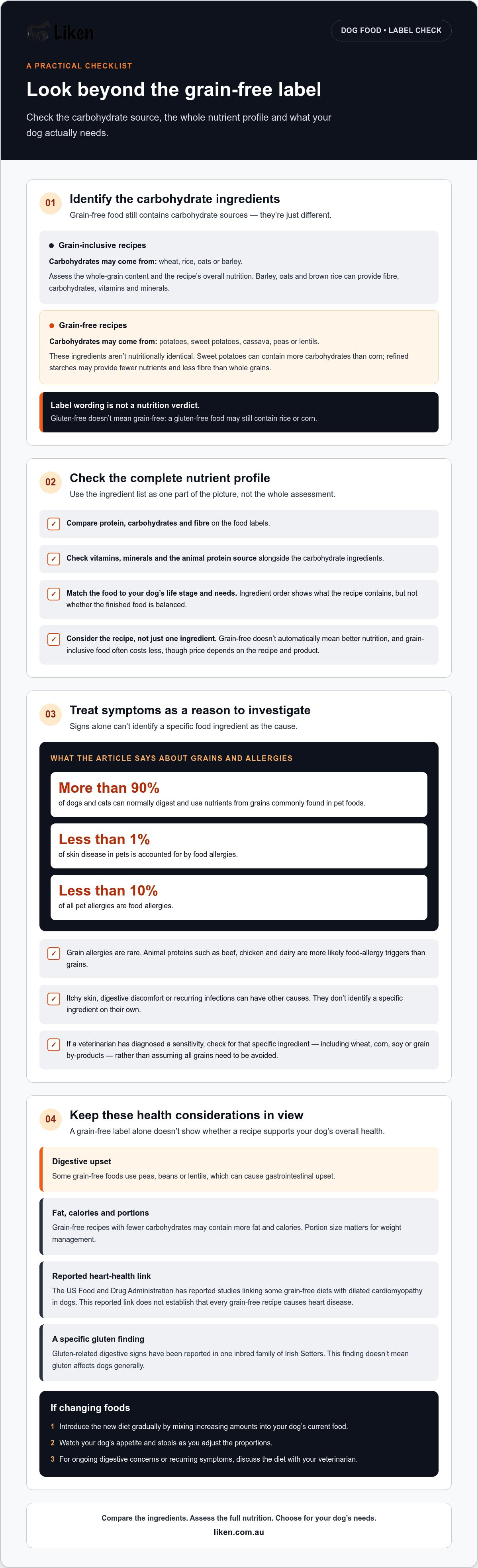
A grain-free label alone doesn’t show whether a recipe supports a dog’s overall health. More than 90% of dogs and cats can normally digest and use nutrients from grains commonly found in pet foods. Grain-free diets can suit individual needs, but removing grains isn’t automatically a health benefit.
Grain allergies are rare in dogs and cats. Food allergies account for less than 1% of skin disease in pets and less than 10% of all pet allergies. Animal proteins, including beef, chicken and dairy, are more likely triggers than grains. So itchy skin or digestive signs don’t identify grain as the cause.
Consider the recipe’s full nutrient profile, not just whether it contains grains or fillers. Some grain-free foods use peas, beans or lentils, which can cause gastrointestinal upset. Grain-free recipes with fewer carbohydrates may also contain more fat and calories, so portion size matters for weight management.
There’s another health consideration. The US Food and Drug Administration (FDA) has reported studies linking some grain-free diets with dilated cardiomyopathy in dogs. This reported link doesn’t establish that every grain-free recipe causes heart disease, but it’s a reason to discuss diet changes with a veterinarian.
Gluten-related digestive signs have been reported in one inbred family of Irish Setters. This specific finding doesn’t mean gluten affects dogs generally. For recurring symptoms, a veterinary assessment can help identify possible causes and guide a balanced, properly formulated diet.
Liken: ADVANCE
Liken offers ADVANCE, COBBER, ENDURO and HILLS dog food options to explore as you compare diets. If you’re weighing grain-free against grain-inclusive food, read each product label for its ingredients and nutritional information, then consider how the recipe fits your dog’s needs. A brand name alone doesn’t tell you whether a food is grain-free or suitable for a particular health concern.
For dogs with diagnosed allergies or ongoing digestive signs, use your veterinarian’s advice to guide food choices. This helps you focus on relevant ingredients and balanced nutrition, rather than choosing based on a grain-free claim alone.
Explore Liken’s dog food range at liken.com.au.
Choose a food that fits your dog
Keep your dog’s needs in view as you decide. Note any dietary requirements, preferred ingredients and changes you’ve observed in appetite or digestion. These details can help you compare labels with a clear purpose and discuss ongoing symptoms with your vet.
Use those priorities to guide your grain free vs grain inclusive dog food choice, rather than relying on a label alone. Liken offers ADVANCE, COBBER and ENDURO dog foods to explore as you compare options. Check each product’s ingredients and nutritional information against your pet’s needs.
Want a hand exploring the available options? Contact Liken for help, and take your notes along as you consider the next step. A thoughtful choice starts with what suits your dog, and you’re well placed to make it.
Frequently Asked Questions
Why choose grain-inclusive dog food?
Choose a grain-inclusive recipe if your dog tolerates its ingredients and the food meets their needs. For example, a dog without a diagnosed grain sensitivity can eat a balanced recipe containing grains; there’s no need to switch just because “grain-free” sounds healthier. Compare the complete recipe and feeding directions with your dog’s life stage and daily routine.
So, which one is better?
Neither option is better for every dog. When comparing grain free vs grain inclusive dog food, consider the individual recipes, calorie content and life-stage suitability, not just the labels. After a change, monitor your dog’s appetite, stools and body condition. These everyday signs can help you assess how they’re responding to the food.
What’s best for your dog?
The best choice matches your dog’s needs, life stage and any diagnosed dietary restrictions. When comparing grain free vs grain inclusive dog food, note the main ingredients and feeding directions on each label. Keep a simple record of appetite, stools and skin changes after a gradual transition. Discuss persistent symptoms with your veterinarian rather than switching foods repeatedly.
Are grains nutritious or harmful for dogs?
Grains can be nutritious ingredients in a properly formulated dog food, rather than harmful by default. More than 90% of dogs and cats can normally digest and use nutrients from grains commonly found in pet foods. A diagnosed allergy or intolerance can make a specific ingredient unsuitable for an individual dog, so distinguish that from a general concern about grains.
What does veterinary research say about grain-free dog food and canine dilated cardiomyopathy?
The US Food and Drug Administration (FDA) has cited studies linking some grain-free diets with dilated cardiomyopathy in dogs. A reported link doesn’t establish that every grain-free food causes the condition. If your dog eats a grain-free diet, discuss its ingredients and nutritional profile with your veterinarian, especially before making a major diet change.


