

Protein percentage isn’t the whole feeding answer. High protein chicken feed for laying hens contains more than 16% crude protein, and adult hens typically eat roughly 120 to 150 grams of feed a day. Most laying hens need feed with 15% to 19% crude protein, depending on age, egg production, feed intake and moulting.
It’s easy to focus on the protein figure, but feed quantity and the timing of a change matter too. This guide explains what high-protein feed means, when to move pullets onto layer feed, and how pellets, crumbles, mash and whole grains differ. You’ll also find a practical daily feeding range and the factors that can affect how much your hens eat, helping you choose feed with confidence.
Key Takeaways
- Time the move to layer feed around point of lay, rather than switching young birds too early.
- Choose a complete layer ration that supports egg production and supplies the calcium laying hens need.
- Compare pellets, crumbles and mash for practical feeding; whole grains alone don’t provide a balanced diet.
- Use daily intake as a guide, then account for factors such as age, production, feed intake and moulting.
1. When should I switch from starter to layer feed?
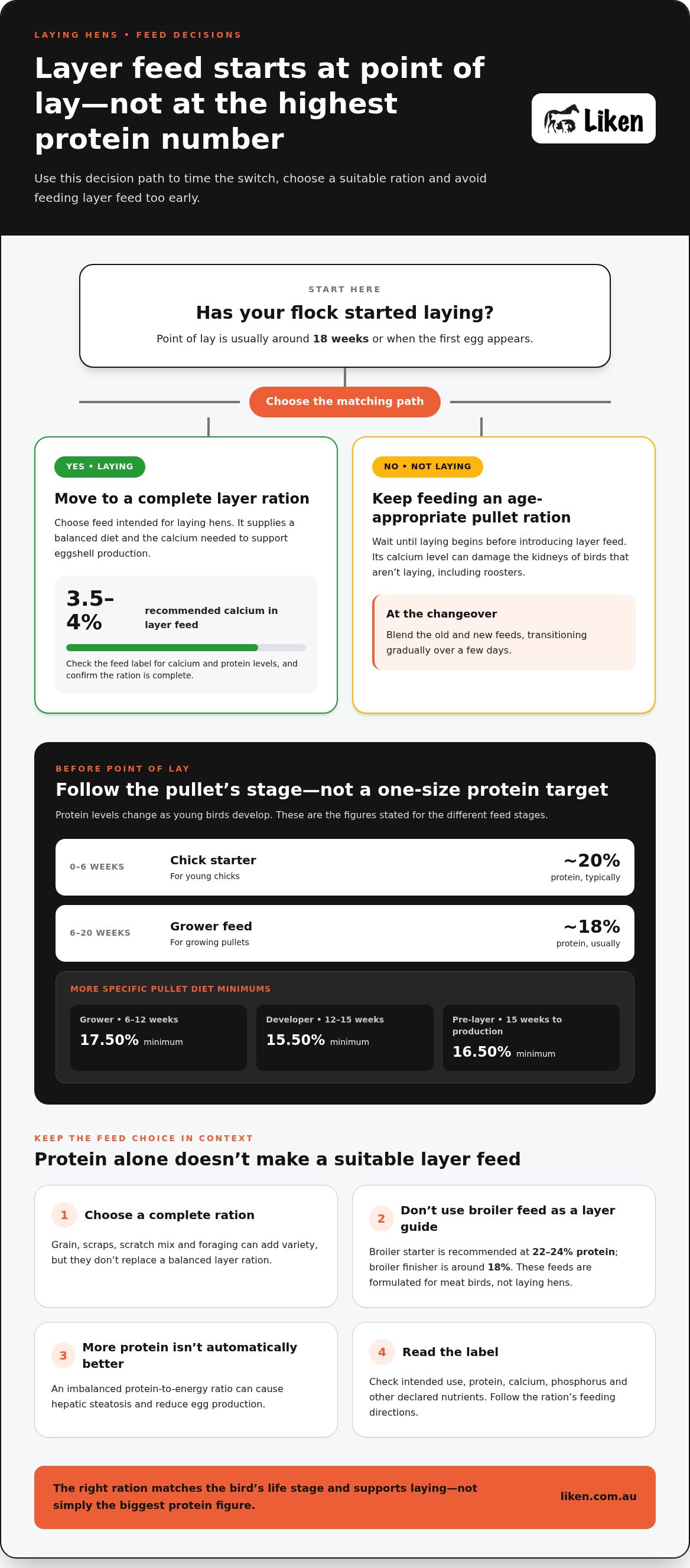
For backyard pullets, switch to layer feed when laying begins, usually around 18 weeks or when the first egg appears. Chick starter is for 0-6 weeks, while grower feed suits 6-20 weeks. Starter typically contains around 20% protein; grower feed usually has around 18%.
Protein levels can change through pullet development. Grower diets for 6-12 weeks have a minimum of 17.50% protein, developer diets for 12-15 weeks have a minimum of 15.50%, and pre-layer diets from 15 weeks until production have a minimum of 16.50%. Layer feed should wait until the flock starts laying.
Choose a complete layer ration, not grain alone. Layer feed for laying hens is recommended to contain 3.5 to 4% calcium, supporting eggshell production. Foraging, scraps and scratch mix don’t replace a balanced ration. Layer feed contains 3 to 4% calcium, which can damage the kidneys of birds that aren’t laying if fed too early, including roosters.
Broiler feed is formulated for meat birds, not laying hens. Broiler starter is recommended to contain 22 to 24% protein, while broiler finisher contains around 18%. Don’t use those figures as a layer-feed guide.
Can laying hens eat chick starter or grower feed? These rations are intended for young birds and don’t provide the calcium balance of layer feed. If hens have been on a grower diet, check that the eggs are suitable before eating them. Blend the old and new feeds, transitioning gradually over a few days.
Can too much protein harm hens? More protein isn’t automatically better. An imbalanced protein-to-energy ratio can cause hepatic steatosis and reduce egg production, according to the National Center for Biotechnology Information.
What do Australian prices look like? Prices vary by bag size and formulation. Where can you buy feed? Australian poultry-feed retailers and rural supply stores sell layer rations. Compare protein and calcium levels on the label.
2. Feed forms: pellets, crumbles, mash and whole grains
Pellets combine ingredients into uniform pieces, helping limit selective feeding. Hens are less able to pick out preferred grains and leave the rest behind. A complete poultry pellet provides a balanced meal, supporting egg production without relying on treats to fill nutritional gaps. Choose a layer ration and follow its feeding directions.
Crumbles are smaller pieces of pellet feed, which can make them easier for smaller birds to eat. They may also create more dust and scattered feed. Watch the feeder: if hens scratch feed onto the ground, adjust its position and keep it clean. Spilt feed is wasted and can attract pests.
Mash has a fine, ground texture and can provide a complete chicken diet with vitamins, trace elements and minerals. It may suit birds that prefer smaller particles, though fine feed can make a mess around water. Keep the feeder dry and check that birds aren’t separating the ingredients.
Whole grains offer variety, but wheat, barley and sorghum contain 8% to 14% protein. Grain alone isn’t an adequate laying-hen diet. Offer it as a treat alongside complete feed, rather than replacing the ration. Foraging can add variety, but it doesn’t make an unbalanced feed complete.
Compare the feed label and form before buying. Check protein and calcium levels, and look for clear guidance on whether the ration is complete. Also review phosphorus and other declared nutrients. A feather-focused treat or scratch mix shouldn’t displace the main feed. To explore animal feed options, consider the type of ration your flock needs.
3. Daily feed intake of laying hens
Adult hens typically eat roughly 120 to 150 grams of feed per day. Daily feed intake can vary between flocks, so monitor it rather than treating it as a fixed amount. These figures differ because intake varies with the bird, its production and the diet’s energy content. Use them as a starting point, not a fixed ration for every flock.
For a practical check, weigh out the flock’s daily feed and divide it between the number of hens. For example, a flock of four adult hens at 120 grams each needs 480 grams daily. Watch what remains, then adjust the next serving to avoid persistent leftovers or empty feeders. Keep clean water available alongside feed.
Age, egg production, feed intake and moulting all influence a hen’s requirements. A laying ration contains nutrients, vitamins and minerals alongside protein; the ingredients work together, so an 18% protein figure alone doesn’t set the correct daily amount. Foraging can contribute to intake, but natural feeding outdoors varies and shouldn’t replace a balanced ration.
Scratch grains and treats can reduce how much complete feed hens eat. Limit extras so the main ration remains the foundation of their diet. If feathers are regrowing during moulting, protein needs can rise. Adjust the complete feed rather than relying on scratch or individual high-protein ingredients.
Track daily feed offered and leftovers for several days. A steady pattern helps you spot changes in appetite or production and fine-tune portions. For broader animal-feeding needs, explore feed options.
Liken: ADVANCE
Liken offers ADVANCE as part of its animal-feed range. For laying hens, choose a complete poultry ration that suits their life stage and has suitable protein and calcium levels. ADVANCE isn’t presented here as layer feed, so use the guidance above to identify the right type of ration for your flock.
Explore Liken’s available feed options for your animals. Keep your hens’ needs in focus: a poultry-feed label should identify its intended use and provide nutritional information to guide your choice. This helps distinguish a suitable layer ration from feed made for other animals.
Visit Liken online to explore its offerings.
Make your next feed choice with confidence
Use your flock’s condition and the feed label to guide your next decision. The right high protein chicken feed for laying hens suits their needs, not simply the option with the highest protein figure. Keep notes on appetite, feather condition and egg production, then use those observations to assess whether the feeding routine is working.
Liken offers ADVANCE, COBBER and ENDURO among its animal-feed brands. Explore the range and choose your next step with your flock’s needs in mind. Contact Liken about feed options and keep building a feeding routine that works for your hens.
Frequently Asked Questions
What Is High Protein Chicken Feed?
High protein chicken feed for laying hens is poultry feed containing more than 16% crude protein. The percentage alone doesn’t show whether a ration suits your flock: check that it’s formulated for laying birds and provides a balanced mix of nutrients. For example, a high-protein grower ration isn’t automatically the right choice for hens producing eggs.
What is the best feed for laying hens?
The best choice is a complete feed made for laying hens, with a label showing the intended bird type and life stage. Compare protein and calcium information, then consider whether the form suits your flock’s eating habits. For example, pellets can help reduce selective eating, while complete mash offers a finely ground option.
When should I switch from starter to layer feed?
Move pullets onto layer feed when they begin laying, usually around 18 weeks or when you see the first egg. If a young bird is still eating starter or grower feed, don’t switch just because layer feed is available. Blend the familiar ration with the new one over a few days to ease the change.
How much protein do laying hens need in their feed in Australia?
Laying hens generally need feed containing 15% to 19% crude protein. The suitable level depends on age, egg production, feed intake and moulting, so choose a complete layer ration rather than adding protein ingredients by guesswork. A hen replacing feathers may have different needs from a bird whose plumage is intact and laying steadily.
What are the best high-protein chicken feeds for laying hens available in Australia?
Choose a complete layer feed whose label matches your hens’ life stage and provides suitable protein and calcium, rather than choosing on protein alone. There isn’t one best option for every flock: production, age and other foods all matter. Treat scratch grain and other extras as additions, not substitutes for a balanced ration.


