

A feed marked “performance” might not be the right fit for a horse in work. The best performance horse feed formula depends on the work your horse does, the forage already available, and whether they need to gain, maintain or lose condition.
It’s easy to assume harder work means more concentrate, or to get stuck comparing ingredient lists. But a label alone can’t tell you how much energy your horse needs or whether a formula fits the rest of their ration.
This guide will help you assess workload, forage and condition before comparing feed options. You’ll learn what “performance” does and doesn’t mean on a feed label, use a practical framework to compare formulas, and recognise when a change calls for individual advice. Start with the whole ration, then choose with confidence.
Key Takeaways
- Read “performance” as a starting point, not a guarantee that a feed suits your horse.
- Match a performance horse feed formula to your horse’s workload and the forage already in their diet.
- Compare fibre, energy sources and declared nutrients alongside your horse’s body condition.
- Keep a clear record before changing the ration, and seek veterinary or qualified equine nutrition advice for health concerns or complex changes.
What a performance horse feed formula can, and cannot, tell you
A performance horse feed formula is intended for horses with particular work-related nutritional needs. The category can offer a clue about the type of horse the product is designed for, but it can’t tell you whether it suits your horse. The label doesn’t account for the work they actually do, the forage they eat, other feeds or supplements, or their current body condition. Consider those factors together. For broader background on equine digestion and nutrition, see Equine Nutrition.
A feed category describes a product’s intended use; an individual feeding recommendation considers the horse and their whole ration. Keep that distinction in mind as you compare options. “Performance” isn’t a measure of how hard your horse works, and the word alone doesn’t determine what they need.
Think about the pattern of work, not just the discipline. A horse doing occasional easy schooling may have different needs from one completing regular, sustained training. A horse in demanding work might have longer or more frequent sessions, or need more time to recover between them. These are broad examples, not feeding prescriptions.
When does a horse’s workload call for a ration review?
Note how often and how long your horse works, what the sessions involve, and how they recover. An occasional short, light ride provides different context from frequent, longer schooling or competition preparation. Changes in energy, condition or ability to return to their usual routine are reasons to review the whole picture, rather than relying on a feed label.
Review the complete diet when training increases, eases off or changes type, and when body condition shifts. Consider forage alongside concentrates and supplements. Record what changed and when, so you have a clear starting point for deciding whether the ration needs another review.
How to compare a performance horse feed formula with your horse’s needs
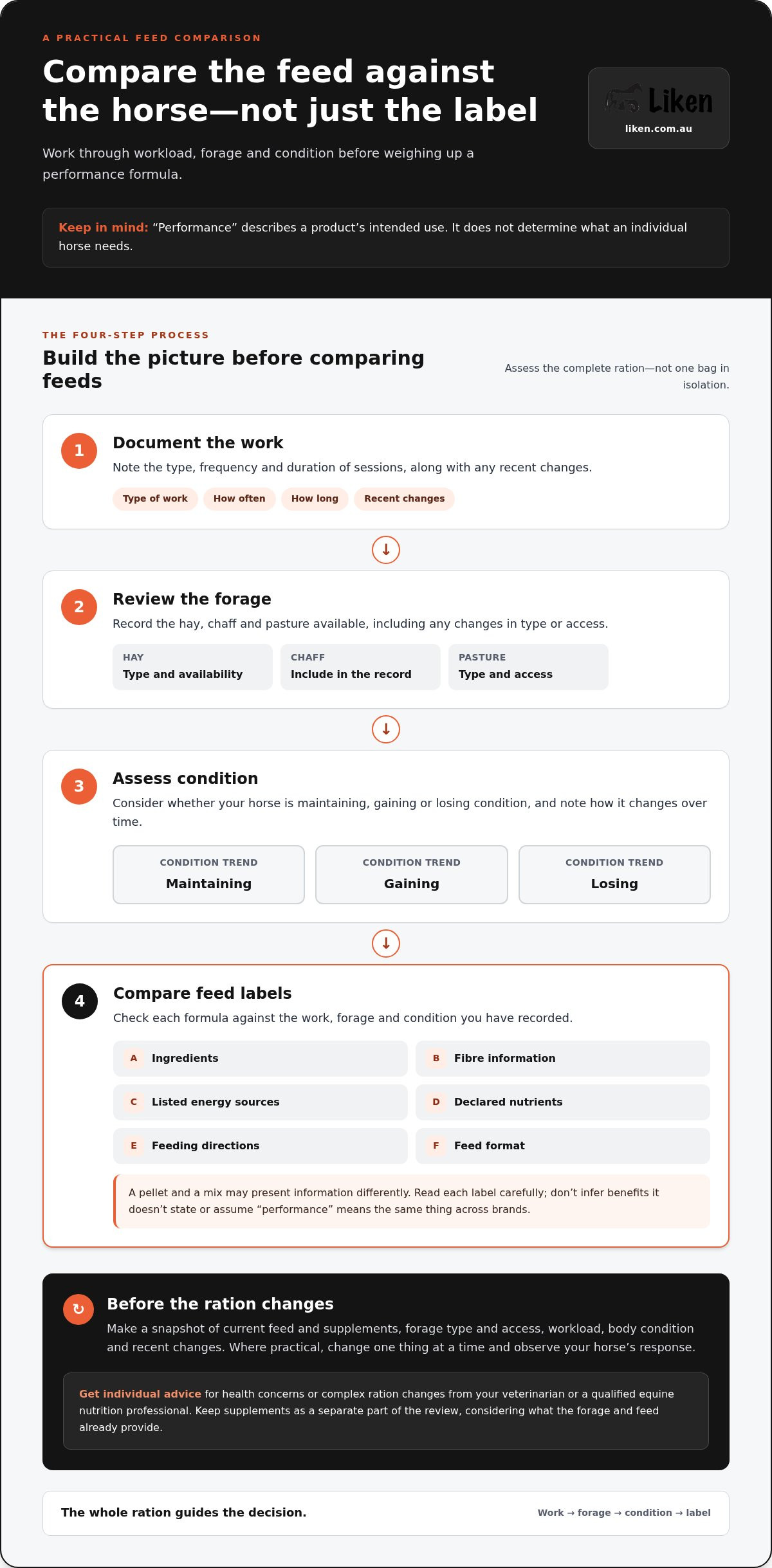
Before comparing feeds, map out what your horse already gets. Work through these steps in order:
- Document the work. Note the type, frequency and duration of sessions, along with any recent changes.
- Review the forage. Record the hay, chaff and pasture available, including any changes in type or access.
- Assess condition. Consider whether your horse is maintaining, gaining or losing condition, and note how it changes over time.
- Compare feed labels. Check ingredients, feeding directions and declared nutrients against the first three points.
Let the horse’s full ration guide feed decisions, not one bag in isolation. Forage, concentrates and supplements all contribute to the overall picture, so assess a new feed alongside what’s already being fed.
Which label details help you compare feeds fairly?
Compare like with like. Fibre information can help you understand a feed’s place in the ration, while listed energy sources show which ingredients contribute energy. Compare declared nutrients and feeding directions, where provided, and take note of differences in feed format. A pellet and a mix may present information differently, so read each label carefully. Don’t infer benefits the label doesn’t state or assume a “performance” claim means the same thing across brands.
Keep supplements as a separate part of the review. Before adding one, consider what forage and feed already provide. This guide to horse nutrition supplements offers useful context. To compare available feeds, browse Liken’s animal feed range alongside your notes. Liken also provides technical advice on additives and supplements to help clarify ingredient information.
From feed comparison to a practical next step for your horse
Before changing feeds, make a simple record of what your horse currently eats and how their routine is going. Include feed and supplements, forage type and access, workload, and body condition. Note recent changes too. This snapshot will help you assess a performance horse feed formula and track what happens if the ration changes.
Where practical, make one change at a time and observe how your horse responds. If there are health concerns or the ration change is complex, seek advice from your veterinarian or a qualified equine nutrition professional. Feed choices can affect the whole diet, so get individual guidance rather than relying on a label to answer a health question.
How can you make feed ordering easier to manage?
Once you’ve settled on a feeding plan, organise supply around your horse’s usual needs. Liken offers online ordering, from single bags to larger orders, as well as digital standing orders for recurring feed requirements. Planning ahead can help keep regular purchases on your radar, while this guide to bulk animal feed delivery covers considerations for larger orders.
Keep your feed notes handy as you shop, and compare available options with the ration you’ve discussed with your adviser. Liken also provides technical advice on additives and supplements; discuss health concerns with a veterinarian. When you’re ready to browse, explore Liken’s animal feed range and compare supplies with your horse’s feeding plan.
Make your next feed decision a considered one
Let your horse’s needs lead, and revisit feed choices when their routine changes. A performance horse feed formula is one part of a feeding plan, not a shortcut to deciding what your individual horse needs. Keep your notes handy and use them to guide a conversation with a veterinarian or qualified equine nutrition professional if questions arise.
When you’re ready to plan your feed supply, Liken is an Australian online retailer of animal feed and supplements, with flexible ordering options, including digital standing orders for recurring needs. Explore Liken’s animal feed range and plan your next order around your horse’s feeding needs.
A thoughtful plan starts with what’s right for your horse. You’ve got this.
Frequently Asked Questions
What is a performance horse feed formula?
A performance horse feed formula is intended for horses with work-related nutritional needs. It doesn’t automatically suit every horse in training: one doing short schooling sessions may have different needs from one preparing for sustained competition work. Read the product information to understand its intended use, then consider it as part of the horse’s overall feeding plan, not as a personal recommendation.
Does every horse in work need performance feed?
No. Being ridden or attending regular training doesn’t, by itself, mean a horse needs performance feed. For example, a horse in light work that maintains condition on its current ration may not need a different feed simply because it’s exercised. If you’re concerned about stamina, appetite, weight or health, speak with a veterinarian or qualified equine nutrition professional before changing the ration.
How do I compare performance horse feeds?
Compare labels side by side, noting ingredients, feeding directions and declared nutrient information rather than relying on marketing terms. For a performance horse feed formula, look for information about intended use and consider whether the feed format suits your routine. If labels use different units or don’t provide comparable information, avoid drawing conclusions from a single figure and seek qualified guidance if you’re unsure.
Can I change my horse’s feed straight away?
Avoid making a sudden switch without considering the existing ration. Read the new feed’s directions and plan any transition carefully. Keep a brief record of changes and observations, such as appetite, manure and body condition, so you can discuss patterns with an adviser. If health signs appear, or you’re uncertain about a complex change, contact your veterinarian for guidance.


