

A food labelled “sensitive” isn’t automatically the right choice for your kitten. If you’re comparing kitten food for sensitive stomachs, it’s understandable to feel unsure: a change might help, but vomiting or loose stools can also have causes that food won’t fix.
Start with your kitten’s age, symptoms and growth, not just the words on the bag. Their food needs to support healthy development as well as suit their digestion. This guide explains which label details matter, how to compare digestive-care and hypoallergenic claims, and how to make a food change carefully. You’ll also learn when symptoms need veterinary attention instead of another food trial, so you can choose a sensible next step with more confidence.
Key Takeaways
- Kitten food for sensitive stomachs should suit your kitten’s individual needs, but symptoms alone can’t identify the cause.
- Compare life-stage statements, feeding directions, ingredients and food format rather than relying on front-of-pack claims.
- “Sensitive” and “hypoallergenic” don’t mean the same thing or guarantee a food will suit your kitten.
- Use a simple next-step plan: assess symptoms, seek veterinary advice when needed, then compare kitten-appropriate options.
Kitten food for sensitive stomachs: understand the signs and the label
Sensitive-stomach food is a diet chosen to suit an individual kitten’s needs. Vomiting or diarrhoea can have several causes, including a sudden food change, stress, parasites or eating too quickly. Those signs alone can’t tell you whether food is the problem, so don’t treat a new diet as a diagnosis.
Start by checking the life-stage statement. Kittens grow quickly and need food labelled for kittens or their growth stage, rather than an adult diet assumed to be equivalent. Read the feeding directions and intended age range on the pack, and use the same details when comparing products. Learning about kitten digestive development can also help explain why a young cat’s needs differ from an adult’s.
Which signs matter, and what does 'sensitive' mean?
Notice what’s happening and how often: soft or watery stools, vomiting, excess gas, a poor appetite or trouble gaining weight are useful details to record. A single episode may have a different explanation from symptoms that keep returning. Note when signs occur, what your kitten has eaten, and whether symptoms follow a food change. These details give your vet a clearer picture.
A food label describes a diet; it doesn’t diagnose what’s causing your kitten’s symptoms. “Sensitive” is a label, not proof that a food will suit every kitten. Repeated, severe or worrying symptoms call for veterinary advice, not a string of food swaps. That’s especially important for a growing kitten, as ongoing digestive trouble can affect eating and weight gain.
How to compare kitten food for a sensitive stomach
Compare the whole label, not just the words on the front. A food marketed for sensitive digestion may suit some kittens, but that claim doesn’t tell you whether it meets your kitten’s growth needs or will address their symptoms. Use the same checklist for each option. If symptoms are a concern, discuss a planned diet trial with your vet before changing foods.
A simple checklist for comparing food labels
- Life stage: Look for wording that says the food is suitable for kittens or growth. Check this before weighing up marketing terms.
- Feeding directions: Find the guide on the pack and note the recommended amount for your kitten’s age or weight. Use it as a starting point, while keeping an eye on your kitten’s appetite and growth.
- Ingredients: Compare the full lists side by side. Note the named protein sources and other ingredients, but don’t assume an ingredient is harmful simply because it’s unfamiliar or appears on a sensitivity food label.
- Food format: Compare wet and dry options based on what your kitten already eats and accepts. If considering a change, keep track of the format as well as the food so you can describe what changed.
Check life-stage suitability before marketing terms. “Sensitive” and “hypoallergenic” aren’t interchangeable guarantees, and neither label confirms the cause of digestive signs. The phrase “kitten food for sensitive stomachs” can help you find options to compare, but it can’t predict how an individual kitten will respond.
Keep portions, treats and meal times steady while observing appetite and stools. Changing several things at once makes it harder to spot a pattern. Don’t start or extend an elimination diet without veterinary guidance. Once you have a suitable checklist, you can browse Liken’s animal food range online and compare product labels at your own pace.
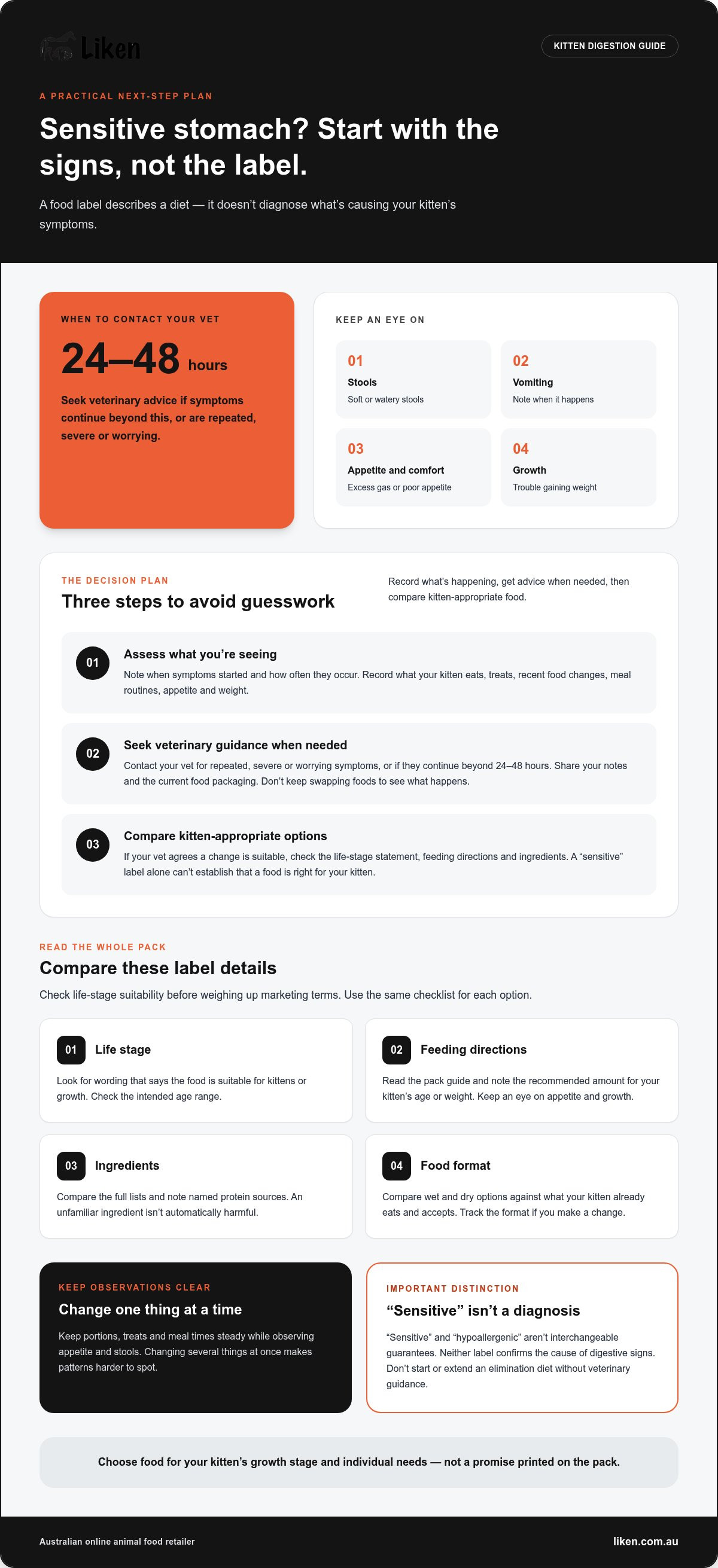
Choosing a next step for your kitten's sensitive stomach
A clear plan can help you avoid guesswork. The goal isn’t to find a food that promises to fix every symptom. First work out whether your kitten needs veterinary assessment, then compare appropriate food options if a change makes sense.
- Assess what you’re seeing. Note when symptoms started, how often they occur and whether your kitten is eating, drinking and gaining weight as usual. Record recent food changes, treats and meal routines too.
- Seek veterinary guidance when needed. Contact your vet if symptoms are repeated, severe, worrying or continue beyond 24-48 hours. Don’t keep swapping foods to see what happens. Share your notes and the current food packaging so your vet can consider the full picture.
- Compare kitten-appropriate options. If your vet agrees that a food change is suitable, check each option’s kitten life-stage statement, feeding directions and ingredients. A brand name or “sensitive” label alone can’t establish that a particular food is right for your kitten.
When to browse, and when to speak with a vet
Routine browsing makes sense when your kitten is otherwise well and you’re comparing labels for a planned change. Persistent or concerning signs call for veterinary assessment before you trial another diet. Keep your notes simple: include what and how much your kitten eats, any treats, when symptoms occur, and changes in appetite or weight.
Once you have a suitable direction, browse Liken’s online animal food range and compare product labels against your kitten’s needs. Liken’s guide to buying cat food online in Australia can also help you plan your online search. Choosing kitten food for sensitive stomachs is a step-by-step decision, not a diagnosis from a label.
Make your next choice with confidence
Your kitten’s needs can change as they grow, so treat food choices as part of an ongoing conversation about their wellbeing. If digestive symptoms are a concern, speak with your vet before starting a diet trial. Once you have a suitable direction, use it to guide your search rather than relying on a label alone. The right kitten food for sensitive stomachs is an individual choice, not a promise printed on a pack.
Liken is an Australian online retailer of animal food and supplements, with brands including ADVANCE and HILLS. Browse the online range and compare product labels against your kitten’s needs. Browse Liken’s animal food range online to take your next step feeling prepared.
Frequently Asked Questions
Is sensitive-stomach kitten food the same as hypoallergenic food?
No. “Sensitive” may describe food marketed for digestive support, while “hypoallergenic” suggests a diet intended to reduce exposure to potential allergens. Neither label confirms that your kitten has an allergy or guarantees a particular result. If an allergy is suspected, ask your vet about a supervised elimination diet rather than choosing a food based on its front-of-pack wording.
Can kittens eat adult cat food for sensitive stomachs?
Adult food shouldn’t be treated as a suitable stand-in for kitten food, even if it carries a digestive-care claim. Growing kittens need a diet formulated for their life stage. If an adult cat’s food is the only option at home, ask your vet what to feed your kitten instead of relying on it as their regular diet.
Is wet food better than dry food for a kitten with a sensitive stomach?
Not necessarily. Wet food can offer extra moisture and may suit some kittens, but food format alone doesn’t establish what’s causing digestive signs or which option is best for your kitten. If you’re weighing up formats, consider what your kitten currently eats and discuss persistent symptoms with your vet before changing their usual meals.
Can stress cause an upset stomach in kittens?
Yes, stress can be one possible contributor to digestive upset. A move, a new pet or a change in routine may coincide with vomiting or loose stools, but timing doesn’t prove stress is the cause. Keep track of changes at home alongside feeding and symptom notes. If signs persist or seem severe, seek veterinary advice rather than assuming your kitten just needs time to settle.


