

The “low sugar” feed on the shelf may not be the right choice for a horse with laminitis. Choosing low sugar horse feed for laminitis means looking beyond the front-of-bag claim: hay, pasture and your horse’s health all shape the ration. It’s understandable to feel cautious when a change intended to help could affect your horse’s condition. In Australia, there’s no national, legally binding definition of “low sugar” for horse feed, so checking the figures matters.
This guide explains how to compare feed labels, consider forage as part of the whole diet, and prepare questions for your vet or a qualified equine nutrition professional before making changes. We’ll cover sugar, starch and non-structural carbohydrates (NSC), as well as how Australian pasture conditions can affect intake. If your horse shows signs of laminitis or is having a flare, seek veterinary advice promptly. Diet decisions should support, not replace, veterinary care.
Key Takeaways
- Choose low sugar horse feed for laminitis by assessing the whole ration, not just a claim on the bag.
- Compare declared sugar or starch information, ingredients, feeding directions and intended use.
- Record your horse’s current feed and forage so label comparisons are more useful.
- Discuss changes with your vet or an equine nutrition professional, and never restrict feed to the point of starvation.
Low-sugar horse feed for laminitis: why the whole ration matters
Choosing low sugar horse feed for laminitis starts with the whole ration, not a single claim on a bag. A horse gets carbohydrates from hard feed, hay and other forage, and pasture. How much it eats, its body condition and any underlying health concerns all affect whether a feeding plan is suitable. A feed that looks like a good match by itself may not suit the total diet.
Pasture deserves attention in Australia, where seasonal conditions can affect sugar levels. Spring and autumn, frosty weather and rain after dry periods may increase risk for some horses. For general background on causes and signs, see What is Laminitis? If you suspect laminitis, or your horse has active signs, contact a veterinarian promptly for assessment. Nutrition information cannot diagnose or treat the condition.
What does ‘low sugar’ mean when choosing horse feed?
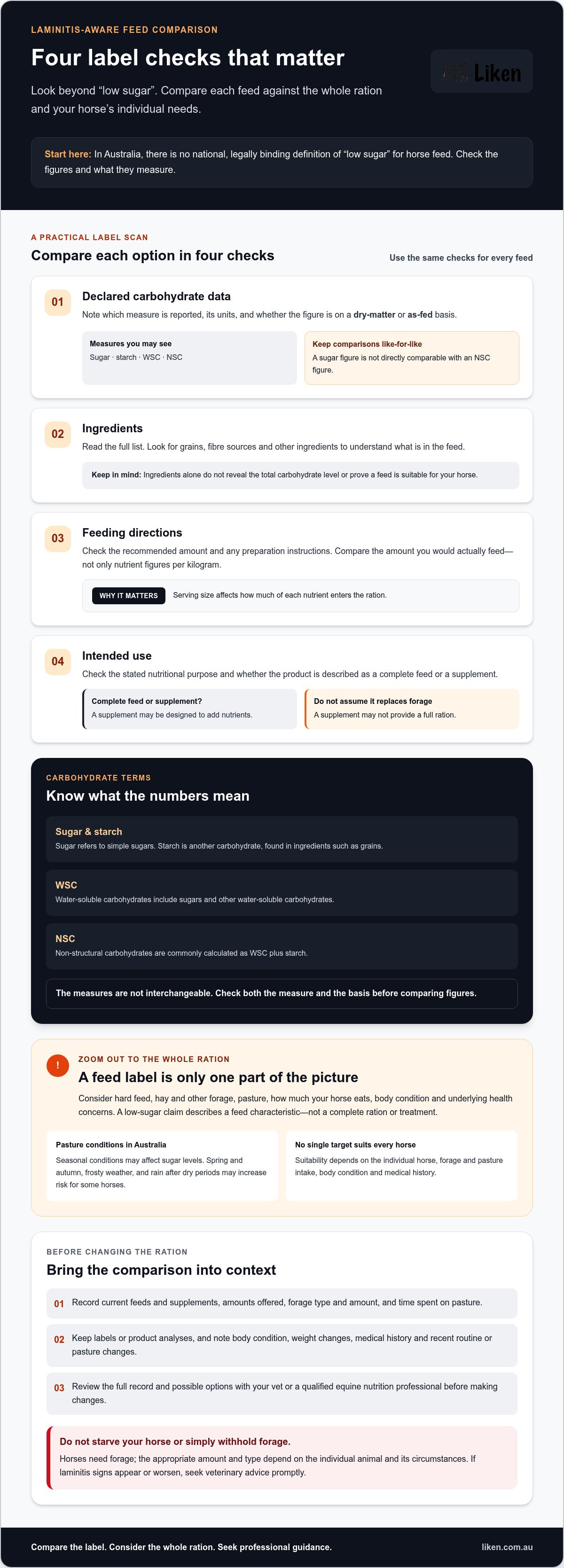
Feed labels and analyses may report different carbohydrate measures. Sugar refers to simple sugars; starch is another carbohydrate, found in ingredients such as grains. Water-soluble carbohydrates (WSC) include sugars and other water-soluble carbohydrates, while non-structural carbohydrates (NSC) are commonly calculated as WSC plus starch. Before comparing feeds, check which measure is reported and whether the figure is on a dry-matter basis or an as-fed basis.
A low-sugar claim describes a feed characteristic, not a complete ration or treatment. There’s no single cut-off that makes a feed right for every horse. The suitable target depends on the individual horse, its forage and pasture intake, body condition and medical history. Ask your vet or an equine nutrition professional to help interpret the figures and set a plan. Never respond to laminitis concerns by simply withholding forage.
How to compare low-sugar horse feeds: a practical label checklist
Read each feed label in the same way, then compare its information with your horse’s current ration and professional recommendations. This keeps your choice of low sugar horse feed for laminitis grounded in useful details, rather than front-of-bag wording alone.
Which feed-label details are useful to compare?
Work through these points for each option:
- Declared carbohydrate data: Note whether the label gives sugar, starch, WSC or NSC, along with the units and whether figures are on a dry-matter or as-fed basis. These measures aren’t interchangeable. For example, don’t compare a sugar figure on one feed directly with an NSC figure on another.
- Ingredients: Check the full list for grains, fibre sources and other ingredients. The ingredients can help you understand what’s in the feed, but they can’t tell you its total carbohydrate level or prove it’s suitable for your horse.
- Feeding directions: Note the recommended amount and any preparation instructions. Compare the amount you’d actually feed, not just the nutrient figures per kilogram, because serving size affects how much of each nutrient enters the ration.
- Intended use: Check the stated nutritional purpose and whether the product is described as a complete feed or a supplement. A supplement may be designed to add nutrients, not replace forage or provide a full ration.
Read the label alongside your forage, pasture access and horse’s individual needs, not in isolation. Put options side by side, but don’t rank brands without comparable data and a clear reason. If a key figure isn’t available, use the manufacturer’s published analysis where provided, or discuss the information you do have with your vet or an equine nutrition professional.
Once you know what information matters, browse Liken’s animal feed and supplement range as part of your comparison. Weigh any option against the full ration and professional advice.
Putting a laminitis-aware feeding plan into practice
A practical plan starts with a clear picture of what your horse eats now. That gives your vet or equine nutrition professional specific information to review before you change the ration. With low sugar horse feed for laminitis, feed choice is only one part of the picture: forage, pasture access, body condition and medical history all matter.
How should owners make feed changes safely?
Avoid abrupt, unsupervised changes. Work through these steps with your horse’s adviser:
- Record the current ration: Note each feed and supplement, the amount offered, the type and amount of forage, and how much time your horse spends on pasture.
- Gather the details: Keep feed labels or product analyses, and note your horse’s body condition, weight changes and relevant medical history. Include recent changes in pasture access or routine.
- Review before changing: Discuss the full record and possible feed options with your vet or a qualified equine nutrition professional. Follow their guidance on whether to change the feed, how to do it and what to monitor.
- Keep notes as you go: Record changes to feed, forage and turnout, along with any concerns. This helps your adviser assess the plan and decide whether it needs adjusting.
Don’t try to manage laminitis by starving your horse or cutting out forage without professional direction. Horses need forage, and the appropriate amount and type depend on the individual animal and its circumstances. If signs of laminitis appear or worsen, seek veterinary advice promptly.
For broader context on how supplements fit into animal nutrition, explore Animal Supplements - A Guide to Livestock and Pet Nutrition. Once you’ve discussed your horse’s needs with an adviser, you can also browse Liken’s online animal feed and supplement range as part of your research.
Take the next step with confidence
Make your next move a conversation, not a guess. Bring your notes and feed-label comparisons to your vet or equine nutrition professional, then agree on a plan that fits your horse’s health and daily routine. Choosing low sugar horse feed for laminitis is an individual decision, and veterinary advice should guide changes, especially if you’re concerned about symptoms.
When you have a clearer idea of what you need, browse Liken’s online animal feed and supplements. Liken supplies animal feed and supplements online across Australia. Orders are dispatched by courier, with tracking details sent by SMS or email.
Keep your horse’s wellbeing at the centre of feeding decisions, and seek veterinary advice whenever health concerns arise.
Frequently Asked Questions
Can low-sugar horse feed prevent laminitis?
No feed can guarantee that a horse wont develop laminitis. A low-sugar option may form part of a vet-guided plan for an at-risk horse, but it cant remove every risk or replace checks for underlying health issues. If youre considering low sugar horse feed for laminitis, discuss your horses history and management with your vet before making changes.
Is low starch the same as low sugar in horse feed?
No. Sugar and starch are different types of carbohydrate, so a feed described as low starch may still contain sugars. For example, a label that reports starch alone doesnt show the feeds sugar figure. Compare like with like, and ask your equine nutrition professional how the figures fit your horses ration rather than relying on a single claim.
Should I stop feeding my horse if it has laminitis?
No. Dont stop all feeding or leave a horse without forage. Starving a horse can be dangerous, and its safe ration needs to be planned around its condition and veterinary advice. If laminitis is suspected or symptoms are active, contact your vet promptly and ask what to offer while you wait for an individual feeding plan.
Can soaking hay reduce its sugar content?
Yes, soaking hay in clean water can leach out a portion of its water-soluble carbohydrates, including simple sugars. However, the amount removed varies based on water temperature, soaking time, and the hays initial composition. Always discard the soak water safely and consult your vet or equine nutritionist to ensure your horse still receives a balanced diet.


