

Have you ever spent a long afternoon watching your best ewes favouring their feet, knowing that lameness is quietly eating into your profit margins? It’s a tough sight for any grazier, and we know how much pride you take in a healthy, upright mob. Many producers find that zinc sulfate for livestock is the missing piece of the puzzle when footrot takes hold or when young stock just aren't hitting their growth targets. Managing mineral deficiencies across a large property is a constant challenge, but getting the right supplements into your animals shouldn't be a struggle.
The good news is that a simple, reliable solution is likely already on your radar. This guide will show you how zinc sulphate acts as a powerful multi-tool to support immunity, boost fertility, and build the strong hooves your animals need to thrive in the Australian paddock. We'll walk through the technical side of things, including why a 10% concentration is the gold standard for sheep footbaths. You'll also learn how to streamline your supplement routine with efficient bulk delivery options that keep your shed stocked and your livestock healthy.
Key Takeaways
- Understand how this bioavailable salt supports vital biological functions, from stronger immunity to healthy skin and gut linings.
- See how zinc sulfate for livestock works as a dual-action defence by hardening hoof horns and fighting the bacteria that cause footrot.
- Master the art of feeding with simple tricks like mixing supplements into molasses or grain to overcome the natural bitterness.
- Learn to tailor your mineral program using total mixed rations (TMR) for more accurate dosing based on animal weight and growth.
- Discover the ease of setting up standing orders for bulk deliveries to ensure your mineral supplies never run low during a busy season.
What is Zinc Sulphate and Why is it Vital for Livestock?
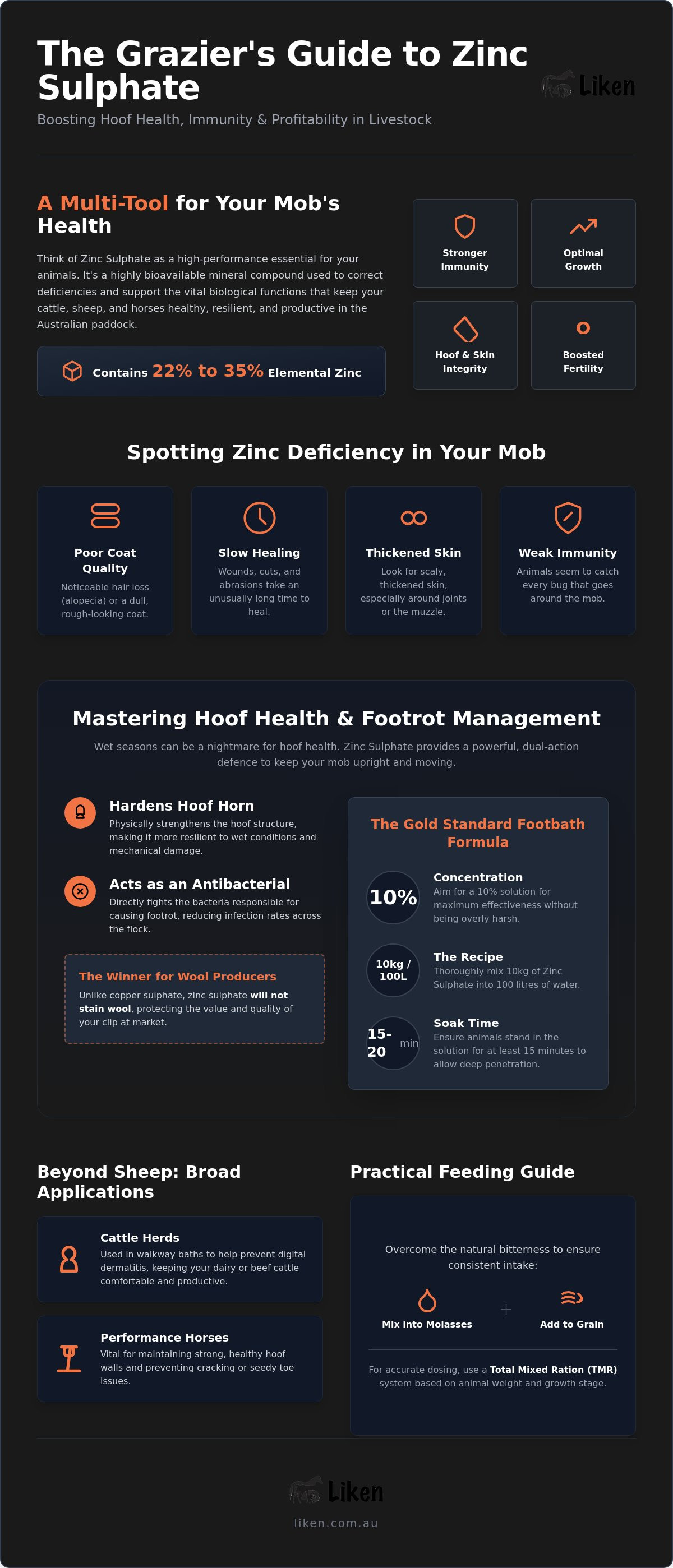
Think of zinc sulphate as a high-performance multi-tool for your animals. It is a highly bioavailable inorganic salt used to correct deficiencies and support vital biological functions in ruminants and horses. Technically speaking, Zinc Sulfate is a versatile mineral compound containing roughly 22% to 35% elemental zinc depending on whether it is the monohydrate or heptahydrate form. Using zinc sulfate for livestock ensures your mob has the building blocks they need for a long, productive life on the land.
This mineral is absolutely essential for epithelial health. This means it maintains the integrity of the skin, the hooves, and even the delicate lining of the gut. Zinc plays a lead role in protein synthesis and cell division; this makes it non-negotiable for growing calves, lambs, and foals that need to hit their growth targets quickly. Without enough zinc, the body simply can't repair itself or grow at an optimal rate.
Signs of Zinc Deficiency in Your Mob
Identifying a deficiency early can save you a lot of heartache and money. Keep a close eye on your stock for poor coat quality or patches of hair loss, often called alopecia. You might also notice thickened, scaly skin around the joints or muzzle. If wounds are taking forever to heal or if your animals seem to catch every bug that goes around, their immune system is likely struggling. You can see how this mineral fits into a broader nutrition plan by checking out our guide on animal supplements australia.
The Link Between Zinc and Fertility
When the joining season rolls around, zinc becomes your best friend. For rams and bulls, adequate zinc levels are critical for maintaining high sperm quality and libido. It isn't just about the males, though. Breeding females need sufficient zinc to support healthy reproductive cycles and successful pregnancies. Ensuring your zinc sulfate for livestock levels are topped up well before joining can lead to better conception rates and a more uniform drop of healthy young stock.
Managing Hoof Health and Footrot with Zinc Sulphate
Wet seasons in the Australian paddock can be a nightmare for hoof health. Footrot is a massive welfare and productivity headache for sheep and goat farmers across the country. It doesn't just hurt the animals; it hurts your bottom line through reduced weight gain and lower lambing percentages. Using zinc sulfate for livestock is one of the most effective ways to tackle this head-on. It works by physically hardening the hoof horn and acting as a powerful antibacterial agent against the bacteria responsible for footrot.
For those of you running wool-producing breeds, zinc is the clear winner over copper sulphate. It won't stain your wool, which keeps your clip clean and protects its value at market. Regular footbathing should be a cornerstone of your integrated flock health plan if you want to keep your stock upright and moving. It is a simple, practical way to manage lameness before it spreads through the whole mob.
Setting Up an Effective Footbath
Getting the mix right is the first step to success. Aim for a 10% concentration; this usually means mixing 10kg of zinc sulphate into 100 litres of water. Once you've moved your mob into the bath, patience is key. They need to stand in the solution for at least 15 to 20 minutes. This allows the mineral to penetrate deep into the hoof horn where it can do the most good. To get the best results, combine this external treatment with proper livestock mineral supplements to support hoof integrity from the inside out.
Hoof Care for Cattle and Horses
It isn't just the sheep that benefit from a bit of extra attention. Dairy farmers often use regular walkway baths to prevent digital dermatitis in their herds, keeping cows comfortable and productive. For those with performance horses, zinc is vital for maintaining strong hoof walls. It helps prevent the cracking and seedy toe issues that can sideline a horse just when you need them most. If you're ready to stock up for the season, you can browse our range of mineral additives and have them delivered straight to your farm gate.
Practical Feeding and Bulk Delivery Logistics
Getting zinc sulfate for livestock into your animals can be a bit of a challenge because of its naturally bitter taste. Most graziers find that mixing it with a bit of molasses or crushed grain does the trick to ensure consistent intake. If you're using a total mixed ration (TMR), you have the advantage of setting a precise dosage based on the life stage and weight of your stock. For those of you with animals out in extensive grazing systems, adding it to loose licks or custom-made lick blocks is a practical way to keep mineral levels topped up across the whole paddock. For a deeper look at the different forms available, check out our essential guide to zinc supplements for livestock.
Safe Mixing and Dosage Tips
Precision matters when you're dealing with mineral additives. Always follow technical advice on dosage because excessive zinc can interfere with how your stock absorbs other vital minerals, particularly copper. When you're preparing the feed, make sure to mix everything thoroughly. This prevents "hot spots" in the mix where a single animal might ingest too much at once while others miss out. If you're unsure about the right balance for your specific mob, our team is here to provide technical support to help you match the supplement to your animals' specific needs.
Effortless Bulk Delivery to Your Gate
Managing a large property is a full-time job. You need reliable logistics for your mineral supplies so you can focus on the stock. Whether you need a few bags to get through the month or a full truckload for the season, we've got you covered. We can organise bulk animal feed delivery australia wide, from single bags to full semi-trailers. You can even set up a standing order to ensure your mineral shed is never empty when you need it most. Keep your mob in top shape with premium minerals. Explore our range of livestock supplements and get your order delivered straight to the paddock.
Build a Stronger Future for Your Flock
Taking care of your animals is a year-round job, but having the right tools makes all the difference. We've seen how zinc sulfate for livestock works double time by protecting hooves from the ground up while boosting internal health and fertility. Just as mineral balance protects your flock, maintaining your farm's infrastructure is key to long-term value; for those with stone outbuildings or heritage timber sheds, Surfprep provides expert restoration and cleaning to keep your property as healthy as your livestock. Whether you're mixing a 10% solution for the footbath or adding it to a custom lick, you're making a smart investment in the longevity of your mob. It's about more than just solving today's lameness; it's about setting your young stock up for success and ensuring your breeding cycles stay on track.
Managing your mineral supplies doesn't have to be another headache on your to-do list. We're here to help with 100% online ordering and expert advice to ensure you're matching the right supplements to your specific property needs. From single bags to full truckloads, we'll get your gear to any gate in the country with our reliable national delivery service. Secure your herd’s health with premium zinc sulphate from Liken and keep your animals thriving in every season. We're looking forward to helping you grow a healthier, more productive mob.
Frequently Asked Questions
Can I use zinc sulphate for sheep and cattle footbaths?
Yes, you can certainly use it for both sheep and cattle. For sheep, a 10% concentration is the standard mix to help manage footrot during those wet Australian winters. For cattle, regular walkway baths are an excellent way to prevent digital dermatitis and maintain strong hoof walls. It is a versatile tool that fits easily into most livestock management routines on the farm.
How much zinc sulphate should I add to my livestock feed?
The right amount depends on your animals' weight, species, and life stage. Since zinc sulfate for livestock is a concentrated mineral, you should always follow technical advice to ensure you aren't over-supplementing. Getting the dosage right is vital because too much zinc can stop your animals from absorbing other important minerals like copper. Mixing it thoroughly into a ration is the best way to ensure even intake.
Is zinc sulphate better than copper sulphate for footrot?
Many producers prefer zinc because it hardens the hoof horn while acting as a powerful antibacterial agent. Unlike some alternatives, it doesn't carry the same toxicity risks if small amounts are accidentally ingested during footbathing. It is a reliable, effective choice for graziers who want to maintain a healthy, upright mob without the risk of damaging their pastures or equipment over time.
Will zinc sulphate stain my sheep’s wool?
No, zinc sulphate will not stain your sheep's wool. This is a major advantage for wool growers who need to treat footrot without devaluing their fleece. Using zinc sulfate for livestock keeps your clip clean and white; this ensures you get the best possible price for your wool when it comes time to sell. It provides peace of mind that your animal health treatments won't impact your wool cheques.


