

Could zinc supplementation support your flock’s feet, or might it distract from the real cause? A zinc supplement for sheep foot health may support normal skin and hoof tissue when dietary intake is inadequate, but it won’t cure footrot or other foot disease.
When sheep are lame, conflicting mineral advice can make it hard to know what to do next. Hoof problems can have nutritional, infectious or environmental causes, and adding zinc without reviewing the whole ration may not help. This guide explains zinc’s role, when supplementation may be relevant, and why the cause of symptoms matters. You’ll also learn what to record about feed, pasture and existing supplements before making a change. That information can help you plan a practical next step for flock nutrition while keeping veterinary diagnosis and disease management in their proper place.
Key Takeaways
- A zinc supplement for sheep foot health may support hoof tissue when it fits the flock’s nutritional needs, but it isn’t a treatment for foot disease.
- Record which sheep are affected, when signs began and how the problem is changing.
- Before adjusting minerals, map out pasture, feed and existing supplements to understand what the whole ration provides.
- Seek veterinary assessment for persistent, painful or spreading lameness. Track ration changes over time rather than assuming zinc caused an improvement.
Zinc and Sheep Foot Health: What the Mineral Can, and Cannot, Do
Zinc is an essential trace mineral, which means sheep need it in small amounts for normal body functions. It contributes to skin and hoof integrity, immune function and wound healing. Zinc is therefore relevant to overall hoof condition, but a cracked, misshapen or sore foot doesn’t necessarily indicate a zinc shortage.
How does zinc relate to hoof condition in sheep?
A hoof’s outer wall is made largely of keratin, a tough structural protein also found in wool. Zinc supports normal skin and hoof tissue, but visible foot problems alone can’t confirm a deficiency or show that zinc caused the problem.
In brief: Zinc supports normal hoof tissue as part of a balanced diet. Supplementation is relevant only when it fits the flock’s nutritional needs.
Consider the whole picture. Lameness and damaged feet can have nutritional, infectious or other causes, including injury and environmental conditions. Footrot is an infectious disease, so adding zinc to feed isn’t a stand-alone treatment and can’t diagnose the cause. Pain, swelling, odour, lesions or several affected sheep call for attention to the signs and flock circumstances, not an assumption that more mineral is needed.
A general overview of Sheep biology can provide background, but it can’t identify what’s causing lameness in your flock. Treat zinc as part of nutrition planning, not as a quick fix for foot disease. Before changing supplementation, consider what sheep already get from pasture, feed and mineral products. This helps avoid basing a ration change on an unverified deficiency, while keeping suspected disease and ongoing lameness in view.
How to Assess Whether a Zinc Supplement Fits Your Sheep’s Ration
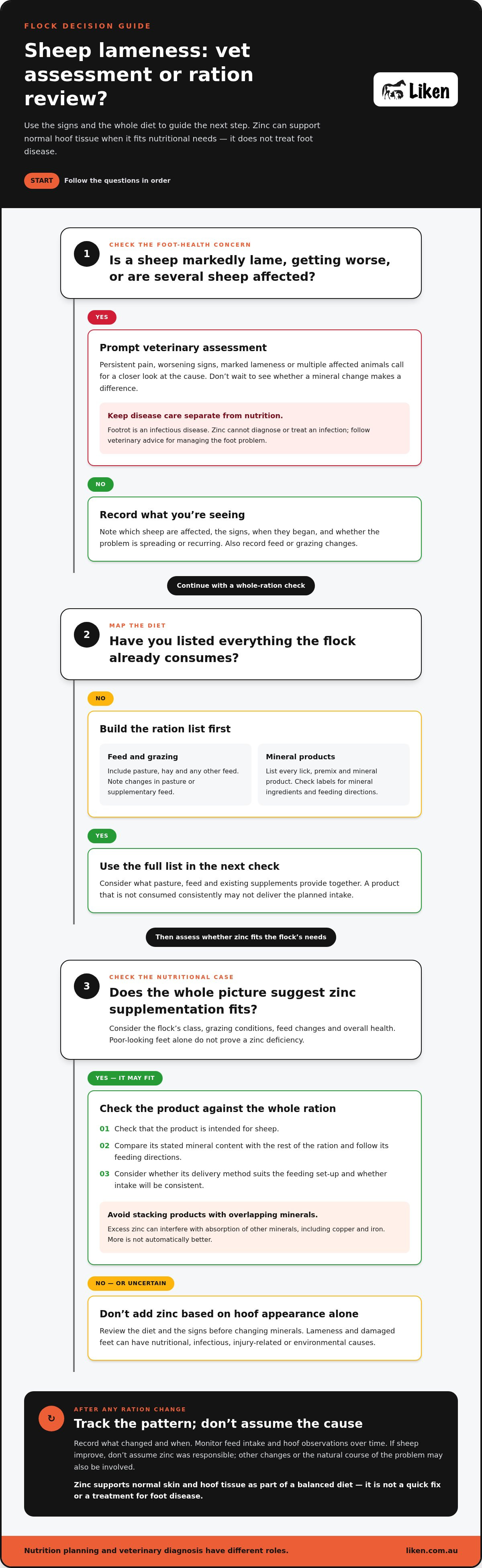
Before changing the mineral programme, build a clear picture of both the problem and what the flock already eats. Consider a zinc supplement for sheep foot health in the context of the whole ration, not simply because feet look poor.
What should you check before adding zinc to a sheep ration?
Work through these steps in order. Keep your notes practical and specific so any nutrition discussion starts with useful details rather than a guess.
- Record the hoof issue. Note which animals are affected, the signs you see, when they began and whether the problem is spreading or recurring.
- List the full ration. Include pasture, hay or other feed, plus every lick, premix or mineral product. Check labels for mineral ingredients and feeding directions.
- Assess whether zinc is needed. Consider the flock’s class, grazing conditions, feed changes and overall health. A hoof problem by itself doesn’t prove a zinc deficiency.
Next, compare options based on practical fit, not promotional language. Check that a product is intended for sheep, how it is supplied, and how its stated mineral content fits with the rest of the ration. In-feed products, loose supplements and other delivery methods can suit different feeding set-ups, but none should be selected without considering what sheep already consume. Avoid stacking products with overlapping minerals. Excess zinc can interfere with the absorption of other minerals, including copper and iron, so more isn’t automatically better.
Flock circumstances matter too. Changes in pasture or supplementary feed can alter the overall diet, while a product that isn’t consumed consistently may not deliver the planned intake. Liken’s livestock supplements guide can help you consider supplements as part of a broader nutrition plan. Liken also provides technical advice on additives to support nutrition planning. Explore Liken’s livestock nutrition support alongside your ration notes.
A Practical Next Step for Sheep Foot Problems and Supplement Decisions
Separate an urgent foot-health concern from a routine ration review. Sheep that are markedly lame, getting worse or affected alongside several others need prompt veterinary assessment. Don’t wait to see whether a mineral change makes a difference.
When should a foot-health concern move beyond nutrition review?
Persistent pain, worsening signs or lameness across multiple animals calls for a closer look at the cause. Infectious foot conditions need appropriate diagnosis and management. A zinc supplement for sheep foot health can’t identify or treat an infection, so keep nutrition support separate from veterinary care.
While arranging an assessment, record which sheep are affected, when signs appeared, what you’ve observed and any changes in feed or grazing. Follow veterinary advice for managing the foot problem. These notes can also make a later nutrition review more focused.
If you adjust the ration after reviewing the whole diet, record what changed and when. Monitor the flock over time, including feed intake and hoof observations. If sheep improve, don’t assume zinc was responsible. Other changes or the natural course of the problem may also be involved. Keeping clear records helps you and your adviser assess the pattern without jumping to conclusions.
Liken’s technical expertise on additives supports informed livestock nutrition planning, while veterinary professionals remain the right people to diagnose foot disease. Liken supplies animal feed and supplements online across Australia, with flexible delivery options. Explore Liken’s animal nutrition resources as you plan your next steps.
Make your next nutrition decision with confidence
Give your next ration review a clear purpose: use what you’ve observed in the flock and the feed on hand to decide whether a nutrition change is justified. Record what changes and when, so future decisions are guided by a pattern rather than a hunch. A zinc supplement for sheep foot health should be part of a considered plan, not a substitute for investigating ongoing lameness.
For the nutrition side of the decision, Liken offers technical expertise on feed additives, online supply and flexible delivery options. Explore Liken’s animal nutrition range and practical support to plan your next step.
Steady, informed choices can help you respond to your flock’s needs with confidence. Keep useful records and take each decision one step at a time.
Frequently Asked Questions
Can zinc supplements prevent footrot in sheep?
No. Zinc shouldn’t be relied on as a proven, stand-alone way to prevent footrot. Footrot is infectious, and similar-looking foot damage can have different causes, so have signs assessed rather than using a mineral change as protection. Correcting a confirmed dietary shortfall may support general health, but it doesn’t replace veterinary diagnosis or appropriate foot-disease management.
How much zinc should sheep receive?
There isn’t one zinc dose that suits every flock. The right amount depends on the full ration, feed sources, the sheep’s circumstances and zinc already supplied by other products. Don’t add a zinc supplement for sheep foot health by guesswork. Review the feeding programme with a qualified livestock nutrition adviser or veterinarian, and don’t assume a higher intake will improve hoof condition.
What should I do if sheep remain lame after adding a mineral supplement?
Arrange veterinary assessment rather than assuming ongoing lameness means sheep need more zinc. Note which animals are affected, when they became lame and whether signs are changing. Take the supplement packaging or feeding details and a record of other feed sources to the assessment. A nutrition adviser can help review the ration, while diagnosis and management of the foot problem require veterinary guidance.


