

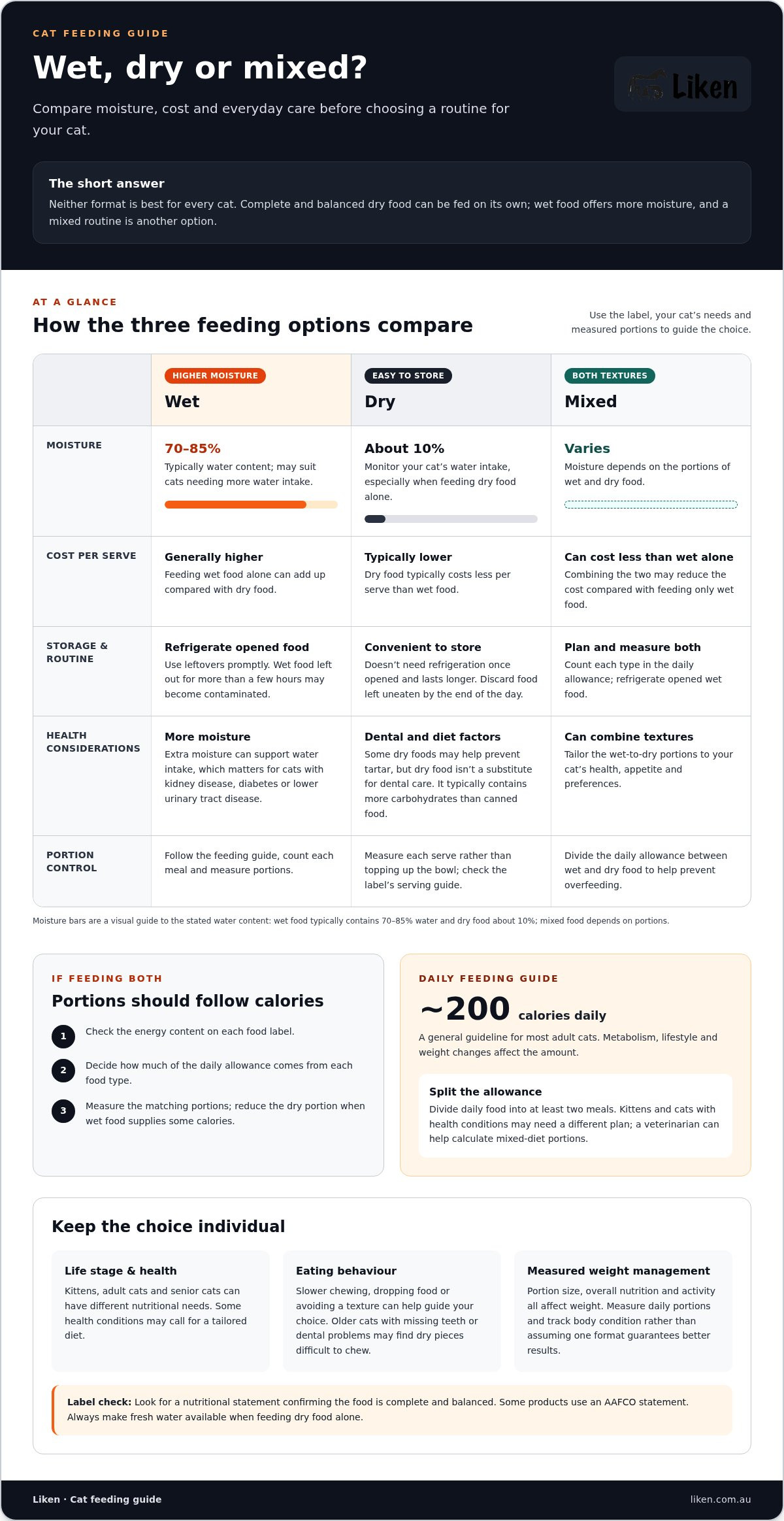
Dry food alone can be enough for a cat when it’s complete and balanced, while wet food offers more moisture, typically 70-85%. The wet vs dry cat food pros and cons come down to hydration, cost, storage and what suits your cat’s needs. Neither option is automatically best for every cat.
It’s easy to focus on the bowl: wet food provides more moisture, while dry food is convenient to serve and store. Both can fit into a balanced feeding routine, and combining them is another option.
This guide compares wet and dry food, explains whether dry food alone can meet your cat’s needs, and outlines how to feed both. You’ll also find practical trade-offs to help choose a routine that works for your cat and household.
Key Takeaways
- Dry food can be fed on its own when it’s complete and balanced, but make sure fresh water is always available.
- Wet food provides more moisture, while dry food is often easier to store and can be more affordable.
- You can combine wet and dry food, but divide daily portions between them to help prevent overfeeding.
- Choose a feeding routine around your cat’s health, appetite and preferences, then adjust portions as their needs change.
Is dry food enough on its own?
Yes. Complete and balanced dry food can be fed on its own. On Australian labels, look for a nutritional statement confirming the food is complete and balanced. Some products use an AAFCO statement.
Wet food hydration and urinary health
Wet food typically contains 70-85% water, compared with about 10% in dry food. That extra moisture can support water intake, which matters for cats with kidney disease, diabetes or lower urinary tract disease. It doesn’t make wet food the right choice for every cat, though. Consider your cat’s health, appetite and preferred texture when deciding whether to feed wet food alone or mix it with dry.
Dry food and dental health
Some dry foods may help prevent dental tartar, but dry food isn’t a substitute for dental care. Wet food diets can be associated with increased rates of dental disease, while older cats with missing teeth or dental problems may find dry pieces difficult to chew. Watch how your cat eats: slower chewing, dropping food or avoiding a texture can help guide your choice. Ask your veterinarian about food for a diagnosed dental condition.
Life stage and health matter as much as texture. Kittens, adult cats and senior cats can have different nutritional needs, while kidney disease or diabetes may call for a tailored diet. Dry food typically contains more carbohydrates than canned food, so consider your cat’s full diet and weight when choosing.
| Option | Moisture | Health and feeding consideration |
|---|---|---|
| Wet | Typically 70-85% | Higher moisture; may suit cats needing more water intake. |
| Dry | About 10% | Some types may help prevent tartar; monitor water intake. |
| Mixed | Depends on the portions | Combines textures; divide food portions to manage intake. |
Choose complete and balanced food suited to your cat’s life stage, then tailor the texture and wet-to-dry portions to their health and preferences.
Is Wet or Dry Food Better for Cats?
Neither format is best for every cat. Compare nutrition, feeding routine and health needs. When weighing the wet vs dry cat food pros and cons for weight management, focus on measured portions and energy content rather than assuming one format guarantees better results.
Dry food convenience, cost and shelf life
Dry food is easy to portion and store, and typically costs less per serve than wet food. Once opened, it lasts longer and doesn’t need refrigeration, making it practical for regular feeding. Check the label’s serving guide and measure each portion instead of topping up the bowl. Choose a complete and balanced food that also suits your cat’s life stage.
Wet food costs and portion control
Wet food generally costs more per serve, so feeding it alone can add up compared with dry food. Combining wet and dry may cost less than feeding wet food alone while offering both textures. Portion control still matters: follow the feeding guide, count every meal and refrigerate opened food. The wet vs dry cat food pros and cons become clearer when you compare serving guidance and nutrition, not just pack size.
Wet or dry food for weight management
Studies have found a correlation between dry-food feeding and obesity, but that doesn’t mean dry food directly causes weight gain. Portion size, overall nutrition and your cat’s activity all affect weight. Start by measuring daily portions and tracking body condition. Senior cats and cats with health conditions may have different needs, so choose food for the individual cat rather than relying on format alone.
Build a measured routine that suits your cat, then browse cat food options for your feeding plan.
Can you feed your pet both wet and dry food?
Yes, cats can eat both. Divide the daily food allowance between wet and dry portions, counting the calories from each to avoid overfeeding.
Wet and dry food proportions
Set portions by calories, not by matching the volume of wet and dry food. Check each food label for its energy content, decide how much of the daily allowance will come from each type, then measure the corresponding amount. Kittens have different needs from adult cats, and some health conditions can change the plan. A veterinarian can help calculate portions for a mixed diet.
Feeding frequency and calorie needs
Most adult cats need about 200 calories daily as a general guideline, but metabolism, lifestyle and weight changes affect the amount. Divide the daily allowance into at least two meals, including both food types in the planned total. For example, if wet food supplies part of the calories, reduce the dry portion rather than adding it on top. Monitor weight and adjust feeding amounts accordingly.
Food storage and feeding practices
Wet food left out for more than a few hours may become contaminated and cause stomach upset. Refrigerate opened food and use leftovers promptly. Discard dry food left uneaten by the end of the day. Raw meals need extra care: home-prepared recipes can lack balanced protein and nutrients, while raw cat food carries a higher risk of bacterial contamination, including Salmonella. These risks matter even if a cat prefers raw food or needs extra moisture for urinary tract health.
Build a measured routine that suits your cat, then browse cat food options for your feeding plan.
Liken: ADVANCE
Liken offers ADVANCE to consider as you compare cat food for your feeding routine. Check the label to see whether the food is complete and balanced, then review its feeding guidance alongside your cat’s life stage, health needs and texture preferences. These details can help you decide whether it suits a wet, dry or mixed-feeding plan.
Compare ADVANCE with other options available through Liken, including COBBER, ENDURO and HILLS. Focus on the product information and portions that suit your cat rather than assuming every range has the same format or nutritional profile. If your cat has a diagnosed condition, follow your veterinarian’s dietary advice.
Explore cat food options at liken.com.au.
Make your next feeding choice with confidence
Your cat’s routine may change as their appetite, preferences and health needs shift. Keep the wet vs dry cat food pros and cons in mind, and observe what your cat eats and how their weight changes. A simple feeding note can help you spot patterns, such as leaving one texture untouched or eating more readily at a particular meal. Use these observations to guide your next food choice, along with the product’s feeding directions and any dietary advice for a health condition.
Liken offers ADVANCE, COBBER and ENDURO among its cat food options. Explore these ranges as you consider what may suit your household’s feeding routine.
Contact Liken for help with your next step. A thoughtful routine starts with what works for your cat, and you can adjust it as their needs change.
Frequently Asked Questions
What Wet and Dry Cat Food Do Veterinarians Recommend?
Veterinarians don’t recommend one food format for every cat. Look for complete and balanced food suited to your cat’s life stage, then consider their preferences and any diagnosed health conditions. For example, a cat with kidney disease may need a tailored diet, while another healthy cat may do well on complete dry food. Ask your veterinarian about choices for a specific condition.
Should I feed wet and dry together?
Yes, you can combine wet and dry food if both suit your cat. Count both types in the daily allowance rather than adding wet food on top of the usual dry portion. If your cat is wary of a new texture, introduce the change gradually over a week. Monitor appetite and weight as the routine settles.
What Are the Main Differences Between Wet Cat Food and Dry Cat Food?
Wet food has a softer texture and more moisture, while dry food is crunchy and easier to keep on hand. These differences can affect how readily a cat eats each type and how you manage leftovers. For example, measured dry portions may suit a cat that grazes, while a cat that prefers soft textures may eat wet food more readily.
What are the nutritional differences between wet and dry cat food?
Dry cat food typically contains more carbohydrates than canned food, but format alone doesn’t show whether a diet meets your cat’s needs. Cats require protein with appropriate essential amino acids and fatty acids. Compare the feeding information and nutritional statement on each label. Choose a complete and balanced food rather than relying on a single ingredient or nutrient claim.
How does wet versus dry cat food affect a cat’s hydration and urinary health?
Wet food typically contains 70-85% water, so it contributes more moisture through meals than dry food. That can be helpful for cats with kidney disease, diabetes or lower urinary tract disease. Keep fresh water available with either diet, and note changes in drinking or litter-box habits. A cat with a diagnosed urinary condition needs food choices guided by veterinary advice.


