

Grain-free pet food isn’t automatically complete and balanced. In Australia, understanding pet food labels means looking beyond the grain-free claim: under AS 5812, a food described as complete and balanced must meet recognised nutritional standards through formulation or feeding trials. The label should also say whether it’s nutritionally complete for a particular life stage or intended to be fed with other foods.
When choosing food for your pet, it’s easy to focus on a prominent claim or ingredient name. This guide to understanding pet food labels in Australia explains how to read ingredient lists, compare nutrition information and interpret manufacturing standards and consumer protections. You’ll also learn why terms such as “natural” and “premium” don’t, by themselves, show that a food is nutritionally complete. Focus on the label details that help you make an informed choice for your pet.
Key Takeaways
- Read ingredients in order of weight, and look for the animal species and additives listed to understand what’s in the food.
- Compare protein and fat figures alongside moisture content; a number on its own doesn’t show the full nutritional picture.
- Look for the company details, net weight, intended animal and feeding directions, plus a date or batch details where relevant.
- Treat words such as “natural”, “premium” and “holistic” as marketing claims, not proof of nutritional quality.
Manufacturing standards and ingredient sourcing
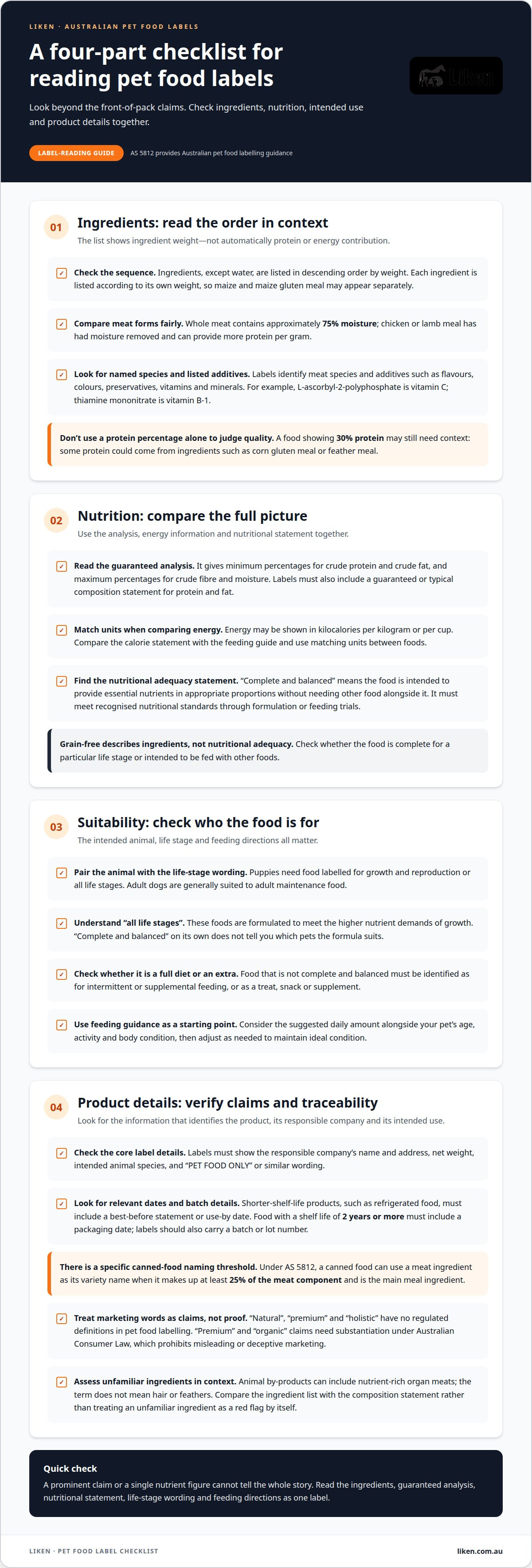
Australian pet food ingredient labelling follows AS 5812, which advises listing ingredients, except water, in descending order by weight. The first items therefore show which ingredients contribute the most weight, not necessarily the most protein or energy. Whole meat contains approximately 75% moisture, while chicken meal or lamb meal has had moisture removed. That concentrated meal can provide more protein per gram than whole meat.
Look for named animal species, such as chicken or lamb, rather than relying on a broad description. The label must identify meat species and list additives, including added flavours, colours, preservatives, vitamins and minerals. Names can look technical: L-ascorbyl-2-polyphosphate is vitamin C, while thiamine mononitrate is vitamin B-1. These details help owners understand which ingredients are present in a particular formula.
Ingredient order also needs context. A formula may list maize, then maize gluten meal separately; each ingredient appears according to its own weight. Carbohydrate ingredients can also contribute nutrients, so their presence alone doesn’t determine nutritional adequacy. A 30% protein figure doesn’t establish protein quality if much comes from ingredients such as corn gluten meal or feather meal. Read the ingredient list alongside the nutrition panel, not as a standalone ranking.
Compare the calorie statement with the feeding guide, and use matching units when comparing foods. Energy may be listed in kilocalories per kilogram or per cup. Consider the suggested daily amount in relation to your pet’s age, activity and body condition, then adjust feeding amounts as needed to maintain ideal condition. The guaranteed analysis gives another comparison point, with minimum crude protein and fat and maximum crude fibre and moisture.
What Needs to Be on a Pet Food Label?
Label details help you assess a food’s intended use, composition and claims. Focus on the information that relates directly to your animal’s needs.
Consumer Information and Product Claims
Consumer information identifies the company responsible for a product and how it should be used. Australian pet food labels must show the responsible company’s name and address, net weight, intended animal species and “PET FOOD ONLY” or similar wording. Products with a shorter shelf life, such as refrigerated food, must include a best-before statement or use-by date. For information about quality control or nutrition, use the company details to identify the manufacturer and its published consumer contact channel.
Product Names and Meat Content
A product name and description should truthfully reflect what the food contains. Under AS 5812, a canned food can use a meat ingredient as its variety name when that ingredient makes up at least 25% of the meat component and is the main meal ingredient. Treat therapeutic or health-related product names as claims to assess, not proof on their own. Terms such as “premium” and “organic” need substantiation under Australian Consumer Law.
By-products, Fillers and Label Red Flags
Animal by-products can include nutrient-rich organ meats; the term doesn’t mean hair or feathers. Read the ingredient list alongside the composition statement instead of treating an unfamiliar ingredient as a red flag by itself. Look out for a product name that doesn’t reflect its contents, unclear intended use or claims without supporting information. Food that isn’t complete and balanced must be identified as intended for intermittent or supplemental feeding, or as a treat, snack or supplement.
Age and Life-stage Suitability
The life-stage statement indicates whether a food is intended for growth, adult maintenance or another use. Puppies need food labelled for growth and reproduction or all life stages; adult dogs are generally suited to adult maintenance food. Foods labelled for all life stages are formulated to meet the higher nutrient demands of growth. Check the intended animal and life-stage wording together: “complete and balanced” alone doesn’t tell you which pets the formula suits.
Australian pet food labelling standards and consumer law
AS 5812 sets Australian guidance for pet food labelling and uses AAFCO nutritional recommendations as a reference for nutritional adequacy. A “complete and balanced” claim means the food must provide essential nutrients in appropriate proportions without needing other food alongside it. The product must meet recognised nutritional standards through formulation or feeding trials. Grain-free describes ingredients, not nutritional adequacy, so it doesn’t automatically mean complete and balanced. Understanding pet food labels in Australia means reading that claim alongside the food’s intended use.
Read the guaranteed analysis alongside the nutritional statement. Australian pet food labels must state minimum percentages for crude protein and crude fat, and maximum percentages for crude fibre and moisture. They must also include a guaranteed or typical composition statement for protein and fat. The nutritional statement tells you whether the food is complete for a particular life stage or should be fed with other foods. Understanding pet food labels in Australia means considering these details together, rather than relying on one nutrient figure.
Traceability matters too. Under AS 5812, food with a shelf life of 2 years or more must include a packaging date; labels should also carry a batch or lot number. Sulphur dioxide or sulphite preservatives must be identified by a common, prescribed or proprietary name, or a Food Standards Code number. These identifiers help connect a product to its composition and production details.
The Australian Consumer Law prohibits misleading or deceptive marketing, and the ACCC has an enforcement role. “Natural”, “premium” and “holistic” have no regulated definitions in pet food labelling, so those words alone don’t establish quality. States and territories enforce Food Standards Code labelling standards set by FSANZ. Compare claims with the product’s analysis, life-stage statement and feeding directions instead of relying on promotional wording.
Liken
When you’re ready to compare label details with food options, browse Liken’s range of ADVANCE, COBBER, ENDURO and HILLS. Use each product’s label to assess its intended animal, life stage, ingredients and feeding directions. That keeps your decision grounded in information relevant to your pet, rather than a front-of-pack claim alone.
For food described as complete and balanced, look for the nutritional statement and the life stage it covers. If it’s intended for supplementary feeding, consider how it fits into your pet’s overall diet. The ingredient list and guaranteed analysis can help you compare the options.
Contact Liken to discuss the pet food options available.
Make your next food choice with confidence
Make label-reading part of your next food choice. Consider your pet’s current needs, then use the package details to guide your decision instead of letting a bold claim decide for you. A clearer understanding of pet food labels in Australia can help you make more informed choices as your pet’s needs change.
Liken offers ADVANCE, COBBER and ENDURO among its pet food options. If you’re weighing up what to choose, bring your questions about labels and suitable options to the conversation. Contact Liken about pet food labels, and take your next step with a little more clarity.
Frequently Asked Questions
Is grain-free pet food automatically complete and balanced?
No. “Grain-free” describes the ingredients, not whether the food provides complete nutrition. Check the nutritional adequacy statement to see whether it’s intended as a complete food for your pet’s life stage or for supplementary feeding. A grain-free product may still be a treat or supplement, so the front-of-pack claim alone can’t tell you how it fits into daily meals.
What about by-products and difficult-to-pronounce ingredients?
By-products can include nutrient-rich organ meats; the term doesn’t mean hair or feathers. A technical ingredient name isn’t automatically a warning sign, either: it may identify a specific nutrient or additive. Consider the full ingredient list and intended use instead of judging a food by one unfamiliar word. If a particular ingredient matters to your pet, discuss the food with a veterinary professional using the ingredient’s exact name.
What information is legally required on pet food labels in Australia?
Look for information that identifies the product, the responsible company and its intended use. Australian pet food labels include the company’s name and address, net weight, intended animal species and “PET FOOD ONLY” or similar wording. They also state whether the food is complete for a life stage or intended to be fed with other foods. Dates and batch details help identify and trace the product.
What do the ingredients on Australian pet food labels mean, and are they listed by weight?
Ingredients describe what went into the food, including animal sources, plant ingredients and additives. Under AS 5812, they’re listed in descending order by weight, except water. This order doesn’t show each ingredient’s nutritional contribution or establish food quality. For example, a meat ingredient can contribute substantial moisture, while a meal ingredient is more concentrated. Read the list with the nutrition information for better context.
How do I interpret the guaranteed analysis or typical analysis on pet food labels?
A guaranteed analysis sets minimum crude protein and fat levels, and maximum crude fibre and moisture levels. A typical analysis gives average composition, rather than those guaranteed limits. Neither figure alone describes the whole diet or confirms how suitable it is for a particular pet. Moisture affects comparisons: canned food listing 8% protein may have a much higher protein concentration on a dry matter basis.


