

Probiotics can support a dog’s gut health, but they won’t fix every cause of digestive upset. Choosing probiotics for dogs with digestive issues may help support a healthy balance of gut microbes and ease problems such as diarrhoea or constipation. They work best alongside a suitable diet and don’t replace veterinary care when a dog is unwell.
Changes in your dog’s poo can be worrying, especially when the cause isn’t clear. Stress, a sudden diet change or disruption to gut bacteria after antibiotics may all play a part.
This guide explains how probiotics work, what can upset a dog’s digestion and when extra support may be useful. It also explains why supplements aren’t a substitute for addressing an underlying health problem, and when to seek veterinary advice.
Key Takeaways
- Learn how probiotics and prebiotics play different roles in supporting a dog’s gut, and where postbiotics fit into the wider conversation about supplements.
- Spot common triggers for digestive upset, including stress, sudden diet changes and changes to gut bacteria after antibiotic use.
- Understand why supplements work best alongside a balanced diet and why they can’t replace veterinary care for an underlying health problem.
- Know when loose stools call for veterinary advice: seek help if they last more than 24 to 48 hours or occur with blood, vomiting or lethargy.
Are Probiotics Enough or Do Dogs Need Additional Supplements?
Probiotics may support gut health, but they don’t replace a balanced diet or veterinary care. If digestive upset continues, an underlying health problem may need attention.
Prebiotics, Probiotics and Postbiotics
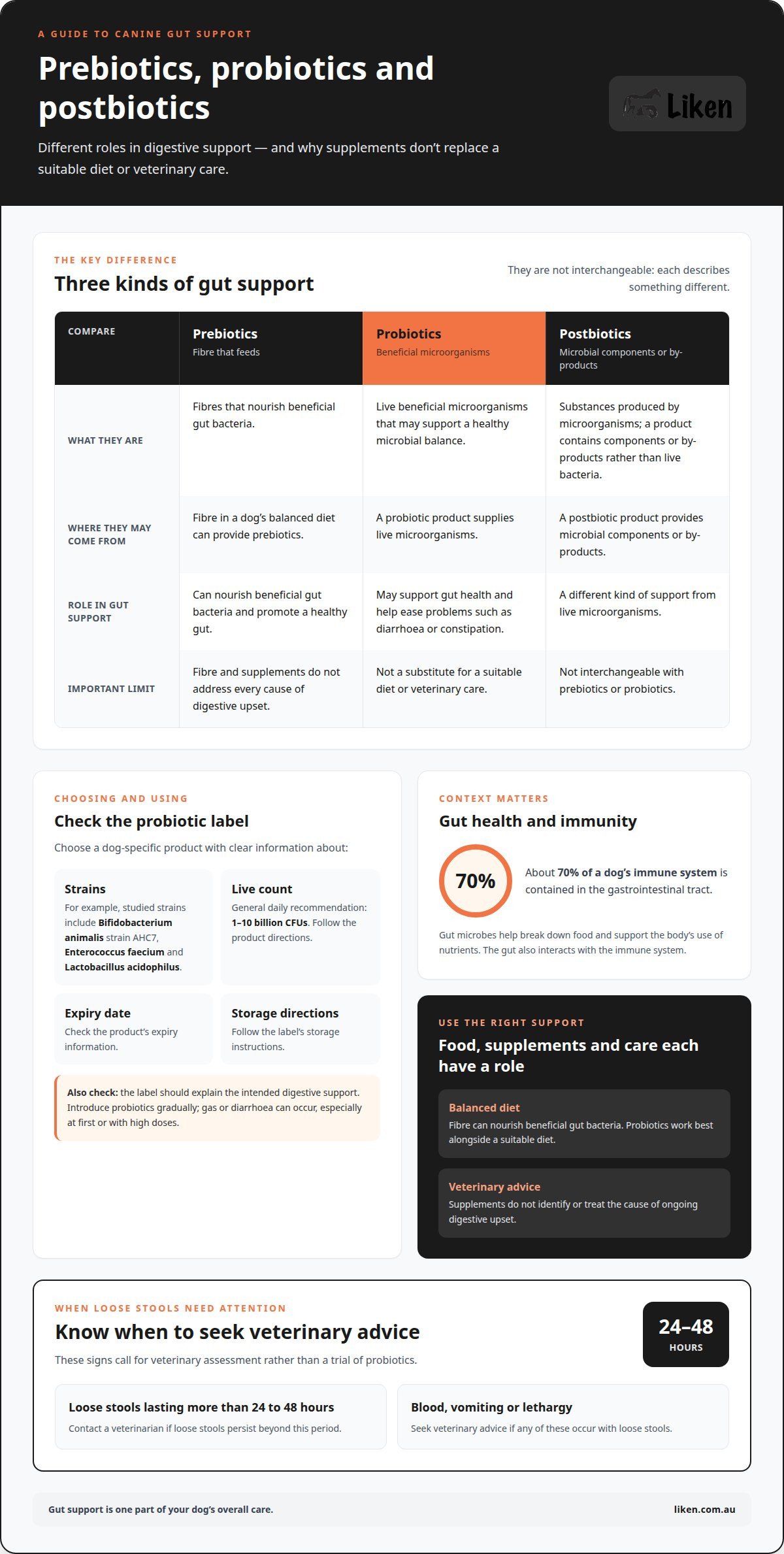
Probiotics are beneficial microorganisms, prebiotics are fibres that feed them, and postbiotics are substances produced by microorganisms. They offer different kinds of support and aren’t interchangeable.
For example, a dog’s food can provide fibre and prebiotics, while a probiotic supplies live microorganisms. A postbiotic product contains microbial components or by-products rather than live bacteria. Fibre in a balanced diet can nourish beneficial gut bacteria, but supplements alone won’t address every cause of digestive upset. Probiotics don’t replace veterinary care or a suitable diet.
Choosing and Using Dog Probiotics
Choose a dog-specific probiotic with clear product information, including the strains, live microorganism count, expiry date and storage directions. Check that the label explains its intended digestive support. Human probiotics aren’t generally harmful to dogs, but strains used in human products may not offer the same benefits as those formulated for dogs.
Studied strains include Bifidobacterium animalis strain AHC7, Enterococcus faecium and Lactobacillus acidophilus. The general daily recommendation is 1-10 billion colony-forming units (CFUs); follow the product directions rather than calculating a dose from age or weight. Introduce probiotics gradually, since gas or diarrhoea can occur, especially at first or with high doses. For a stressful event, they can be started several days ahead. Ask your veterinarian about use during medication, and use veterinary supervision for severely immunocompromised dogs.
What probiotics are and how gut microbes support health
A dog’s gut microbiome is a community of microorganisms, including bacteria, throughout the digestive system. These microbes help break down food and support the body’s use of nutrients. Probiotics are beneficial microorganisms that may support a healthy microbial balance. This matters because the gut does more than process food: it also interacts with a dog’s immune system.
About 70% of a dog’s immune system is contained in the gastrointestinal tract. A healthy gut can help support normal immune function, while changes in the gut microbiome may accompany digestive upset. Probiotics may support digestion and help reduce problems such as diarrhoea or constipation. Prebiotics also matter: fibre in a dog’s diet can nourish beneficial gut bacteria and promote a healthy gut.
Use your dog’s usual habits as a guide to digestive health. Regular, formed stools, a steady appetite and comfortable eating are useful everyday clues. Loose stools, constipation, gas or a change in appetite can signal that the digestive system needs attention. Note whether symptoms began after a food change or stressful event. A powder supplement may support gut health, but it won’t identify or treat the cause.
Studies have examined probiotics for digestive support, but persistent symptoms shouldn’t be managed with supplements alone. Contact a veterinarian if loose stools last more than 24 to 48 hours, or if they occur with blood, vomiting or lethargy. Those signs call for veterinary assessment rather than a trial of probiotics.
Common causes of digestive upset in dogs
A sudden diet change can unsettle a dog’s gastrointestinal system. Switching foods quickly, changing portion routines or introducing unfamiliar ingredients may affect digestion and gut bacteria. Note what changed before loose stools or vomiting began. The timing can help you describe the issue to your veterinarian and recognise whether it’s ongoing.
Stress is another possible trigger. Boarding, a change in routine or travel can affect a dog’s digestion. Some dogs develop diarrhoea during stressful periods, even when their usual food stays the same. Keeping meals and routines consistent around a change may help limit disruption.
Long-term antibiotic use can also affect gut bacteria. Antibiotics may disturb the balance of microorganisms in the digestive system, and diarrhoea can follow. Probiotics are beneficial microorganisms that may help support balance in this situation, but the right strain depends on the dog’s needs. A probiotic doesn’t guarantee that symptoms will stop or treat the reason they started.
Look for patterns rather than treating every episode alike. Record whether symptoms followed a food change, a stressful event or antibiotic use, and how long they last. Probiotics may benefit some dogs with stress-related diarrhoea or bacterial imbalance, but persistent or severe symptoms need veterinary attention.
For a diet change, explore dog food options that can support a consistent feeding routine.
Liken
Liken helps Australian pet owners find dog food options to support a consistent feeding routine, which can be useful when diet changes may upset digestion. Its range includes ADVANCE, COBBER, ENDURO and HILLS. Choose food that suits your dog’s needs, and make feeding changes gradually rather than switching abruptly.
If you’re considering probiotics for dogs with digestive issues, remember that food and supplements play different roles. Liken supplies animal feed and supplements, while ongoing symptoms or signs of illness call for veterinary care. Supplements shouldn’t replace advice about the cause of digestive problems.
Contact Liken for help exploring its range of dog food and supplements.
Make gut health part of your dog’s ongoing care
Use your dog’s everyday routine to guide future decisions. A thoughtful plan for probiotics for dogs with digestive issues should reflect the concern, your dog’s diet and any other care they receive. This can help you avoid adding supplements without a clear purpose. If symptoms return, share the pattern with your veterinarian so they can consider the full picture, including food, routine and health history.
For feeding support, Liken offers options including ADVANCE, COBBER and ENDURO. Choose the next step that suits your dog, and keep their wellbeing at the centre of the decision. Discuss your dog’s gut health with Liken and explore practical options for their care.
Small, considered choices can help you feel more prepared to support your dog.
Frequently Asked Questions
What Makes Probiotics for Dogs in Australia Unique?
No single probiotic feature makes a product suitable for every Australian dog. Consider the microorganism strains, the digestive concern it’s intended to address and the storage instructions. For example, a dog with stress-related loose stools may need different support from one recovering after antibiotics. Choose a canine-specific product with clear label information, and discuss health concerns with your veterinarian.
Can dogs eat yoghurt and other foods with probiotics?
Some dogs can have a small amount of plain, unsweetened yoghurt, but new foods may upset digestion. Check the ingredient label carefully: xylitol is toxic to dogs, and some human foods contain this sweetener. Kefir and fermented vegetables may contain live cultures, but they aren’t suitable for every dog. Ask your veterinarian before adding yoghurt or other probiotic foods, especially if your dog is unwell.
Why Use Dog Probiotics and Prebiotics?
Probiotics and prebiotics offer different kinds of gut support: probiotics provide beneficial microorganisms, while prebiotics provide fibre that nourishes them. A dog eating a complete diet with suitable fibre may already get prebiotic support from food. Supplements may be considered for a specific digestive concern, but adding both types without a clear reason can complicate changes to your dog’s routine. Keep your veterinarian informed about supplements.
Can Probiotics Help Dogs with Diarrhoea?
Probiotics may help with some diarrhoea linked to stress, a sudden food change or bacterial disruption after antibiotics. They don’t treat every cause, so note whether symptoms follow a particular event and whether other signs appear. Contact a veterinarian if loose stools last more than 24 to 48 hours, or come with blood, vomiting or lethargy. Keep fresh water available during digestive upset.
Can puppies take probiotics?
Puppies may need different support from adult dogs because age and health affect what’s appropriate. Don’t assume an adult product or dose suits a young dog. If a puppy has loose stools, reduced appetite or vomiting, speak with a veterinarian before starting supplements; puppies can become unwell quickly. Share the puppy’s age, current food and symptoms so the veterinarian can advise you.


