

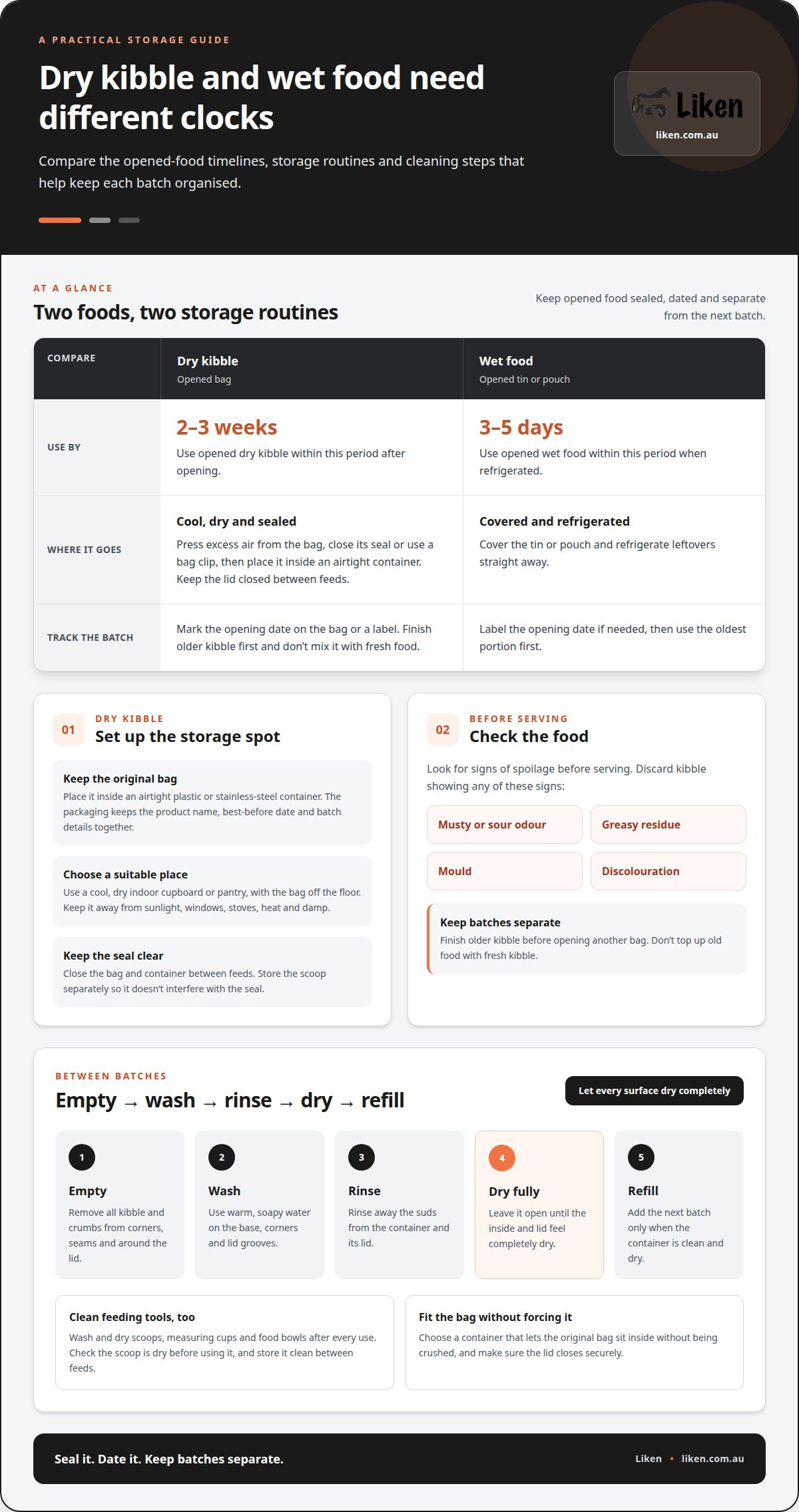
A sealed container can help protect kibble, but storage conditions matter too. Keep bulk dry dog food in its original bag, sealed inside an airtight container, in a cool, dry cupboard or pantry off the floor. That’s the key to how to store bulk dog food safely. Use opened kibble within 2-3 weeks after opening, and keep it away from sunlight, heat and damp.
Buying dog food in bulk can simplify feeding routines, so protect each scoop from staleness and moisture. Learn where to keep kibble, how to spot signs of spoilage and why older food shouldn’t be mixed with a fresh batch. We’ll also cover how to empty, wash and fully dry your storage container between batches, keeping it clean and ready for the next bag.
Key Takeaways
- Keep kibble in its original bag inside a sealed container, in a cool, dry spot away from sunlight.
- Plan to use opened kibble within 2-3 weeks, and finish older food before opening a fresh bag.
- Empty the storage container between batches instead of topping it up with new food.
- Wash containers with warm, soapy water and let them dry completely before refilling.
1. How do I store dry dog food to keep it fresh?
Choose a cool, dry cupboard or pantry indoors, and keep the bag off the floor. Avoid windows, direct sunlight, stoves and laundries, where heat or humidity can fluctuate. A sealed container helps keep out air and pests, while a stable indoor spot reduces exposure to damp conditions that can encourage mould.
Keep kibble in its original bag, then place the bag inside an airtight plastic or stainless-steel container. The packaging protects the food and keeps its product name, best-before date and batch details together. These details are useful if you need to identify the food later. If you transfer kibble, attach the product information and date to the container, updating them with each new bag.
To close the bag, press out excess air and use its built-in seal or a bag clip before placing it in the container. If the packaging won’t reseal, put the kibble in a clean container with a tight-fitting lid. Keep the lid closed between feeds, and don’t leave the scoop inside where it could interfere with the seal.
Help prevent pests, moisture and mould by sealing the bag, using a tightly lidded container and choosing a dry indoor spot away from sunlight. Store the container in a secure cupboard or pantry that children and pets can’t open, rather than beside their bowls.
For Australian households, follow the storage directions on the food packaging and use these practical safe-storage steps. Check the kibble for musty or sour odours, greasy residue, mould or discolouration before serving; discard food showing these signs.
2. Using opened kibble within a recommended period
Plan to use opened dry kibble within 2-3 weeks after opening. Mark the opening date on the bag or a label, then use it to guide your feeding routine. A large bag may last longer than this window if your dog eats small portions, so choose a pack size that suits your household’s pace. If you have older kibble left, finish it before opening another bag. Don’t mix old food with fresh kibble, as this makes it harder to track how long each batch has been open.
After each serving, press excess air from the bag and close its built-in seal. If the seal won’t hold, fold over the top and secure it with a bag clip. Put the closed bag back in its storage container, and keep the lid on between feeds. These steps limit air exposure while keeping the opening date and food details with the kibble.
Opened wet dog food needs a different routine. Cover the tin or pouch and refrigerate leftovers straight away. Use refrigerated opened wet food within 3 to 5 days, and write the opening date on a label if you might lose track. This makes it easier to use the oldest portion first and avoid leaving an opened pack forgotten at the back of the fridge.
Serve only the portion your dog will eat, then promptly refrigerate any remaining wet food. Keep dry kibble sealed between meals instead of leaving the bag open beside the bowl. If you open a new dry-food bag before finishing the previous one, keep the batches separate and use the older food first. A date label makes rotation easier to track.
3. Cleaning and drying food containers
Cleaning is part of how to store bulk dog food safely: don’t let a fresh batch sit on residue from an older one. Empty the container completely, including crumbs caught in corners, seams and around the lid. Don’t top up leftover kibble with food from a new bag. Keeping batches separate also makes it easier to spot stale pieces or residue.
Wash the container with warm, soapy water, paying attention to the base, corners and lid grooves. Rinse away the suds, then dry every surface completely before refilling. A damp base or lid can transfer moisture to dry kibble. Leave the container open until the inside and lid feel fully dry, rather than drying only the visible surfaces.
For a large bag, choose an airtight container that fits the original bag without forcing or crushing it. The right fit is one practical part of how to store bulk dog food safely. Keep the bag inside the container and make sure the lid closes securely. If the bag won’t fit, use a clean, dry container with enough room for the kibble.
Clean feeding tools, too. Wash and dry scoops, measuring cups and food bowls after every use so leftover crumbs don’t build up between meals. Check that the utensil is dry before scooping. Store it somewhere clean between feeds instead of leaving a damp scoop inside the container. The routine is simple: empty, wash, rinse, dry completely, then refill.
Liken: ADVANCE
When it’s time to restock your dog’s food, Liken offers a convenient next step. Browse ADVANCE alongside COBBER, ENDURO and HILLS, and choose an option that fits your dog’s usual feeding routine.
For households buying larger quantities, Liken offers delivery options from single bags to full truckloads. Weekly or monthly standing orders can also make repeat feed purchases easier to manage. Bulk buying works best when you have a cool, dry storage spot and can use each opened bag within the period recommended on its packaging.
Explore Liken’s dog food range and delivery options, then visit Liken online.
Make your next food order fit your routine
A good plan for how to store bulk dog food safely starts before your next order. Consider how quickly your dog goes through a bag and how much room you can set aside for storage. Matching your order size to your household’s routine can help keep food organised and ensure you use each bag in turn.
Consider what works best at home, too. A regular feeding routine, suitable storage and a clear place for new supplies can make restocking straightforward. If you’re weighing up your options, browse Liken’s dog food range to find what suits your needs.
Contact Liken for help with your next order. A little planning can make feeding time feel simpler.
Frequently Asked Questions
Where is the best place to store dry dog food?
Choose a cool, dry indoor cupboard or pantry away from sunlit windows and heat sources. For example, avoid a shelf beside an oven or a spot near a frequently opened external door. Keep food somewhere children and pets can’t reach, and avoid garages or laundries where temperature and humidity can change.
Can dry dog food go bad in heat?
Yes. Heat can speed up changes that affect kibble’s freshness, especially when the bag is also exposed to air or humidity. Store dry pet food below 80°F, and avoid hot spots such as beside a stove or in direct sun. If the food smells stale, sour or paint-like, don’t serve it.
How do I store dry dog food to keep it fresh?
Keep kibble sealed between meals and limit how often you open the main bag. For easier daily access, put about a week’s portion in a smaller sealed container, leaving the rest protected in its bag. Use the older portion first and keep batches separate so you can track their age.
Why do I need to put the dry food bag inside a container?
A sealed outer container adds a barrier against pests and helps limit air exposure around the bag. It can also contain the food if the bag tips or gets knocked. Choose a container with a lid that closes securely, and keep it in a dry spot rather than beside a sink.
Why does the original bag matter for dry food storage?
The original bag keeps key identification details with the food, including its product name, manufacturer, UPC code, lot number and best-before date. These details can help identify the exact batch if you need to follow up about a product problem. If you transfer kibble, keep the bag or copy its details onto the container label.


