

A calming supplement may be one part of a wider plan, not a complete solution. Natural calming supplements for anxious dogs may help with mild to moderate anxiety. Common ingredients include chamomile, L-theanine and valerian root, but effects vary between dogs. Consider what triggers your dog’s stress and how it presents.
If your dog paces, pants or barks excessively, it’s understandable to look for gentle ways to help them feel more settled. This guide covers what calming products may do, common supplement ingredients and available formats, from chews and tablets to powders and liquids. It also explains how veterinary advice can help match support to your dog’s needs and identify other possible health concerns.
Key Takeaways
- Match the type of calming support to the situation: supplements are one option, alongside pheromones, wraps and changes to your dog’s environment.
- Learn how ingredients such as L-tryptophan and melatonin are used in calming formulas, and why ingredient lists matter.
- Compare formats such as chews, tablets, powders and liquids to find an option that suits your dog’s routine.
- Know when persistent anxiety calls for veterinary guidance, particularly before combining products or considering prescription medication.
Are natural calming products effective for dogs?
Natural calming products may help some dogs with mild to moderate anxiety, though effects vary. Compare the trigger, such as separation anxiety, with the product’s purpose and format.
Comparing Pheromones, Wraps and Medication
Supplements are taken by mouth, while pheromone collars, diffusers and sprays alter the dog’s surroundings. Wraps apply gentle pressure, which may help some dogs feel more secure. The best approach depends on the situation: note whether anxiety occurs during storms, travel or time alone. Some supplements may take a few weeks to build up, and duration of use depends on the dog’s needs, the ingredients and the care plan. If anxiety persists, discuss prescription options with your veterinarian.
Prescription medication and supplements are not interchangeable. Both may affect brain processes associated with relaxation, but a veterinarian can assess your dog and decide whether medication belongs in a broader care plan. Zylkene, which is derived from a milk protein, is a supplement, not a prescription medicine.
Pheromones and Essential Oils
Dog-appeasing pheromones are chemical signals intended to create a reassuring environment for dogs. They are used in collars, diffusers and sprays, allowing exposure at home or while out. Adaptil is a pheromone product for dogs; Feliway is for cats, not dogs.
Essential oils are scents, not dog-appeasing chemical signals. Some calming products use oils to create a soothing environment. Choose a format to suit where the stress occurs, such as a diffuser at home or a collar during outings. An oil-based product does not work in the same way as a pheromone product.
Australian Veterinary and Government Guidance
For advice about supplements in Australia, start with your veterinarian. They can assess your dog’s anxiety, consider possible health issues and help match an option to your dog’s triggers, age and health. Veterinary guidance is also important before combining calming products or adding supplements to an existing care plan.
Government guidance cannot replace an individual veterinary assessment. If pacing, trembling or destructive chewing continues despite trying natural options, discuss the symptoms and prescription choices with your veterinarian. This can help distinguish situational stress from a condition that needs further care.
Supplement ingredients and how they may help
The ingredients in natural calming supplements for anxious dogs vary by formula and intended use. Read the label and consider your dog’s signs of stress and daily routine.
Ingredients in Calming Formulas
L-tryptophan is a building block for serotonin, which helps regulate mood and emotion. L-theanine, chamomile and valerian root also appear in calming supplements. Melatonin relates to the canine sleep-wake cycle, while omega-3 fatty acids from oily fish may support a dog’s response to stress. These ingredients have different roles, so consider the behaviour you’re addressing, such as restlessness during travel or distress when left alone.
Prescription calming diets are different from supplements. A veterinarian can assess whether a therapeutic diet suits your dog’s health and behaviour needs. Natural calming supplements for anxious dogs are not a substitute for assessment when anxiety affects everyday life.
Ingredient Amounts and Formulation
Check the label for each active ingredient and the amount per chew, tablet or scoop of powder. Follow the feeding directions, including any serving changes based on your dog’s weight. A blend may contain several ingredients, so assess the full formula rather than focusing on a prominent name on the packaging.
Choose and use a product according to its directions for your dog’s weight. Before use, ask your veterinarian to consider your dog’s health, current medicines and the product’s ingredients. For products sold in Australia, read the stated ingredients, amounts and directions, and discuss any claims or uncertainties with your veterinarian. Natural calming supplements for anxious dogs should be chosen with each dog’s needs in mind.
Seek veterinary advice if anxiety persists, worsens or involves aggression, or if stress-related behaviour affects your dog’s wellbeing. For complex or severe anxiety, a veterinary behaviourist can provide support alongside your veterinarian’s assessment.
Calming supplements and product formats
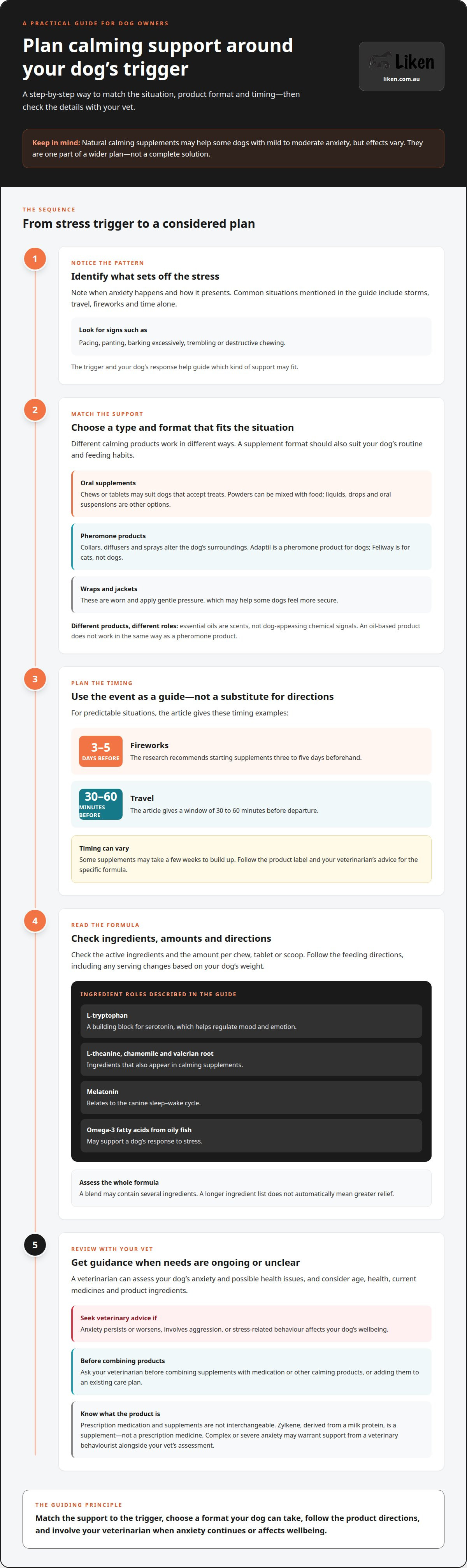
Calming treatments come in several formats. Match the option to your dog’s routine and the situation causing stress. Chews or tablets may suit dogs that accept treats, while powders can be mixed with food. Liquids, drops and oral suspensions are other ways to give a supplement.
For separation anxiety at home, a supplement mixed into a regular meal may fit an established routine. Before travel, consider how easily your dog will take the chosen format and when it needs to be given. For predictable events such as fireworks, the research recommends starting supplements three to five days beforehand. For dog travel, it gives a window of 30 to 60 minutes before departure. Follow the product label and your veterinarian’s advice for the specific formula.
Other calming products are not supplements. Collars, sprays and diffusers use pheromones or scents, while jackets and wraps are worn. Each works differently, so one format will not suit every trigger. For example, if your dog is afraid of noise, consider the event, your dog’s response and whether support is needed at home or while out.
Check the product’s ingredients and directions, and whether its format suits your dog’s age, size and feeding habits. Some products contain ingredients such as tryptophan, herbs or vitamins, but a longer ingredient list does not automatically mean greater relief. Do not combine supplements with medication or other calming products without veterinary guidance. Your veterinarian can help create a plan that pairs suitable products with routine and behaviour support.
Liken
Liken supplies animal feed and supplements, including options for dogs’ everyday needs. Calming products do not replace a veterinary assessment, especially if anxiety is ongoing or affects your dog’s wellbeing. Use the ingredient and format guidance above to discuss suitable support with your veterinarian, then consider how your dog’s broader diet fits into their routine.
Liken offers ADVANCE, COBBER, ENDURO and HILLS for everyday feeding. These products are not presented as treatments for anxiety. If you are considering nutrition products for your dog, explore the available options through Liken.
Make your dog’s next step a thoughtful one
Supporting an anxious dog takes observation and adjustment, not just choosing a product. Keep a simple record of situations that trigger stress and how your dog responds. These notes can help your veterinarian shape a plan around your dog’s needs. Natural calming supplements for anxious dogs may be one part of that plan, alongside routines and behavioural support.
For everyday feeding options, Liken offers ADVANCE, COBBER and ENDURO. These are animal nutrition products, not treatments for anxiety. If you’d like to explore Liken’s offerings or discuss your dog’s feeding needs, contact Liken about your dog. Small, considered steps can help you support your dog with care.
Frequently Asked Questions
How do dog anxiety medications work?
Dog anxiety medications can support neurotransmitter balance in the brain, helping promote relaxation and reduce reactions to stressors. When discussing prescription treatment, a veterinarian considers your dog’s symptoms, health and specific triggers. For instance, distress linked to separation may call for a different plan from fear during storms. Medication may be one part of care, but it does not replace addressing the trigger.
What are the signs my dog has anxiety?
Watch for repeated behaviour changes, especially around a particular trigger. Your dog might hide when visitors arrive, whine before you leave or have toileting accidents despite established habits. These signs can have other causes, so note when they occur and how long they last. Share your observations with your veterinarian, particularly if the behaviour is new or worsening.
What types of stress and anxiety treatments are available for dogs?
Options include supplements, pheromone products, pressure wraps, prescription medication and behaviour support. A practical plan may combine gradual training with a predictable routine and a quiet place to rest. For example, a dog unsettled by household noise may benefit from reduced exposure while learning calm behaviours. The right combination depends on the trigger and how strongly your dog reacts.
Are there any side effects associated with stress and anxiety treatments?
Some anti-anxiety medications can cause effects such as diarrhoea, restlessness, panting or shaking. More serious reported effects include seizures, persistent vomiting and aggression. Do not assume a natural product is automatically suitable to use with medication or another calming aid. Monitor your dog for changes after starting a treatment and contact your veterinarian promptly about concerning symptoms or unexpected reactions.
Are these treatments safe for all breeds of dogs?
No single calming treatment suits every dog or breed. Age, weight, health conditions, current medicines and the product’s directions all affect suitability. A small dog and a large dog may need different amounts, while an existing health issue can affect which ingredients are appropriate. Ask your veterinarian to assess your dog before starting a supplement or combining treatments.


