

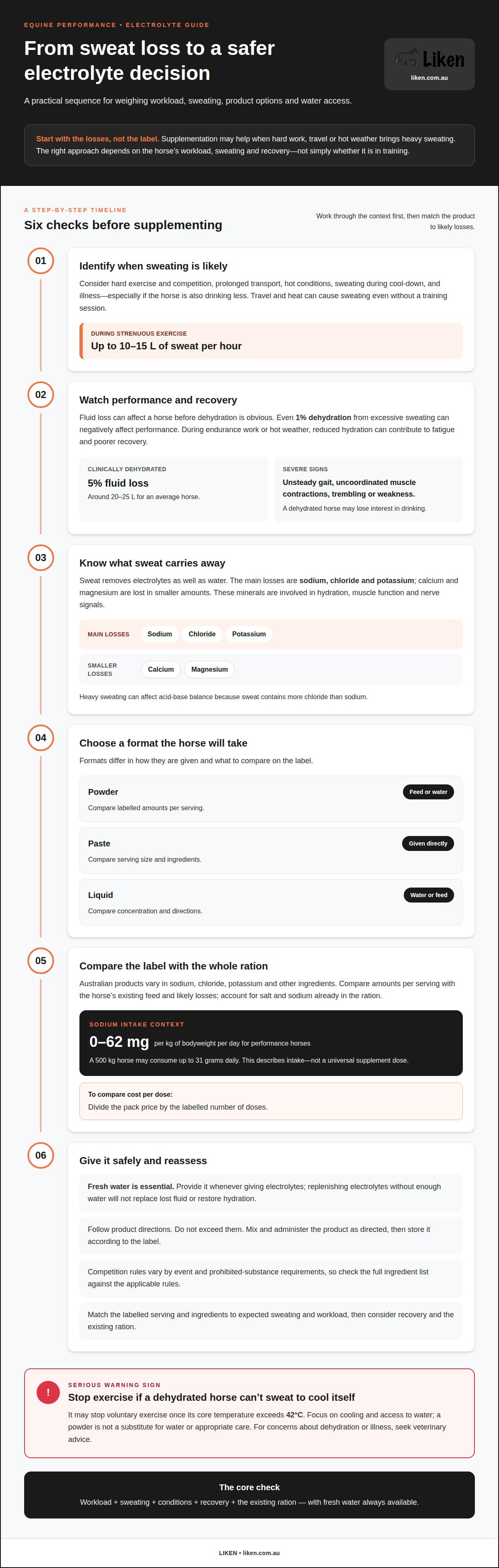
A horse can lose performance before dehydration is obvious. Equine electrolytes for performance horses may be useful when hard work, hot weather, travelling or competition brings heavy sweating and fluid loss. During exercise, a horse can lose up to 10-15 L of sweat per hour, and even 1% dehydration from excessive sweating can negatively affect performance.
It makes sense to focus on water, but sweat also carries away electrolytes, particularly sodium, chloride and potassium. Knowing when losses are likely, how dehydration can affect performance and how supplementation options compare can help you make an informed feeding decision. This guide covers the signs, common causes of electrolyte loss and factors to consider before supplementing.
Key Takeaways
- Match supplementation to the horse’s workload, sweating and conditions, especially during hard exercise, travel or hot weather.
- Watch for changes in performance and recovery, as fluid loss can affect a horse before dehydration is obvious.
- Pay attention to sodium, chloride and potassium, the main electrolytes lost in sweat.
- Use the comparison and decision guide to weigh the horse’s likely losses and choose a suitable approach to supplementation.
Does my Horse need an Electrolyte Supplement?
Supplementation may help when exercise, travel or hot Australian weather causes heavy sweating. Whether it is appropriate depends on sweat loss, workload and recovery, not simply on whether a horse is in training.
Sweating During Exercise
Hard exercise and competition can produce up to 10-15 L of sweat per hour. Sweat removes sodium, chloride and potassium, which support hydration, muscle function and nerve signals; calcium and magnesium are lost in smaller amounts. For horse owners, the key difference from routine feeding is the extra loss during strenuous work. Regular heavy sweating can also contribute to blood alkalosis because sweat contains more chloride than sodium.
Sweating During Transport and Hot Weather
Transport and heat can cause sweating even without a training session, so consider them separately from exercise. Prolonged travel, hot conditions and continued sweating during cool-down can increase fluid and electrolyte losses. Illness can also affect fluid balance, particularly if a horse is sweating or drinking less. Always provide fresh water when giving electrolytes.
Powders are mixed into feed or water, pastes are given directly, and liquids are added to feed or water. Australian products vary in their sodium, chloride, potassium and other ingredients, so compare the amounts per serving on the label. To compare cost per dose, divide the pack price by the labelled number of doses.
Competition rules vary by event and its prohibited-substance requirements, so check the full ingredient list against the applicable rules. Follow product directions and consider the horse’s workload, sweating, heat and humidity. Don’t exceed the directions or give electrolytes without access to fresh water. Mix and administer the product as directed, then store it according to the label.
| Option | Typical use | Key comparison |
|---|---|---|
| Powder | Feed or water | Label amounts per serving |
| Paste | Direct administration | Serving size and ingredients |
| Liquid | Water or feed | Concentration and directions |
Choose a format your horse will take, then match its labelled serving and ingredients to the expected sweating and workload.
Dehydration signs and performance effects
Even mild fluid loss can affect performance: 1% dehydration from excessive sweating can negatively affect a horse’s performance. During endurance work or hot weather, reduced hydration can contribute to fatigue and poorer recovery. A horse is considered clinically dehydrated after losing 5% of its total body fluid, around 20-25 L for an average horse.
Monitor movement and muscle control as well as drinking. Severe dehydration can cause an unsteady gait, uncoordinated muscle contractions, trembling and weakness. A horse losing both water and electrolytes may also lose interest in drinking, even while dehydrated. Access to clean, fresh water is essential during recovery.
Electrolyte imbalance and dehydration are related, but they are not the same. Water loss reduces fluid volume, while sweating also removes minerals involved in nerve function and muscle contraction, including sodium, chloride, potassium, calcium and magnesium. Replenishing electrolytes without enough water will not replace lost fluid or restore hydration.
When a dehydrated horse can’t sweat to cool itself, it may stop voluntary exercise once its core temperature exceeds 42°C. This is a serious sign, not a cue to keep working. Stop exercise and focus on cooling and access to water; a powder is not a substitute for water or appropriate care. For routine feeding decisions, explore supplement options alongside the horse’s workload and recovery needs.
Electrolyte losses in performance horses
Both daily intake and sweat losses affect electrolyte balance. Sodium, chloride and potassium have different roles and loss patterns. A practical guide to equine electrolytes for performance horses starts by distinguishing routine intake from replacement after sweating.
Sodium Requirements
Sodium intake varies with bodyweight and daily nutrition. Performance horses consume 0 to 62 mg per kg of bodyweight per day; a 500 kg horse may consume up to 31 grams daily. This describes intake, not a universal supplement dose. Before adding more, account for salt and sodium already present in the ration. Workload and sweating also affect how much sodium may need replacing.
Chloride Requirements
Chloride leaves the body in sweat alongside sodium, but the amounts lost are not identical. Heavy sweating can affect acid-base balance because sweat contains more chloride than sodium. Daily chloride intake comes from the whole ration, while additional losses depend on sweating and exercise. When comparing equine electrolytes for performance horses, check the chloride amount on the label as well as the sodium content.
Potassium Requirements
Potassium supports muscle function and is also lost through sweat. Its daily contribution comes from the horse’s overall nutrition, so assess the complete ration before adding a supplement. Workload and recovery help determine whether extra replacement is relevant. Compare the labelled potassium amount with the horse’s existing feed, and follow the product’s feeding directions rather than guessing a dose.
Compare electrolyte supplement options with your horse’s workload and existing ration.
Liken
Liken can help you review your horse’s feed and supplement routine alongside its workload, sweating and recovery. As an Australian online retailer of premium animal feed and supplements, Liken offers ADVANCE, COBBER, ENDURO and HILLS. These products are part of its range, but they do not replace matching electrolyte intake to losses or providing fresh water.
Use your horse’s usual ration and work pattern as context when considering an addition. Product labels help you compare ingredients and feeding directions, but a feed or supplement should not automatically be treated as a replacement for electrolytes lost through heavy sweating. For concerns about dehydration or illness, seek veterinary advice.
Contact Liken to discuss your horse’s feed and supplement needs.
Make your next feeding decision with confidence
Build a routine around the work your horse actually does rather than relying on a one-size-fits-all approach. A sound approach to equine electrolytes for performance horses starts with observing how your horse responds during training, travel and recovery. Use those observations when reviewing its overall feed and supplement plan.
Small, consistent decisions can make it easier to spot changes in sweating, drinking and recovery. If you’d like help considering your horse’s nutrition needs, contact Liken about equine nutrition. Take the next step when you’re ready, and keep your horse’s individual routine at the centre of the plan.
Frequently Asked Questions
Can electrolytes improve performance?
They can support performance when sweating causes meaningful electrolyte loss. A properly formulated oral performance electrolyte, given in solution at the recommended rate, can delay fatigue onset by over 22%. This isn’t a reason to supplement every horse automatically. Match use to the horse’s work and sweating, follow the product directions, and keep plain water available alongside any electrolyte solution.
Electrolytes and muscle function: What’s the connection?
Electrolytes help carry nerve signals that prompt muscles to contract. Sodium, potassium, calcium and magnesium all play roles in normal nerve function and muscle activity. For example, repeated contractions during fast work rely on coordinated signalling, not just muscular strength. Electrolytes support this process, but they do not replace conditioning, suitable recovery or a balanced overall diet.
What are electrolytes and why are they important?
Electrolytes are minerals that carry an electrical charge when dissolved in body fluids. In horses, they help regulate fluid balance and support nerve and muscle activity. They also help support the body’s acid-base balance. Sodium, chloride and potassium are key examples, while calcium and magnesium also contribute to normal body functions.
What electrolytes do performance horses lose in sweat, and in what proportions?
Horses lose the most chloride, sodium and potassium in sweat, with smaller amounts of calcium and magnesium. At a sweating rate of 15 L per hour, reported losses are 105 g chloride, 60 g sodium and 30 g potassium. The same hour can also mean losses of 4.5 g calcium and 1.5 g magnesium. Actual losses vary with sweating.
When should electrolytes be given before, during and after exercise?
For prolonged sweating, electrolytes in 3 L of water one hour before strenuous exercise, competition or lengthy travel may support hydration. After training or competing, provide electrolytes within 45 minutes. During exercise, use the product’s directions for timing and administration rather than guessing a dose. Keep fresh water available, and account for continued sweating during cool-down and recovery.


