

An estimated 41% of Australian dogs are overweight or obese. Weight management dog food in Australia is designed to help dogs lose excess weight through controlled energy intake while still providing essential nutrition. Choosing the right food is only part of the plan: portion sizes, treats and regular progress checks matter too.
If your dog’s weight has crept up, it can be hard to know which food features matter. This guide explains what to check on the label, how to introduce a weight-management diet and what to track as your dog’s weight changes. It also covers when veterinary advice can help you build a safe, practical plan.
Key Takeaways
- Compare energy content and key nutrients on the label to find a food suited to weight management.
- Make dietary changes gradually, measure portions and keep treats in the overall feeding plan.
- Track your dog’s weight regularly so you can spot progress or a stall early.
- Use veterinary advice to shape a safe plan and adjust it to your dog’s needs.
What are weight loss dog foods, really?
Weight-loss food is designed to help reduce energy intake while supplying the nutrients an adult dog needs. For dry kibble, compare calories per 100 g, protein and fat on the label. A general guide suggests adult food with at least 20-25% crude protein; commercial weight-loss food ideally has 30% or more protein and moderate fat of about 10-18%. These are starting points, not a substitute for checking the food’s feeding guide.
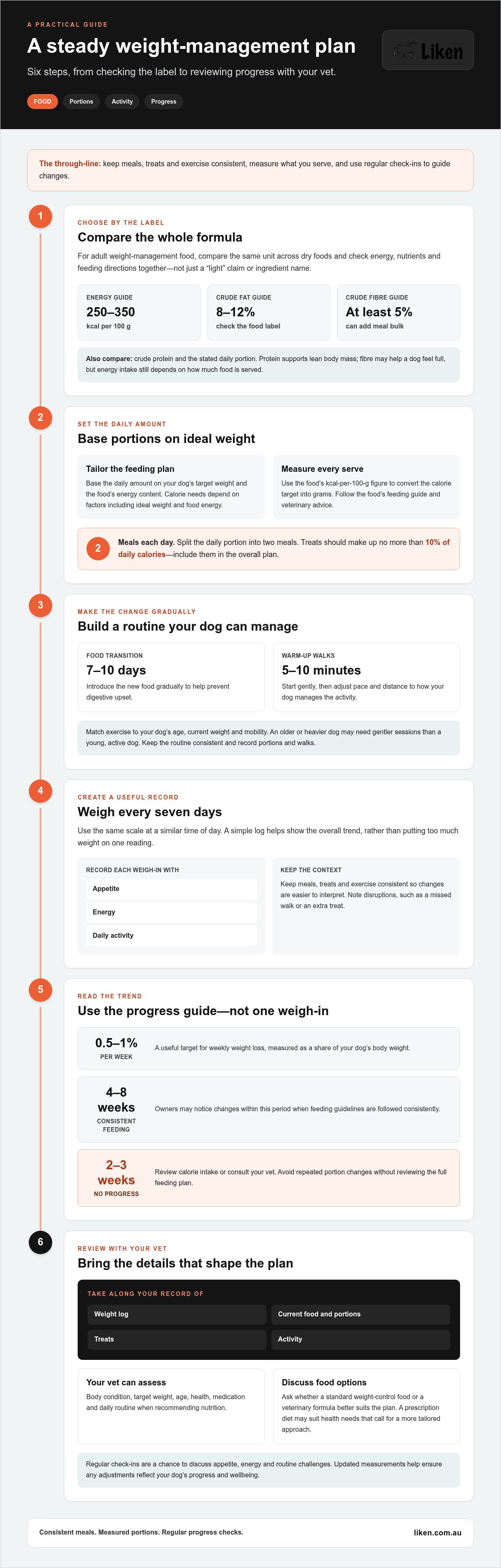
How much should you feed? Base the daily amount on your dog’s target, or ideal, weight and the food’s energy content. Your dog’s daily calorie needs depend on factors such as ideal weight and the food’s energy content, so use a tailored feeding plan. Use the kibble’s kcal-per-100-g figure to convert that calorie target into grams, then follow veterinary advice on the plan.
For weight management dog food in Australia, choose an adult formula labelled for weight control and measure each serving rather than topping up the bowl. Split the daily portion into two meals, and keep treats to no more than 10% of daily calories. Transition to a new food gradually over 7-10 days to help prevent digestive upset. Protein supports lean body mass, while the right portion helps your dog feel satisfied during weight loss.
Monitoring progress and consulting a veterinarian
Weigh your dog every seven days, using the same scale at a similar time of day. Record each result alongside appetite, energy and daily activity. A simple log reveals the overall trend, rather than focusing on one reading. Keep meals, treats and exercise consistent while monitoring, so changes are easier to interpret. Note anything that disrupts the routine, such as a missed walk or an extra treat.
A useful target is weekly weight loss of 0.5-1% of your dog’s body weight. Owners may notice changes within 4-8 weeks when feeding guidelines are followed consistently. If the scales show no progress for 2-3 weeks, review the calorie intake or consult a veterinarian. Don’t respond to a stall by making repeated portion changes without reviewing the full feeding plan.
At a veterinary appointment, bring your weight log and details of your dog’s current food, portions, treats and activity. The veterinarian can assess body condition and consider target weight, age, health, medication and daily routine when recommending nutrition. This information helps match a healthy weight-management formula to your dog, rather than relying on packaging claims alone.
Ask whether a standard weight-control food or a veterinary formula better suits the plan. A prescription diet may be appropriate if your dog’s health needs call for a more tailored approach. The veterinarian can explain how to use the selected food, what changes to monitor and when to review progress. Regular check-ins are also a good time to discuss appetite, energy or challenges with the routine. Bring updated measurements so any adjustments reflect your dog’s progress and wellbeing.
Features of weight-management dog food
Start with energy density: a guide range for weight-management food is 250-350 kcal per 100 g. Compare the same unit across dry foods, then check the feeding guide and measured portion. A smaller-looking serve can still provide substantial energy if the kibble is calorie-dense. The package’s calorie figure helps you compare foods more meaningfully than bag size or ingredient order alone.
Check crude fat and fibre next. The guide suggests 8-12% crude fat and at least 5% crude fibre for adult food. Fibre can add bulk to a meal, which may help a dog feel full, while calorie intake still depends on the amount served. Don’t judge a formula by one number; assess its energy, protein and feeding directions together.
Protein matters during weight loss because your dog’s diet still needs to provide useful nutrition. Look for a clear crude-protein figure and compare it with the food’s calorie content. Ingredients such as chicken identify a protein source, but the ingredient name alone doesn’t show the overall nutrient balance. Vitamins and minerals are also part of a complete diet, so check the nutritional information rather than choosing by flavour alone.
Use a simple label check: compare kcal per 100 g, crude protein, crude fat, crude fibre and the stated daily portion. For example, a food with 300 kcal per 100 g sits within the guide’s energy range, but it still needs to suit your dog’s feeding plan. The clear takeaway is to compare the whole formula, not a single claim such as “light” or “healthy weight”.
Liken: ADVANCE
Liken offers ADVANCE for pet owners comparing dog food options for a weight-management plan. The ADVANCE Adult Healthy Weight Dry Dog Food Chicken & Rice formula contains 27% crude protein and 11% crude fat per 100 g. These label figures can help you compare its nutrition with your dog’s needs and feeding plan.
Use the feeding directions to measure portions, keeping your veterinarian’s recommendations in mind when selecting food. ADVANCE is one option to consider if you’re looking for a named healthy-weight formula. The right choice depends on your dog’s target weight, overall health and routine.
Explore ADVANCE and other dog food options online at Liken.
Make your dog’s next step a steady one
A lasting change starts with a routine you can maintain: consistent meals, measured portions and regular activity. If establishing an active routine with your dog also inspires you to focus on your own healthy habits, Weightloss and Wellness provides helpful resources for personal fitness and recovery. Keep your dog’s preferences and everyday habits in mind as you choose weight management dog food in Australia. A practical routine makes it easier to stick with the plan over time.
If you’re exploring food options, Liken offers ADVANCE, COBBER and ENDURO. Browse the range and compare products against the feeding plan you’ve discussed with your veterinarian. For help exploring Liken’s dog food range, contact Liken about your dog. Small, consistent choices can help you keep moving towards a healthier routine together.
Frequently Asked Questions
How Can I Keep My Dog Satisfied On Fewer Calories?
Help your dog feel satisfied by making meals last longer, rather than adding extra food. Put a measured portion in a slow-feeder bowl, explore interactive feeding accessories and toys from TinPaw, or use pieces from their daily kibble allowance for sniffing games. Set aside some food for training before the day begins, so rewards come from the planned ration instead of becoming uncounted extras.
How much weight should a dog lose a day?
Use a weekly target rather than judging progress day by day: a general guide aims for 0.5-1% of body weight each week. There’s no single daily amount that suits every dog. Daily readings can fluctuate, so focus on the trend and discuss the target with your veterinarian if your dog has health concerns.
Should you be concerned about fat content in a dog food?
Fat content matters because it contributes energy, but the lowest-fat food isn’t automatically the best choice. Compare crude fat with the food’s calorie content and feeding directions, then review the full nutrition panel. Your dog’s plan also depends on total intake and health needs, so discuss a major diet change with your veterinarian rather than choosing by fat percentage alone.
Why did your dog really gain weight?
Weight gain can happen when a dog regularly consumes more energy than they use, and small extras are easy to overlook. Check how you measure kibble, count chews and table scraps, and consider whether walks or play have changed. If your dog’s weight rises despite a consistent routine, note the pattern and discuss possible health or medication factors with your veterinarian.
What are the best weight management dog foods available in Australia?
There isn’t one best food for every dog. Suitability depends on target weight, calorie needs, health and preferences. When comparing weight management dog food in Australia, review the feeding guide and energy content, then align your choice with veterinary advice. Liken offers ADVANCE, COBBER and ENDURO. Check each product’s details to see whether it fits your dog’s plan.


