

The supplement most likely to help lift milk yield may be the one you don’t add until you know what’s missing. When production falls below target or changes unexpectedly, it’s natural to look for supplements to increase milk yield in cows. But adding a product without reviewing the whole ration can increase feed costs and leave the underlying issue unresolved.
The right option depends on your herd, feeding system and any gaps in the diet. This guide explains how nutrition can influence milk production, compares common supplement types and sets out practical checks to make before changing your feeding programme. From energy and protein to minerals and additives, you’ll learn what each option may be suited to and why a clear assessment matters across Australian dairy systems.
Key Takeaways
- Check feed intake, forage quality, water access, cow health and lactation stage before making a nutrition change.
- Compare supplements to increase milk yield in cows by the specific ration gap they may address, not by claims alone.
- Choose a supplement category only after identifying a likely need, and introduce changes carefully.
- Track feed intake, herd production trends and cow condition to assess whether the change is helping.
Why supplements to increase milk yield in cows start with the whole ration
A yield-supporting supplement is a targeted addition to a balanced ration, not a stand-alone fix. It may help address a nutritional shortfall, but it won’t make up for poor feed access, low-quality forage or another factor limiting intake. First identify what the ration is missing and whether cows are able to eat and drink consistently.
Milk production can shift for several reasons. Feed intake, forage quality and water access affect what cows consume, while health and lactation stage influence their needs. The broad relationship between dairy cattle nutrition and milk production is outlined in Dairy cattle nutrition and milk production. A sudden or persistent production change calls for appropriate professional investigation, not guesswork or an automatic supplement change.
What to check before adding a milk-production supplement
Start with the current feeding picture. Compare what’s offered with what cows are eating, note any changes to forage or other ration ingredients, and check whether feed and water are consistently accessible. Look for changes in intake or feeding behaviour, then compare herd-level production trends with cow condition and lactation stage. One supplement won’t suit every herd: ration balance, forage, feeding system and the suspected shortfall all matter.
- Review the ration and note recent changes to feed or forage.
- Check whether feed access, water access or intake has shifted.
- Track production trends alongside observations of the cows.
These checks help narrow down the likely issue before you compare supplement options. If the cause isn’t clear, a sudden or continuing production change needs appropriate assessment rather than an assumption that more supplementation will help.
Compare supplements to increase milk yield in cows by the need they address
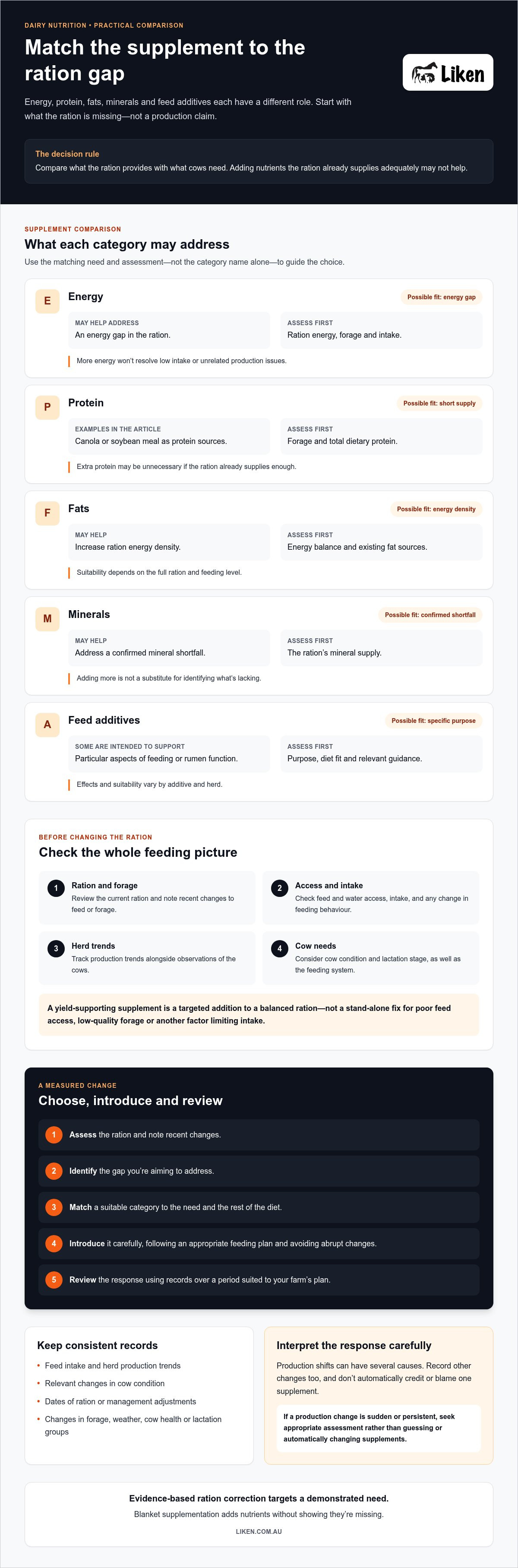
Match the category to a specific ration gap, not simply to a production target. Energy, protein, fats, minerals and feed additives have different roles, and adding nutrients the ration already supplies adequately may not help. Use these options as a starting point for assessing the diet, not as a promise of more milk.
How to match a supplement category to your herd’s feeding needs
Compare what the ration provides with what the cows need, then consider how a supplement will fit alongside the rest of the diet. Liken’s livestock supplement and nutrition guide offers broader context for comparing supplement types.
| Category | Possible use | Key limitation | Assessment needed |
|---|---|---|---|
| Energy | May help address an energy gap in the ration. | More energy won’t resolve low intake or unrelated production issues. | Review ration energy, forage and intake. |
| Protein | May help where protein supply is short; canola or soybean meal are examples of protein sources. | Extra protein may be unnecessary if the ration already supplies enough. | Assess forage and total dietary protein. |
| Fats | May increase ration energy density. | Suitability depends on the full ration and feeding level. | Review energy balance and existing fat sources. |
| Minerals | Can address a confirmed mineral shortfall. | Adding more is not a substitute for identifying what’s lacking. | Check the ration’s mineral supply. |
| Feed additives | Some are intended to support particular aspects of feeding or rumen function. | Effects and suitability vary by additive and herd. | Assess purpose, diet fit and relevant guidance. |
Evidence-based ration correction targets a demonstrated need; blanket supplementation adds nutrients without showing they’re missing. Liken provides technical guidance on feed additives and supplements. Explore Liken’s livestock feed and supplements for support with feed and supplement options.
Choose, introduce and review a cow milk-yield supplement with a clear plan
Once you’ve identified a likely ration gap, use a consistent process to make and review the change. Record what you changed and why, so you can assess the response alongside other changes in the herd. Supplements to increase milk yield in cows should be selected for a clear nutritional reason, not added on the assumption that more is better.
- Assess the ration: Review the current feed plan and note recent changes.
- Identify the need: Pinpoint the gap you’re aiming to address.
- Choose a suitable category: Match the option to the need and the rest of the diet.
- Introduce it carefully: Follow an appropriate feeding plan and avoid abrupt changes.
- Review the response: Compare records over a period suited to your farm’s plan.
How to review whether a supplement is helping
Keep consistent records before and after the change. Track feed intake, herd production trends and relevant changes in cow condition, alongside the dates of ration or management adjustments. Set a review period that fits your feeding plan. If forage, weather, cow health or lactation groups also change, record those factors too. Production shifts can have several causes, so don’t credit or blame one supplement automatically.
For a broader look at livestock supplements, Liken’s livestock productivity supplements guide can help put options in context. Liken offers technical guidance on additives, livestock feed supply from single bags to truckloads, and digital standing orders for regular supply. Explore Liken’s livestock feed and supplements as you plan ongoing feed management.
Make your next ration change a confident one
Set one clear goal for your next feeding adjustment, then use consistent records to assess it. A measured approach helps you learn from each change and make better decisions for your herd over time. The right supplements to increase milk yield in cows are the ones that suit the need you’ve identified, not simply the ones with the boldest claims.
As you plan ongoing feed management, Liken offers technical expertise on feed additives and supplements. Flexible delivery and digital standing orders can also help you manage regular livestock feed supply. Explore Liken’s livestock feed and supplements to plan your next feed management step.
Frequently Asked Questions
Can supplements alone increase milk yield in cows?
Not reliably. A supplement can only support production if it addresses a real nutritional limitation. If cows are eating less because of poor access to feed or water, adding nutrients may not resolve the cause. Before choosing supplements to increase milk yield in cows, consider whether changes in health, forage or management also need attention.
How quickly can a feed change affect milk production?
There’s no single timeline: the response depends on the change, the cows’ starting diet and other conditions on the farm. A change in feed intake may show up differently from a gradual ration adjustment. Keep dated records of feeding changes and production, then compare trends over a review period that suits the feeding plan rather than judging from one day.
Can dairy cows have too much mineral supplement?
Yes. Excess minerals, or an imbalance between minerals, can be harmful and may interfere with how other nutrients are used. Check the mineral contribution from the whole ration, including any fortified feeds, before adding another source. Use a suitable ration assessment to guide the amount and type rather than offering extra mineral mix as a general production boost.
Do all cows in a herd need the same milk-yield supplement?
No. Requirements can differ with factors such as lactation stage, production level and the feed group a cow is in. Cows at different stages, for example, may not have identical ration needs. Where practical, feeding groups can help match diets more closely. Individual health or intake concerns need separate attention rather than simply increasing the supplement for the whole herd.


