


Could a food labelled “low fat” still be the wrong choice for a dog with pancreatitis? It’s understandable to focus on the fat figure when you’re worried about triggering symptoms. But finding low fat dog food for pancreatitis australia isn’t simply a matter of picking the smallest number on the packet.
Your vet should guide food choices because the right diet depends on your dog’s individual health and needs. This guide explains what to look for on Australian food labels and what to discuss with your vet. It also covers how to keep to a feeding plan, monitor your dog and maintain a consistent supply.
Key Takeaways
- Choosing low fat dog food for pancreatitis australia starts with your vet’s dietary target, not just a “low fat” label.
- Compare the full product information with your vet. Moisture and food format affect how fat percentages can be interpreted.
- Follow the agreed portions and feeding schedule, and keep notes on appetite and food tolerance to share with your vet.
- Once your vet has guided the food choice, plan ahead for a consistent supply, including with a digital standing order.
Low fat dog food for pancreatitis in Australia: what owners need to know
“Low fat” isn’t a universal number that makes a food right for every dog. It describes a dietary choice, but your vet should set the target based on your dog’s health and treatment plan. Choosing low fat dog food for pancreatitis australia therefore starts with veterinary advice, not the front of a packet.
A low-fat label alone can’t establish that a food is suitable for a dog with pancreatitis. Food choices are one part of care, not a way to diagnose or treat the condition on their own. Follow your veterinary plan, and speak with your vet before changing your dog’s diet or adding extras.
Why pancreatitis calls for an individual feeding plan
The pancreas helps with digestion and produces hormones that regulate blood sugar. Pancreatitis is inflammation of this organ. For a general overview of the condition, including acute and chronic forms, see Pancreatitis in dogs. A vet needs to assess your dog to make a diagnosis and guide care.
Food choices can depend on your dog’s health history, current condition and response to care. The plan may need review as their needs change, so follow-up matters. There isn’t one fat limit or food choice that suits every dog with pancreatitis.
Ask your vet what dietary target to follow and how to apply it to the foods you’re considering. Keep to the agreed plan, and check back with your vet if your dog’s condition or tolerance changes. This gives you a clear basis for comparing options.
How to compare low fat dog food labels with your vet
Once your vet has set a dietary target, use it to compare options. For low fat dog food for pancreatitis australia, don’t rely on a front-of-pack claim or a single number in isolation. The MSD Veterinary Manual explains the role of diet within veterinary treatment for pancreatitis, but your vet can apply dietary advice to your dog’s needs.
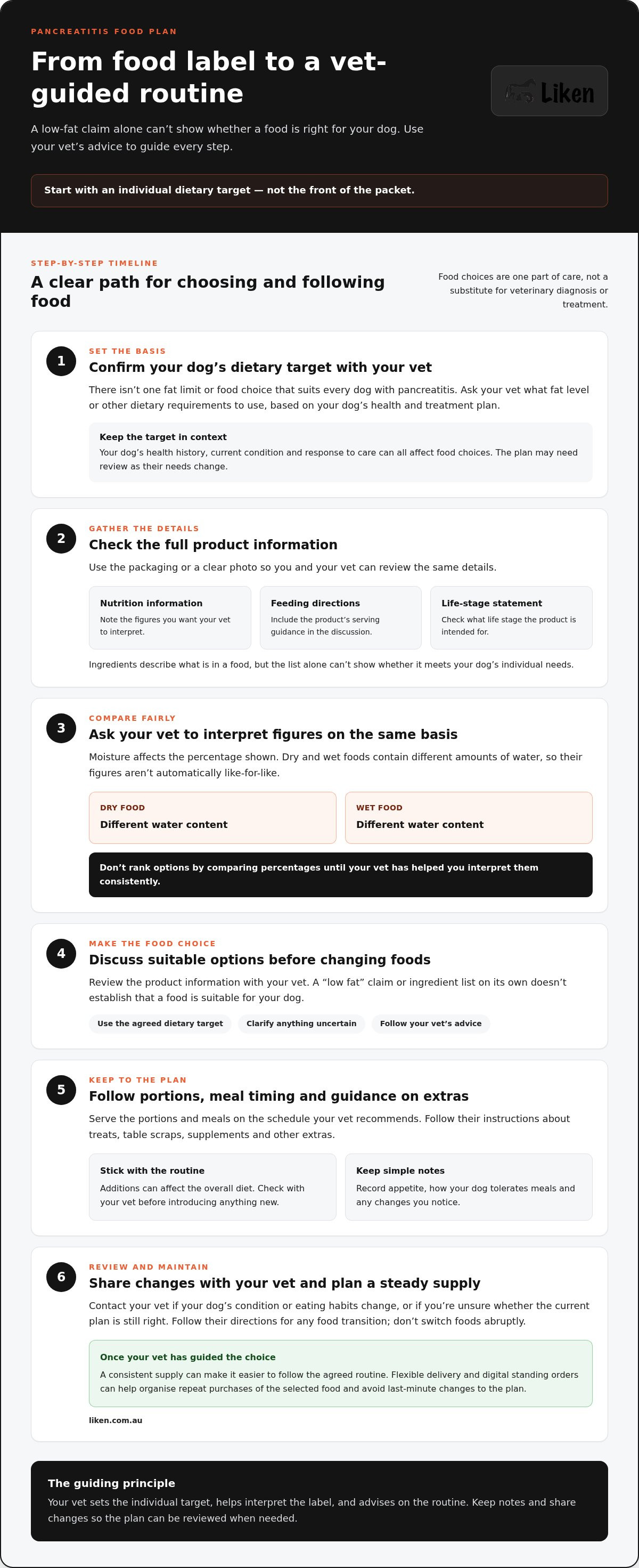
- Confirm the target. Ask your vet what fat level or other dietary requirements to use when reviewing foods.
- Compare the full product information. Check nutrition information, feeding directions and the product’s life-stage statement. Note anything you’d like clarified.
- Discuss suitable options. Review the information with your vet before changing foods, rather than choosing based on a claim or ingredient list alone.
Compare foods on the same basis, and use your vet’s guidance to interpret the figures. Moisture affects the percentage shown: dry and wet foods contain different amounts of water, so their figures aren’t automatically like-for-like. Food format matters too. Avoid ranking options by comparing percentages until your vet has helped you interpret them consistently.
Which label details matter when discussing food options?
Bring the packaging or a clear photo of the nutrition information, feeding directions and life-stage statement. Ingredients can describe what’s in a food, but the list alone can’t show whether it meets your dog’s individual needs. For general background, read the ADVANCE dog food guide; it isn’t a pancreatitis diet recommendation. Once your vet has guided the choice, browse dog food options at Liken.
Following a pancreatitis food plan: feeding, monitoring and reordering
A suitable food is only part of the plan. Serve the portions and meals on the schedule your vet recommends, and follow their instructions about treats, table scraps, supplements and other extras. Additions can affect the overall diet, so check with your vet before introducing anything new. For more background on nutrition for dogs with pancreatitis, VCA Animal Hospitals outlines feeding considerations for dogs with pancreatic disease.
Keep a simple record of your dog’s appetite, how they tolerate meals and any changes you notice. Share those observations with your vet rather than trying to diagnose a problem from symptoms. This information can help your vet decide whether the plan needs reviewing.
When should owners review the feeding plan?
Contact your vet if your dog’s condition or eating habits change, or if you’re unsure whether the current plan is still right. Follow their directions for any food transition, especially during recovery. Don’t switch foods abruptly or assume a general guide to low fat dog food for pancreatitis australia applies to your dog. For broader, non-therapeutic food-choice context, see this natural dog food guide.
Once your vet has guided the choice, a steady supply can make it easier to follow the agreed routine. Liken offers flexible delivery and digital standing orders to help organise repeat purchases of your selected food and avoid last-minute changes to the plan.
Build a steady plan with your vet
Choosing low fat dog food for pancreatitis australia is about more than spotting a claim on a packet. Your vet can set an individual food target, help compare label details on a like-for-like basis, and advise on portions, meal timing and extras. Stick to the agreed routine, keep notes on appetite and tolerance, and share changes with your vet so they can review the plan.
Once your vet has guided the food choice, a reliable supply can help you keep feeding consistently. Liken is an Australian online animal feed retailer operating since 2016, with flexible delivery and digital standing orders to help organise ongoing purchases of your selected food.
Explore dog food options to discuss with your vet, then follow your vet’s advice as you make your choice. A clear plan and steady routine can make mealtimes feel more manageable.
Frequently Asked Questions
Is low fat dog food enough to manage pancreatitis?
No. Food choice is one part of care, not a substitute for veterinary diagnosis or treatment. Your vet should assess your dog, set an individual dietary plan and advise when follow-up is needed. Stick to their instructions, and don’t assume a low-fat food alone will treat pancreatitis or prevent it from returning.
How do I choose low fat dog food for a dog with pancreatitis?
Start with your vet’s dietary target, then compare current product information against their guidance. A “low fat” claim alone doesn’t prove a food is suitable for your dog. Check the nutrition information, feeding directions and life-stage statement, and discuss the details with your vet before switching. There’s no single fat threshold that suits every dog.
Can I feed homemade food to a dog with pancreatitis?
Possibly, but discuss a home-prepared diet with your vet before feeding it. Homemade diets can be unbalanced if they haven’t been professionally formulated, and they aren’t automatically lower in fat or safer. Your vet can advise whether a qualified veterinary nutrition professional should help design a plan that fits your dog’s needs.
What should I do if my dog with pancreatitis stops eating or seems unwell?
Contact your dog’s veterinarian promptly for guidance if they stop eating or seem unwell. Get in touch especially promptly if their condition worsens or new concerning signs appear. Don’t try to diagnose the cause, change prescribed treatment or wait it out. Share what you’ve noticed and follow your veterinarian’s instructions on the next steps.


