


The best food for an indoor cat isn’t automatically the one with “indoor” on the bag. If you’re searching for the best cat food for indoor cats australia, start with your cat, not the marketing: age, body condition, activity and everyday eating habits all matter.
Indoor living doesn’t automatically call for a different food or feeding routine. The right choice depends on your individual cat. Measured portions and consistent mealtimes can make it easier to manage what they eat.
This 2026 guide explains what to compare on food labels, how to choose a format and routine that suit your cat, and what to consider when managing portions. You’ll also find ADVANCE options to explore, with Liken’s online ordering and digital standing orders for convenient repeat purchasing.
Key Takeaways
- The best cat food for indoor cats australia depends on your cat’s age, body condition, activity and daily routine, not just an “indoor” label.
- Compare life-stage information, the complete-food statement and feeding guidance before choosing an option.
- Wet and dry food each have practical differences. Consider your cat’s preferences, routine and water intake rather than assuming one format suits every cat.
- Introduce a new food gradually, follow its feeding guide and monitor appetite and body condition. Liken’s online ordering and standing orders can make repeat purchasing easier.
What makes choosing food for an indoor cat different?
Indoor-cat food isn’t a universal special category. A suitable choice is complete cat food that fits an individual cat’s needs, whether or not the packet says “indoor”. Age, activity, body condition and daily routine are more useful guides than a lifestyle label alone.
Activity can affect how much energy a cat uses, while life stage influences which food is appropriate. Body condition is another useful cue: if your cat is gaining or losing weight, their portions may need adjusting. Include meals, treats and any food left out during the day when considering their overall intake. For a broader overview of cat food and nutritional requirements, see the different food types and nutrients cats need.
Do indoor cats need a special diet?
Not automatically. Living indoors alone isn’t a diagnosis or a reason to switch foods. A playful cat may be more active than a less mobile cat in the same home, and kittens, adult cats and older cats can have different needs. Consider your cat as an individual, then use the food’s feeding guide as a starting point for portions.
Complete food is designed to provide the nutrition a cat needs when fed as directed; complementary food is intended to be served alongside other food, not as the sole diet. Check the label so treats or toppers don’t replace a complete meal. The right choice is one that suits your cat and fits a feeding routine you can maintain.
How to compare indoor cat food labels and feeding options
A quick label check can narrow the options. When comparing food for an indoor cat, focus on suitability and how easy it will be to feed consistently, rather than relying on front-of-pack claims.
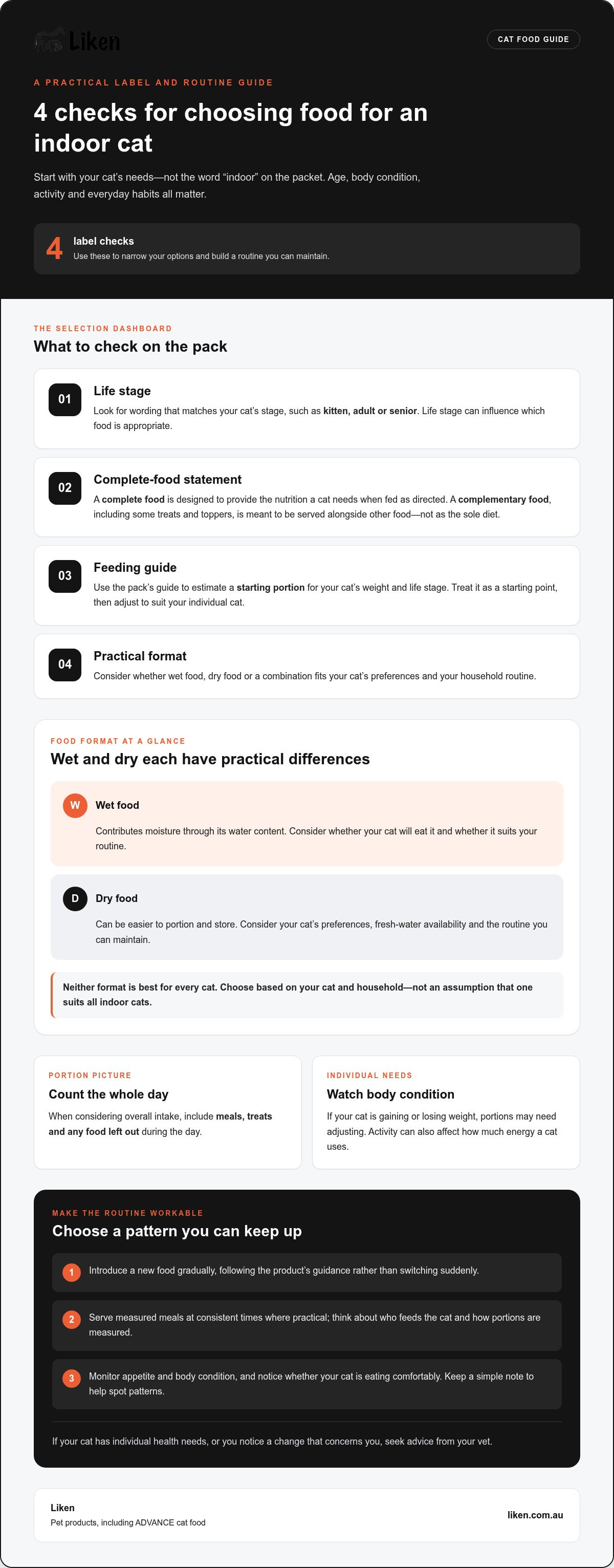
- Life stage: Look for wording that matches your cat’s stage, such as kitten, adult or senior.
- Complete-food statement: Check whether the product is labelled as a complete food for cats. Complementary foods, including some treats and toppers, are intended to be fed alongside other food, not as the sole diet.
- Feeding guide: Find the guide on the packaging. Use it to estimate a starting portion for your cat’s weight and life stage.
- Practical format: Consider whether wet food, dry food or a combination fits your cat’s preferences and your household routine.
What should you check on a cat food label?
Life-stage details and feeding guidance are usually printed on the pack, near the product information or feeding instructions. Read the guide alongside the complete-food statement, and account for treats and any other food you offer. A feeding guide is a starting point; adjust portions to suit your individual cat and monitor their body condition.
Wet food contributes moisture through its water content, while dry food can be easier to portion and store. Neither format is best for every cat. Consider whether your cat will eat the food, whether fresh water is available and whether the format fits the routine you can maintain. If your cat has individual health needs, discuss suitable food choices with your vet rather than trying to diagnose or manage a condition through a label.
Once you know what you’re looking for, explore ADVANCE cat food options as one brand to compare.
Choosing and maintaining a suitable indoor-cat food routine
Choosing a food is only part of the picture. A routine your cat accepts and you can follow consistently makes it easier to serve measured meals and notice changes. When comparing options, consider both your cat’s preferences and your household’s habits.
Introduce a new food gradually, following the product’s guidance rather than switching suddenly. Use the feeding instructions as a starting point, then monitor appetite, body condition and whether your cat is eating comfortably. If you notice a change that concerns you, or your cat has individual health needs, seek advice from your vet.
How can you make a food choice easier to maintain?
Choose a food your cat will eat and a serving routine that works day to day. Think about who feeds the cat, how portions are measured and whether meals happen at consistent times. A simple note of appetite and body condition can help you spot patterns, rather than prompting a change in food after every small fluctuation.
ADVANCE is one brand to consider as you compare suitable options. Read the ADVANCE cat food guide for more information. Liken’s online ordering and digital standing orders make repeat purchasing convenient. For more shopping tips, see this guide to buying cat food online in Australia.
Choose a routine you can keep up
The best cat food for indoor cats australia is one that suits your cat’s life stage, body condition and everyday needs. Check the label for a complete food and use its feeding guide as a starting point, not a rigid rule.
Make any change gradually, then monitor appetite, body condition and how well the routine fits your household. If something concerns you, your vet can offer advice tailored to your cat.
Liken supplies pet products, including ADVANCE cat food. Online ordering and digital standing orders make repeat purchasing straightforward, helping you stick with a routine that works.
Explore ADVANCE cat food at Liken and find an option to suit your indoor cat’s needs.
Frequently Asked Questions
Is indoor cat food different from regular cat food?
Not always. “Indoor” is often a product description, but it doesn’t make a food automatically right for every cat who lives inside. Focus on whether the food is complete and suits your cat’s life stage and individual needs. Activity and body condition can also influence portions. Indoor living alone isn’t a reason to change food.
What should I look for in food for an indoor cat?
Check the label for the intended life stage, a complete-food statement and clear feeding guidance. Consider your cat’s age, body condition, preferences and daily routine rather than relying on front-of-pack claims. Complementary foods are intended to be fed with other food, not as the sole diet. Ask your vet about individual health needs.
Is wet or dry food better for indoor cats?
Neither format is best for every indoor cat. Wet food contains moisture, while dry food can be convenient to portion and store. Your cat’s preferences, access to fresh water and household routine all matter. Some owners feed one format, while others combine them. If you mix foods, account for both in the overall daily amount so portions don’t creep up.
How much should I feed my indoor cat?
Use the feeding guide on the food’s packaging as a starting point, since amounts vary with the product and your cat. Measure portions and include treats and other food in the daily total. Monitor appetite and body condition, then adjust carefully if needed. If your cat’s weight or eating habits concern you, seek advice from your vet.


