


Could the right urinary diet depend less on the boldest label claim and more on what your cat’s vet recommends? If your cat has urinary concerns, it’s understandable to feel unsure whether a special food is appropriate, how to compare products or whether a change could disrupt their routine. Searching for “urinary care cat food australia” can add to the confusion, with different formats and claims to sort through. This guide explains what urinary-care food is designed for and what to check on the label, while keeping your cat’s health in view.
Start with your vet’s advice, then compare the exact product details, feeding directions and format. Once you know which diet fits your cat’s plan, you can organise a routine and regular orders without relying on guesswork.
Key Takeaways
- Urinary signs can have different causes, so get veterinary guidance before choosing a diet.
- Compare labels for life-stage suitability, complete-and-balanced statements, feeding directions and food format.
- Use your vet’s advice and the exact product label to plan a suitable feeding routine.
- Use this guide to assess urinary care cat food australia options and choose with more confidence.
What is urinary care cat food, and when might a cat need it?
Urinary-care cat food is formulated to meet particular urinary-health needs, while everyday cat food is designed for general nutritional maintenance. A label alone can’t tell you whether a diet suits your cat. Products can have different purposes and feeding directions, so start with veterinary assessment rather than choosing by a urinary-care claim. When researching urinary care cat food australia, remember that a targeted diet may form part of an individual care plan. It is not a diagnosis or a universal solution.
Could urinary symptoms mean your cat needs a special diet?
Changes in urination deserve attention. You might notice your cat visiting the litter tray more often, straining, passing only small amounts, urinating somewhere unusual or having blood in their urine. These signs can have different causes and don’t confirm that a particular food is needed. The broad condition group known as Feline Lower Urinary Tract Disease (FLUTD) includes varied causes, which is why food choices should be guided by the underlying issue.
If your cat can’t pass urine, seek urgent veterinary attention. Inability to urinate can be a medical emergency, so don’t wait to see whether a food change helps. For other new or recurring urinary changes, arrange veterinary assessment promptly. Describe what you’ve observed, including any changes in litter-tray habits.
Choose food after that assessment. Your vet can advise whether a targeted diet is appropriate, what it’s intended to do and how it fits your cat’s care plan. Don’t use a special diet instead of getting a diagnosis, or assume that every product labelled “urinary” suits every cat.
How to compare urinary care cat food for your cat
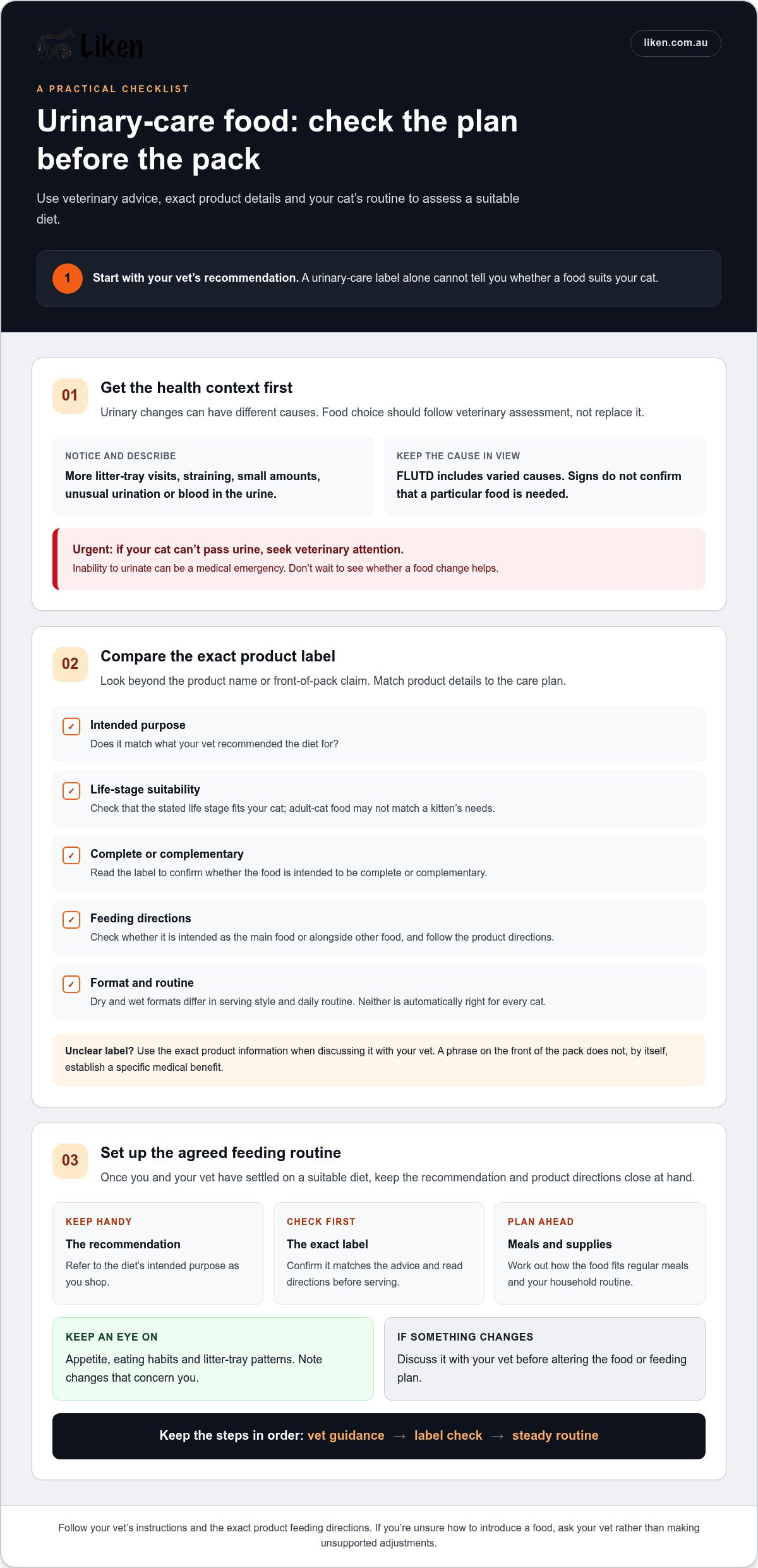
Begin with your vet’s recommendation. Write down the diet’s intended purpose and any feeding instructions, including whether it should be fed as the main food or alongside other food. Then compare the exact product details with your cat’s care plan, rather than relying on a product name or broad marketing claim.
Choose by matching professional advice, label suitability and your cat’s everyday routine. Check the intended life stage, whether the label says the food is complete and balanced, the feeding directions and the available format. For example, a food described as suitable for adult cats may not match a kitten’s needs. A phrase on the front of the pack does not, by itself, establish a specific medical benefit.
Which label details deserve a closer look?
Read the whole label, not just the front. Compare the stated purpose with your vet’s advice, check the feeding guide and confirm whether the food is intended to be complete or complementary. If you are comparing two products, note their differences in purpose, life-stage suitability, format and directions. Use the exact product information when discussing an unclear label with your vet, rather than making assumptions about its claims.
Dry and wet formats can differ in serving style and daily routine. Consider either only in line with veterinary advice and the product directions. Neither format is automatically right for every cat. Think about what your cat will reliably eat and how the recommended feeding plan fits your household.
Once you’ve identified a suitable diet, browse cat food online in Australia at your own pace. For a broader checklist on comparing products and ordering, use a guide to buying cat food online in Australia. Checking the exact label and feeding directions makes urinary care cat food australia options easier to assess.
Buying and feeding urinary care cat food: practical next steps
Once you and your vet have settled on a suitable diet, use a simple checklist to buy the right food and follow its directions consistently.
- Keep the recommendation handy. Refer to the diet’s intended purpose as you shop.
- Check the exact product label. Confirm it matches the advice and read the feeding directions before serving.
- Plan your supplies. Work out how the food fits your cat’s regular meals and how much you need for your routine.
Follow the product’s feeding directions and your vet’s instructions. Don’t assume that a gradual change, a particular mixing method or a set transition schedule suits every cat. If you’re unsure how to introduce the food, or your cat’s circumstances change, discuss the plan with your vet rather than making unsupported adjustments.
How can you make a suitable food routine easier to manage?
Once the diet is established, aim for a steady routine and keep an eye on your cat’s appetite, eating habits and litter-tray patterns. Note changes that concern you and discuss them with your vet before altering the food or feeding plan. Following the agreed instructions makes it easier to spot when something seems different.
Regular ordering can help you organise household supplies. Liken offers flexible delivery options, from single bags to larger orders, and digital standing orders for regular feed purchasing. These options can make restocking easier once you’ve identified a suitable food. Let your vet’s advice and the exact product label guide the choice. When comparing urinary care cat food australia options, keep the steps in order: veterinary guidance, label check, then routine. You can also browse Liken’s cat food and nutrition range as you plan your regular shop.
Make your next step a confident one
Your cat’s feeding plan may need revisiting if their needs or circumstances change. Keep your vet’s advice as a reference for future food decisions instead of relying on a familiar label or changing meals on a hunch. Choosing urinary care cat food australia options is more straightforward when you shop with your cat’s individual plan in mind.
Liken supplies cat food and nutrition products online to Australian pet owners. When you’re ready to shop, explore the range and organise your next order. Browse Liken’s cat food range.
Frequently Asked Questions
Is urinary care cat food right for every cat?
No. These diets are intended for particular nutritional needs, and one cat’s requirements may differ from another’s. A vet can consider your cat’s signs, health history and current diet before advising whether a targeted food is suitable. Even if another cat in your household eats urinary-care food, don’t assume it’s also the right everyday choice for your cat.
Can I feed urinary care cat food without asking a vet?
Get veterinary guidance before choosing a targeted diet, especially if your cat has urinary signs or a diagnosed condition. Similar signs can have different causes, so a food labelled for urinary health may not address your cat’s particular issue. For urinary care cat food australia options, use your vet’s advice to identify the relevant dietary purpose and feeding instructions.
What should I do if my cat is straining to urinate?
Contact a vet promptly for advice. Repeated attempts to urinate, straining or passing only a little urine can signal a serious problem. If your cat can’t pass urine, seek urgent veterinary attention. Don’t wait to see whether changing food helps. Note what you’ve observed, such as frequent litter-tray visits, and follow the clinic’s instructions.
Can I mix urinary care cat food with my cat’s usual food?
Check with your vet and read the specific food’s directions before mixing it with your cat’s usual meals. Adding another food could change the feeding plan, and suitability depends on why the targeted diet was recommended. If your vet approves mixing, follow their instructions and watch for changes in appetite or eating habits, reporting concerns as advised.


