


What if the most useful digestive support for your horse starts with the feed bucket, not a supplement tub? Searching for horse digestive health supplements australia can bring up plenty of ingredient claims, but a supplement can’t make up for a feeding routine that doesn’t suit your horse.
Before comparing products, note what your horse eats, how the feeding routine has changed and what you’ve observed. This guide explains how forage, routine and targeted supplements fit together, and what to check on a product label. You’ll also find practical ways to introduce a supplement in line with its directions, track changes and recognise when signs call for veterinary advice. Start with your horse’s needs, then decide whether a supplement has a clear role.
Key Takeaways
- Supplements are one part of a wider feeding and management routine, not stand-alone treatments.
- Match the horse’s concern and current ration to a supplement’s stated use and label directions.
- When comparing horse digestive health supplements australia, focus on ingredients, intended use and compatibility with existing feed.
- Follow label and professional advice when introducing a supplement, and keep consistent notes to discuss with your vet.
Horse digestive supplements: what they can and can't do
Digestive health supplements are additions to a horse’s wider feeding and management routine. Depending on their ingredients and intended use, they may provide targeted nutritional support, but they aren’t stand-alone treatments or a substitute for suitable feed, clean water and consistent care. When researching “horse digestive health supplements australia”, consider the horse’s full routine, not just the claims on a tub.
Forage, water access, feeding patterns, workload and individual health all matter. A supplement that suits one horse may not suit another, even if they share a paddock. Nutritional support can complement a feeding plan, but it can’t diagnose or treat a veterinary condition. If signs concern you or persist, seek veterinary advice.
How a horse’s digestive system relates to everyday feeding
A horse’s foregut, including the stomach and small intestine, handles early stages of digestion and nutrient absorption. In the hindgut, the caecum and large colon help ferment fibre from forage. This is why fibre-led feeding and a steady routine are central to digestive health. For a broader overview of how horses use feed, see Equine Nutrition.
Keep forage and fresh water at the centre of the feeding plan, and aim for consistency in meal timing and daily management. Sudden changes to pasture, hay, hard feed or routine can affect horses differently. For example, note whether a change in appetite or manure occurs around the same time as a pasture or feed change. Consider the horse’s age, workload and existing diet before deciding whether a supplement has a useful role.
How to compare horse digestive supplements and choose thoughtfully
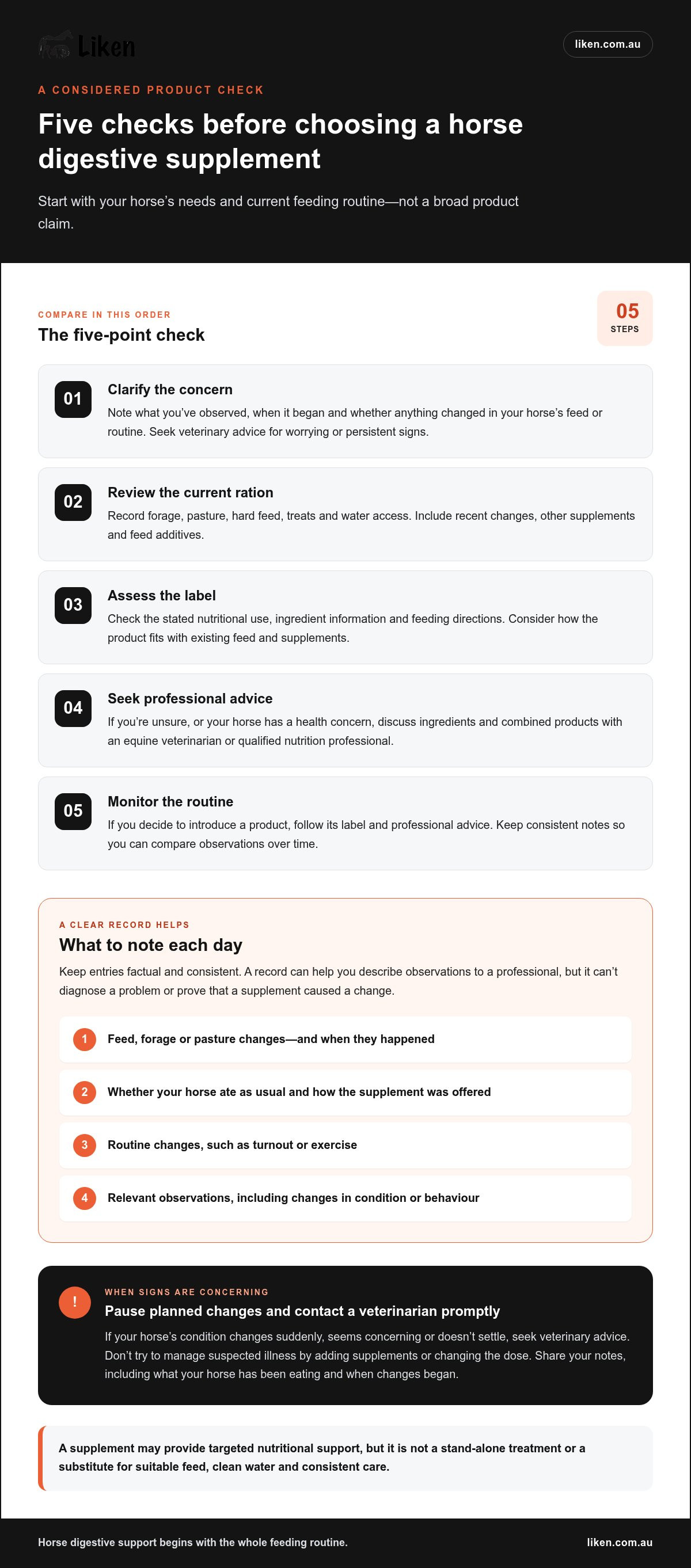
Choosing among horse digestive health supplements australia options is easier when you start with the horse, not the marketing. A broad claim doesn’t show whether a product suits your horse’s ration, routine or particular concern. Use this order to compare options:
- Clarify the concern. Note what you’ve observed, when it began and whether anything changed in the horse’s feed or routine. Seek veterinary advice for worrying or persistent signs.
- Review the current ration. Record forage, pasture, hard feed, treats and water access. Include any recent changes and other supplements or feed additives.
- Assess the label. Check the stated nutritional use, ingredient information and feeding directions. Consider how the product fits with existing feed and supplements.
- Seek advice. Discuss ingredients and combined products with an equine veterinarian or qualified nutrition professional if you’re unsure, or if the horse has a health concern.
- Monitor. If you decide to introduce a product, follow its label and professional advice. Keep notes so you can compare observations over time.
Let your horse’s circumstances guide product choice, not a broad claim about what a supplement can do. Ohio State University’s Equine Gastrointestinal Tract Function and Health offers further context on how diet relates to the digestive tract.
Questions to guide a safer supplement choice
Before comparing products, write down your horse’s current feed and forage, daily routine and the changes you’ve noticed. Then compare the product’s intended use, ingredients and feeding directions against that record. If your horse already receives other supplements or feed additives, discuss the combined ingredients with an equine veterinarian or qualified nutrition professional, especially if signs are new or ongoing.
For a wider look at how supplements fit into animal nutrition, explore the guide to animal supplements. Liken provides technical expertise on additives and supplements to help you consider nutrition options. Browse animal feed and supplement options as part of your research.
Introducing a horse digestive supplement and tracking the routine
Once you’ve chosen a supplement that fits your horse’s needs, keep the introduction simple and observable. Follow the product label and any professional advice on how to feed it. There’s no single transition schedule or dosage that suits every product and horse, so don’t guess or copy another owner’s routine. If you’re researching horse digestive health supplements australia, a clear record can help you distinguish a feed-plan change from other changes in your horse.
Make a brief daily note of:
- Feed, forage or pasture changes, including when they happened.
- Whether the horse ate as usual and how the supplement was offered.
- Routine changes, such as turnout or exercise.
- Relevant observations, including changes in condition or behaviour.
Keep entries factual and consistent. Notes can help you describe what you’ve observed to a professional, but they can’t diagnose a problem or prove that a supplement caused a change. Avoid introducing several new feed or routine changes at once if you can, so there’s less guesswork when reviewing your record.
When to pause routine changes and seek veterinary help
If your horse’s condition changes suddenly, seems concerning or doesn’t settle, contact a veterinarian promptly. Pause planned feed or supplement changes while you seek advice, unless a veterinarian recommends otherwise. Don’t try to manage suspected illness by adding supplements or changing the dose. Share your notes, including what the horse has been eating and when changes began, to help inform professional assessment.
A consistent supply can make it easier to maintain a considered routine. Liken’s online ordering and digital standing orders provide practical ways to manage ongoing feed and supplement supplies.
Make your next feeding choice a considered one
Your next step doesn’t need to be another product search. Use what you’ve observed to shape a clear question about your horse’s feeding plan, and bring that context into a conversation with a vet or nutrition professional. That way, choosing among horse digestive health supplements australia options becomes part of a considered plan, rather than a guess based on a promising label.
If your horse competes, factor relevant competition rules into the decision and check ingredients against the applicable prohibited-substance list. A steady approach starts with your horse’s needs, the current ration and appropriate professional advice.
Explore Liken’s animal nutrition range to find feed and supplement options for your routine.
Frequently Asked Questions
Can horses have digestive supplements every day?
Daily use may suit some horses, but it isn’t necessary or appropriate for every horse. Search results for “horse digestive health supplements australia” can’t determine whether a daily schedule suits your horse. Frequency depends on the product label, the horse’s full diet and individual needs. Follow the directions, and seek professional guidance if you’re unsure, especially when combining supplements or fortified feeds.
How long do horse digestive supplements take to work?
There’s no reliable universal timeframe. What you might observe depends on the product’s intended use and directions, the horse and the concern. Agree on a review point with an equine veterinarian or qualified nutrition professional, using a brief baseline note for comparison. If the expected change hasn’t appeared, don’t extend use or alter the ration on that basis alone. Seek advice first.
Are probiotics and prebiotics the same for horses?
No. Probiotics and prebiotics are different ingredient categories: probiotics are live microorganisms, while prebiotics are substances that can be used by microbes in the gut. A product may contain one or both, and composition and intended use vary between labels. Check the ingredient information, then discuss suitability with a professional familiar with your horse’s ration. Neither category is right for every horse.


