

What goes into your horse’s feed bin is a more useful guide to your monthly feed bill than a national average. If you’ve searched “cost of feeding a horse per month australia”, you’ve probably found estimates that don’t quite fit your horse. Feed needs and prices vary, and cutting back without a plan could leave important nutrition gaps.
Build a horse-specific estimate from your horse’s ration and current feed prices. This guide breaks down the costs to include, from hay and pasture to hard feed and supplements, and explains what can change the total, such as workload and pasture availability. You’ll also find practical ways to track use and plan orders, while keeping your horse’s wellbeing at the centre of your budget.
Key Takeaways
- The cost of feeding a horse per month australia depends on its individual ration and feed-related waste, not a one-size-fits-all figure.
- Record what your horse eats, measure how quickly it’s used and check current prices to build a practical monthly estimate.
- Calculate each feed’s monthly quantity multiplied by its current unit price, then add the amounts together.
- Keep a feed log to spot changes in use, update your budget and plan regular orders, from single bags to larger deliveries.
Factors Affecting Monthly Horse Feed Costs in Australia
Your monthly feed cost is the combined cost of your horse’s regular ration and any feed wasted before it’s eaten. Base your estimate on what goes into the feed bin and how quickly it’s used, not just the price on a bag or bale.
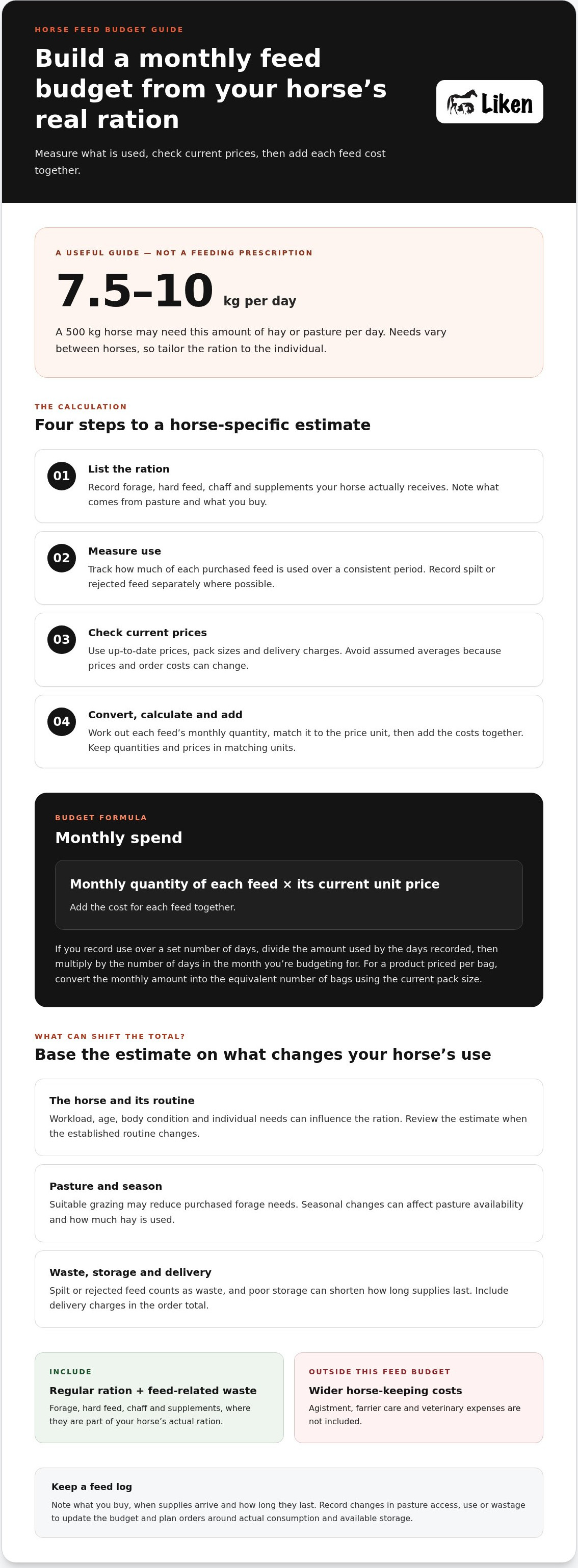
Workload, age, body condition and individual needs can all influence a horse’s ration. Pasture access matters too: a horse with suitable grazing may need less purchased forage than one relying on hay. As a guide, a 500 kg horse may need 7.5-10 kg of hay or pasture per day, but this is not a universal feeding prescription. Explore these horse nutrition guidelines for broader context, and tailor the ration to the individual horse.
Feed costs cover the ration and its waste. They don’t include the wider costs of keeping a horse, such as agistment, farrier care or veterinary expenses.
Which parts of a horse’s ration affect the monthly total?
Forage, hard feed, chaff and supplements may all contribute to the monthly total, but not every horse needs every category. Start with what your horse actually eats rather than assuming a standard mix. For example, a horse with good pasture access may use less purchased hay, while another may need hay as a regular part of its ration. Don’t add hard feed or supplements simply because they’re part of another horse’s routine.
Track how quickly each item runs out. Spilt or rejected feed counts as waste, and poor storage can mean supplies don’t last as expected. Seasonal changes can affect pasture and how much hay you use. These details help explain why the cost of feeding a horse per month australia can differ between horses, even when their owners buy similar types of feed.
How to calculate your horse’s monthly feed budget
Build your estimate from your horse’s established ration and what you actually use, not a generic figure. A simple record makes the cost of feeding a horse per month australia easier to work out and revise as prices or feeding patterns change.
- List the ration. Record each feed your horse receives, including forage, hard feed, chaff and supplements. Note what’s supplied from pasture and what you buy.
- Measure use. Track how much of each purchased feed is used over a consistent period. Record wastage separately if you can.
- Check current prices. Use up-to-date retailer prices, pack sizes and delivery charges. Avoid assumed averages, as prices and order costs can change.
- Convert and calculate. Work out the monthly quantity for each feed, match it to the price unit, then add the costs together.
Monthly spend = (monthly quantity of each feed × its current unit price), added together. If you track use for a set number of days, divide the amount used by the number of days recorded, then multiply by the number of days in the month you’re budgeting for. Keep quantities and prices in matching units. For example, if a product is priced per bag, convert the monthly amount needed into the equivalent number of bags using the current pack size.
Turn daily feed use into a monthly estimate
Use the ration your horse already receives as your starting point, and keep a separate running total for forage, hard feed and supplements. If use varies, record it across a representative period rather than relying on a single day. This makes each part of the estimate easier to update when your horse’s routine or current prices change.
Include any delivery charges in your feed order total so the budget reflects the full purchase cost. You can compare your list with current product and retailer information for animal feed and supplements.
How to manage horse feed costs with a practical ordering plan
A feed log can turn your monthly estimate into a useful ordering plan. Note what you buy, when each supply arrives and how long it lasts. Record changes in pasture access, feed use or wastage as they happen. You’ll spot shifts in consumption, avoid ordering more than you can use and have a clear basis for updating your budget as prices change.
Plan replenishment around your actual rate of use. Liken offers flexible delivery options, from single bags to full truckloads, as well as digital weekly or monthly standing orders. These options can help you organise repeat purchases around your horse’s needs and available storage, rather than guessing when you’ll run out. Keep current prices and delivery charges in your budget, and review the cost of feeding a horse per month australia whenever the figures change.
Keep the ration suitable while making ordering easier
Review your plan if your horse’s workload, pasture access or established ration changes. Update the feed log and check whether the new pattern affects how quickly each supply runs out. Avoid changing the ration just to fit an order size or reduce the bill. Before changing a horse’s diet, seek advice from a qualified equine nutritionist or veterinarian. Liken also provides technical advice on additives and supplements. Explore its animal feed and supplements as you plan your order.
A steady routine helps, but leave room for change. Browse animal feed and supplements with Liken as you organise your next order.
Make your next feed plan work for you
Let your budget guide thoughtful choices, not push you towards cutting feed without considering your horse’s needs. Treat your estimate as a working plan: revisit it when your routine changes, and use your records to make the next order with greater confidence. A clear picture of the cost of feeding a horse per month australia can also help you plan for months when your usual feeding pattern shifts.
Explore Liken’s range of animal feed and supplements and choose an ordering rhythm that suits your setup. Explore animal feed and supplements with Liken. Steady planning can make feeding decisions more manageable while keeping your horse’s wellbeing front and centre.
Frequently Asked Questions
Does pasture reduce the monthly cost of feeding a horse?
Yes, good pasture can reduce the amount of purchased forage a horse needs, which may lower the cost of feeding a horse per month australia. The saving depends on how much suitable grazing is available and whether it meets your horse’s needs throughout the year. If pasture growth drops or grazing becomes limited, you may need to buy more forage to maintain the ration.
How much hay does a horse need each day?
There isn’t one fixed daily amount that suits every horse. The right quantity depends on the horse’s size, condition, workload, pasture intake and individual needs. Weighing a usual hay portion gives you a more useful starting point than estimating by flakes or armfuls, which can vary. Include any grazing when considering total forage, and seek qualified advice if you’re unsure.
Do horses need hard feed if they have access to good pasture?
Not always. Some horses may meet their needs with suitable pasture and forage, while others may require additional feed for their individual circumstances. Don’t add hard feed just because it’s part of another horse’s routine. Consider your horse’s condition and workload, and get qualified equine nutrition or veterinary advice if you’re unsure whether the current diet is appropriate.
Can I change my horse’s feed suddenly to reduce costs?
It’s best not to make a sudden feed change just to cut costs. Abrupt changes can upset a horse’s digestive system, so plan any adjustment gradually and keep an eye on appetite, manure and general condition. Before changing the ration, speak with a qualified equine nutritionist or veterinarian. They can help you consider suitable alternatives without compromising your horse’s nutritional needs.


