

Could your hungry-looking Labrador puppy already be getting the right amount? A labrador puppy feeding chart is a useful starting point, but serving sizes differ between foods, and a keen appetite doesn’t always mean the bowl needs topping up.
If you’ve found conflicting amounts or aren’t sure how to turn the food guide into a daily routine, you’re not alone. The right portion depends on your puppy’s age, the food’s feeding directions and how they’re growing. Treat the chart as a guide, not a fixed rule.
This article explains how to read the food label, plan age-appropriate meals and review portions as your puppy grows. You’ll also learn what to keep track of and when a change in appetite or growth is a good reason to speak with your vet.
Key Takeaways
- Use a labrador puppy feeding chart as a guide, and check which details shape the suggested daily amount.
- Measure your puppy’s daily ration, divide it between meals and keep a simple record to review as they grow.
- Count training treats and other extras as part of the day’s food, not as additions to the measured ration.
- Keep mealtimes consistent, and follow the new food’s directions when changing foods.
Labrador puppy feeding chart: how to read the daily amount
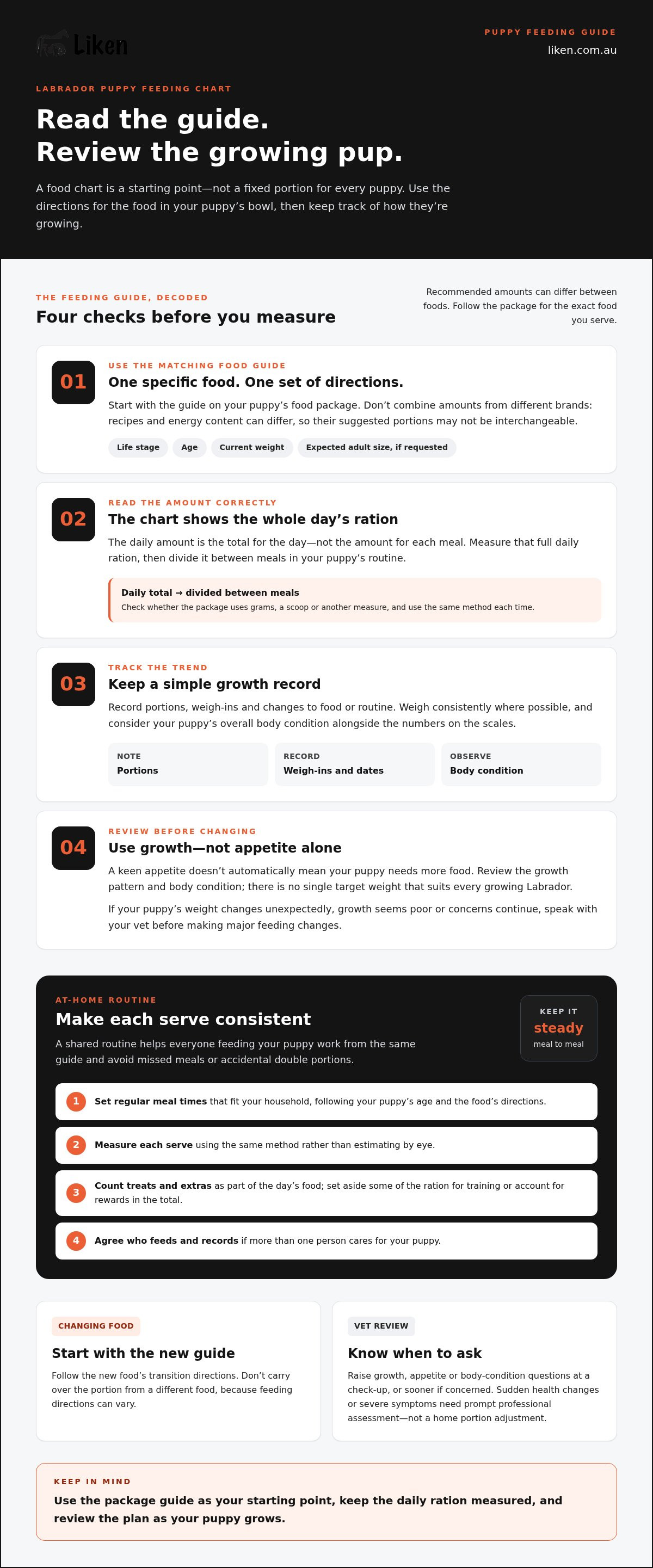
A labrador puppy feeding chart is a starting guide, not a fixed prescription for every pup. The suggested amount depends on the food’s recipe and energy content, as well as your puppy’s age, current weight and expected adult size. That’s why two foods can recommend different daily amounts for puppies of the same age. Start with the guide for the food in your puppy’s bowl, then review their growth instead of treating the figures as universal.
The chart’s daily ration is the total amount for the whole day, not the serving for each meal. If you feed several meals, divide that daily total between them. Confusing the daily total with a per-meal amount can mean offering the full day’s ration at every sitting.
Which feeding chart should Labrador puppy owners use?
Start with the feeding guide on the specific food package. Don’t combine amounts from different brands: their foods can differ, so recommended portions may not be interchangeable. Check the guide’s instructions and find the categories for your puppy’s age and current weight. If it asks for expected adult size, use that category as well. For background on the breed, see Labrador Retriever breed information, but remember that a general breed description can’t determine your puppy’s individual feeding amount.
- Check that you’re reading the guide for your puppy’s life stage and the exact food you’re serving.
- Match your puppy’s age and weight to the package categories. If they fall between listed ranges, don’t use another brand’s chart to guess a precise portion.
- Follow the package directions and your vet’s individual advice, especially if your puppy’s growth or health calls for a tailored approach.
Keep the package handy when measuring portions, and note whether its guide uses grams, a scoop or another measure. Use the same method each time so everyone feeding your pup is working from the same reference.
How to adjust a Labrador puppy feeding chart as your puppy grows
A chart is most useful when you turn it into a steady routine and check how your pup is doing over time. Keep a simple record of portions, weigh-ins and any changes you make. This gives you a clearer picture than changing the bowl whenever your puppy seems especially keen for a snack.
- Measure the daily ration. Use the guide for your puppy’s food and measure the full day’s amount consistently.
- Divide it between meals. Split the ration according to your puppy’s routine instead of estimating each serve by eye.
- Record growth. Weigh your puppy consistently, and note the date and any changes to their food or routine.
- Review regularly. Look at the pattern in their growth and body condition before deciding whether portions need to change.
Training rewards count too. Set aside some of the day’s food for practice, or account for treats and other extras in the overall amount. Otherwise, they can quietly add to the ration. The AKC Labrador Retriever care guide also discusses weight management as part of caring for the breed.
Your puppy’s body condition can help flag when their portion needs a review. Notice how their shape changes as they grow, alongside the numbers on the scales. Appetite alone isn’t a reliable reason to serve more: a puppy can seem hungry without needing a larger portion.
How can you tell whether the portion needs reviewing?
Use the same scales and a consistent weighing routine where possible, and keep an eye on your puppy’s overall shape. There’s no single target weight that suits every growing Lab. If you notice unexpected weight changes, poor growth or ongoing concerns, seek advice from your vet before making major feeding changes. When comparing dog food options, you can also explore dog food brands such as ADVANCE.
Build a Labrador puppy feeding routine that works at home
A simple routine makes a labrador puppy feeding chart easier to follow day after day. Choose meal times that fit your household, measure each serve and keep the food guide somewhere easy to find. If more than one person feeds your puppy, agree who serves each meal and how you’ll record it. That helps avoid missed meals and accidental double portions.
- Set regular meal times. Keep them consistent from day to day, adjusting the number of meals to your puppy’s age and the food’s directions.
- Measure each serve. Use the same measuring method each time rather than estimating by eye.
- Keep a quick record. Note meals, treats and any changes to the routine so you can spot patterns and share useful details with your vet.
If you change foods, follow the new food’s transition directions and consider what suits your puppy. Don’t carry over portions from a different food’s guide, as feeding directions can vary. For broader advice on feeding a growing pup, see Puppy feeding guidelines from veterinary experts.
When should you review the routine with your vet?
Raise routine questions about growth, appetite or body condition at your puppy’s veterinary check-up, or sooner if you’re concerned. A sudden change in your puppy’s health or symptoms that seem severe need prompt professional assessment, rather than a home portion adjustment. Keep notes on food, meals and changes you’ve noticed to help explain what’s happening.
When comparing dog food brands, you can explore ADVANCE dog food through Liken.
Keep building a routine that grows with your puppy
Your puppy’s needs will change as they grow, so use the labrador puppy feeding chart to guide regular reviews rather than lock yourself into one portion forever. Keep observing, stay consistent and make thoughtful adjustments as needed. If you’re unsure about a change in growth, appetite or body condition, your vet can help you decide what to do next.
When you’re ready to explore dog food options, browse ADVANCE through Liken. Liken is an online retailer supplying animal feed to customers across Australia, so you can explore the range from home.
Explore ADVANCE dog food through Liken and choose a feeding routine that works for you and your growing pup.
Frequently Asked Questions
How often should I feed a Labrador puppy?
Feed a Labrador puppy several smaller meals a day, with frequency reducing as they mature. A common guide is four meals daily up to about 12-16 weeks, three meals from around 3 to 6 months, then two meals from 6 months. Follow the food label and your vet’s advice if your puppy’s age or needs call for a different plan.
Can I use one feeding chart for every Labrador puppy food?
No, use the directions for the exact food you’re feeding. A labrador puppy feeding chart from one brand won’t automatically match another, even if both foods are for puppies. For example, don’t carry over a scoop count when changing foods. Check the new pack’s serving measure and daily guide, and keep its instructions handy during the transition.
What should I do if my Labrador puppy still seems hungry after eating?
First, check that your puppy has had the planned meal and that treats or training rewards haven’t crowded out a proper serve. Some pups eat quickly and still beg, so a pleading look alone isn’t proof they need extra. Keep an eye on appetite alongside growth and body condition. If hunger persists or you’re concerned about their health, speak with your vet.
When should a Labrador puppy change from puppy food to adult food?
Most Labradors stay on puppy food until roughly 15 to 18 months, as they can take longer to mature than smaller dogs. Don’t switch automatically on the first birthday. Consider your puppy’s development and follow the adult food’s transition directions. If growth, body condition or health makes the timing uncertain, discuss the change with your vet.


