

A full bowl can make changes in your dog’s appetite harder to spot. For most healthy adult dogs, scheduled meals are a practical choice in the free feeding vs scheduled feeding debate: offer food twice a day, morning and evening. Puppies generally need three meals a day before six months of age.
Leaving food out all day can feel convenient, especially if your dog likes to graze. But a routine can make portions easier to manage and changes in appetite easier to notice. This guide compares the two feeding styles, outlines health concerns to keep in mind and explains how to move from an always-full bowl to scheduled meals. You’ll also find steps to help your dog settle into a new routine and guidance on when an appetite change deserves attention.
Key Takeaways
- Measure your dog’s portions and keep meal times consistent so you can better manage how much they eat.
- Watch for changes in appetite, which can be easier to spot when food isn’t available all day.
- Start the change gradually, offering food at set times and picking up the dish after 15 to 20 minutes.
- Give your dog time to adjust; many settle into scheduled meals within 2-4 weeks, though some need longer.
What is Free Feeding a Dog?
Free feeding means keeping a filled food bowl available for your dog throughout the day. For scheduled meals, leave food down for 15 to 20 minutes, then pick up the bowl. Store dry food sealed in a cool, dry place; refrigerate opened wet food and follow its label for storage and use.
- Choose a feeding pattern. Most healthy adult dogs have two meals daily, one in the morning and one in the evening. Puppies generally need three meals a day before six months of age. Choose times that suit your household and keep them consistent.
- Work out the daily portion. Start with the feeding guide on your dog’s food packaging. The suggested amount depends on factors such as weight, age and activity. Measure the full daily allowance instead of topping up the bowl by eye.
- Divide the allowance between meals. If your adult dog eats twice a day, split the measured allowance between breakfast and dinner. Measure the full daily amount first, then divide it between the two meals. Include treats and extras in the day’s overall food intake.
Health risks associated with free feeding
Free feeding can suit dogs that regulate their own intake, but it makes portions and appetite harder to track. Scheduled meals provide more control and make changes easier to spot, though they require a consistent routine.
-
Recognise health drawbacks
Check your dog’s weight and bowl habits regularly. A constantly topped-up bowl can make it difficult to measure daily intake, and overeating can contribute to excess weight. The Association for Pet Obesity Prevention reported that 59% of dogs were overweight as of 2022.
Notice what remains after each meal, too. When food is available all day, a gradual drop in appetite can be less obvious. Scheduled meals make it easier to spot when your dog skips food or eats less than usual. This is a key monitoring benefit, but the routine needs to suit your household.
-
Identify dogs unsuited to free feeding
Choose scheduled meals if your dog needs close portion or appetite monitoring. Dogs with health issues may need a routine tailored to their condition, so speak with a veterinarian before changing their meals. This is particularly important if meal times affect medication or a health management plan.
In a multi-dog household, feed dogs separately and keep an eye on each bowl. One dog may eat another’s share, making it difficult to know who ate what. Separate meal times help you track each dog’s intake and notice appetite changes. For dogs that gulp, guard food or need measured portions, a shared bowl left out all day can also be harder to manage.
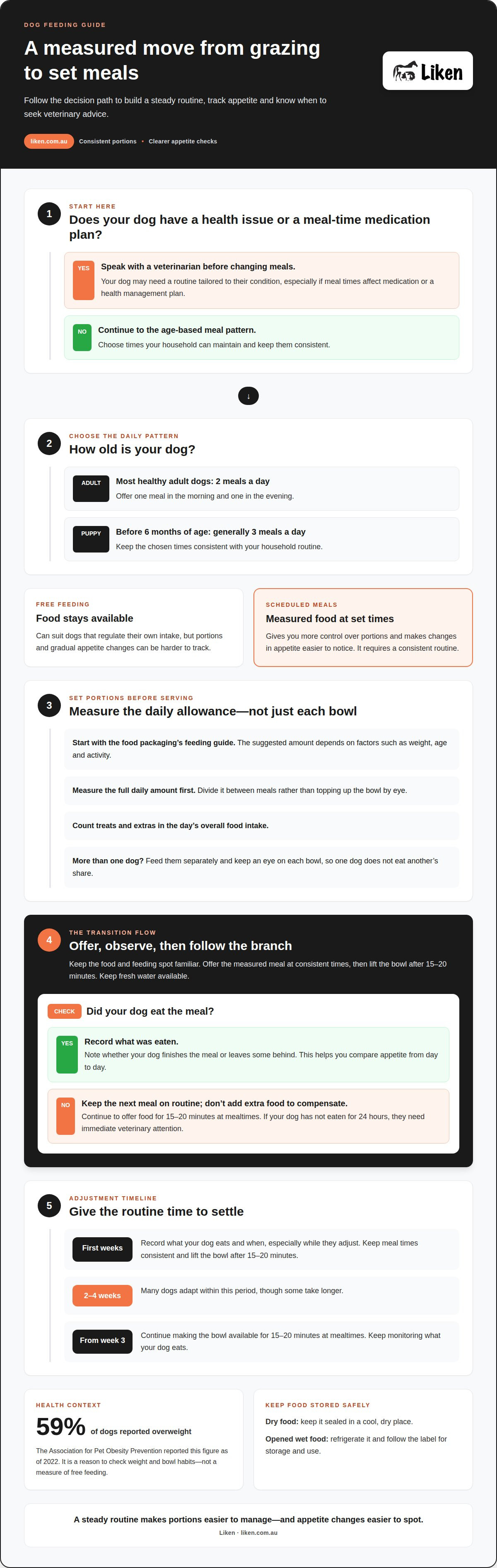
Gradually transitioning from free feeding to scheduled meals
Make the change in manageable steps and keep meal times consistent each day. Most veterinarians recommend two daily feedings for healthy adult dogs, morning and evening.
- Set consistent meal times. Choose times your household can maintain, then offer your dog’s measured daily allowance at each meal. Keep the food and feeding spot familiar as you make the change. A steady routine helps your dog learn when meals arrive and gives you a clearer view of their appetite.
- Offer food, then lift the bowl. Put the meal down and pick up the dish after 15 to 20 minutes. Avoid leaving uneaten food out between meals, as that can blur the routine. Keep fresh water available, and note whether your dog eats, leaves some food or refuses the meal.
- Keep the routine steady as your dog adjusts. Most dogs adapt within 2-4 weeks, though some take longer. From week 3, continue making the bowl available for 15-20 minutes at mealtimes. Don’t compensate for a missed meal by adding extra food at the next one.
For a practical next step, browse dog food options as you settle on a consistent meal routine.
Most veterinarians recommend scheduled meals rather than free feeding, with healthy adult dogs typically fed morning and evening. Offer measured portions at consistent times and remove uneaten food after 15 to 20 minutes.
Liken: ADVANCE
Liken offers ADVANCE for dog owners choosing food for a measured meal routine. Consistent feeding is easier when you can portion your dog’s daily food and track what they eat. Start with the packaging’s feeding guide, then consider your dog’s age, weight and activity when working out portions.
Explore ADVANCE alongside other dog food options available through Liken, including COBBER, ENDURO and HILLS. Choose food that suits your dog’s needs, then serve measured portions at regular times. If your dog has a health issue or needs a specific diet, seek veterinary guidance before changing their food or feeding routine.
Visit Liken online to explore its dog food range.
Build a routine that works for your dog
Treat free feeding versus scheduled feeding for dogs as a choice you can review over time. Your dog’s appetite, behaviour and daily routine can help you decide whether the pattern still suits your household. Keep observing and make changes deliberately rather than reacting to one missed meal.
If you’re choosing food for a regular meal routine, Liken offers ADVANCE, COBBER and ENDURO. Explore the options, choose a product that fits your dog’s needs and follow its feeding guidance. For health concerns or diet changes, speak with your veterinarian.
Contact Liken for help exploring dog food options. A steady, thoughtful approach can make mealtimes easier for you and your dog.
Frequently Asked Questions
How Often Should I Feed My Dog?
Most healthy adult dogs do well with meals in the morning and evening. Keep the timing predictable so you can plan walks, medication and household routines around meals. If your dog’s schedule changes, for example during a move or a new work pattern, shift meal times gradually and observe their appetite and behaviour as the routine settles.
What is free feeding versus scheduled feeding for dogs?
Free feeding means food stays available for your dog to eat throughout the day; scheduled feeding offers food at set mealtimes. The choice between free feeding and scheduled feeding for dogs affects how closely you can track intake. For example, in a home with more than one pet, separate meals can make it easier to monitor what each dog eats.
How many times a day should adult dogs and puppies be fed?
Most veterinarians recommend two daily feedings for healthy adult dogs. Puppies generally need three meals a day before six months of age. A growing puppy may need a different routine from an adult dog, so follow the food’s feeding guidance and keep an eye on appetite and growth. If your dog has a health condition, ask your veterinarian about meal timing.
How much food should a dog eat per day based on weight, age and activity?
Start with the feeding guide on the food packaging, then measure your dog’s daily portion. The right amount depends on weight, age, activity and the food’s energy content, so one dog’s serving may not suit another. Include treats and extras in the daily total. Reassess portions if your dog’s weight or routine changes instead of adding food by guesswork.
Does free feeding increase the risk of obesity in dogs?
Free feeding can make overeating harder to notice because the bowl is available throughout the day, but it doesn’t automatically cause obesity. The Association for Pet Obesity Prevention reported that 59% of dogs were overweight as of 2022. Measure what you offer and watch your dog’s weight over time. Ask your veterinarian for guidance if weight gain becomes a concern.


