


Could the right food help your older dog move more comfortably, without being a cure-all? If your dog is slower to rise or reluctant to jump, it’s understandable to wonder whether changing their food could help. Choosing senior dog food for joint health can feel confusing when labels highlight ingredients but don’t explain what they mean for your dog. Stiffness isn’t always just a sign of getting older.
This guide explains what nutrition can and can’t do for mobility, how to compare food labels and feeding needs, and when to seek a veterinary assessment. Focus on the basics: a balanced diet, a healthy body condition and realistic expectations of joint-support ingredients. You’ll also learn why a sudden or worsening change in movement deserves attention. Once you’ve identified your dog’s needs, you can compare suitable options, including ADVANCE, and build a feeding routine that works for them.
Key Takeaways
- Choose senior dog food for joint health based on your dog’s needs and body condition, not just claims on the pack.
- Compare feeding guides and calorie content to help support a healthy weight and avoid unnecessary strain on joints.
- Before considering a food change, note mobility changes and review your dog’s current food, then plan any transition gradually.
- Monitor appetite, stools, weight and movement after a food change, and seek veterinary advice if mobility changes concern you.
Senior dog food for joint health: what nutrition can support
Joint-supportive feeding isn’t about finding one magic ingredient. It means choosing a balanced food that meets your dog’s nutritional needs and helps maintain a healthy body condition. Extra weight can put additional strain on joints, so suitable portions and regular weight checks matter. A senior label alone doesn’t tell you whether a food is right for your dog.
Nutrition can support overall wellbeing, but it can’t diagnose or cure joint disease. For background on understanding osteoarthritis, remember that it is a medical condition, not simply an inevitable part of getting older. If symptoms persist or worsen, a food change should sit alongside veterinary advice.
Can senior dog food help with stiff or ageing joints?
A suitable diet may support general health and a healthy weight, but the right choice depends on your dog’s age, size, activity, health and body condition. For example, a less active dog may need different portions from an active dog of similar size. Look at your dog’s movement, appetite and weight over time rather than relying on the word “senior” on the pack.
Food can support your dog’s wellbeing, but it can’t diagnose or treat joint disease. Occasional slowing may have several causes, but ongoing stiffness, difficulty rising, reluctance to walk or a noticeable change in movement deserves veterinary assessment. Don’t assume it’s just ageing, especially if the change is sudden or getting worse. A vet can assess possible causes and advise on suitable care, including whether a diet change is appropriate.
Think of senior dog food for joint health as one part of a broader plan: balanced meals, sensible portions and attention to how your dog moves. Next, compare the label details that can help you make a more informed choice.
How to choose senior dog food for joint health
Start with your dog, not the claims on the bag. Choose a complete and balanced food suited to your dog’s life stage and individual needs, including their size, activity level, health and body condition. A “senior” label can be a useful clue, but it doesn’t guarantee the food is the right fit for every older dog.
Which label details matter most for an older dog?
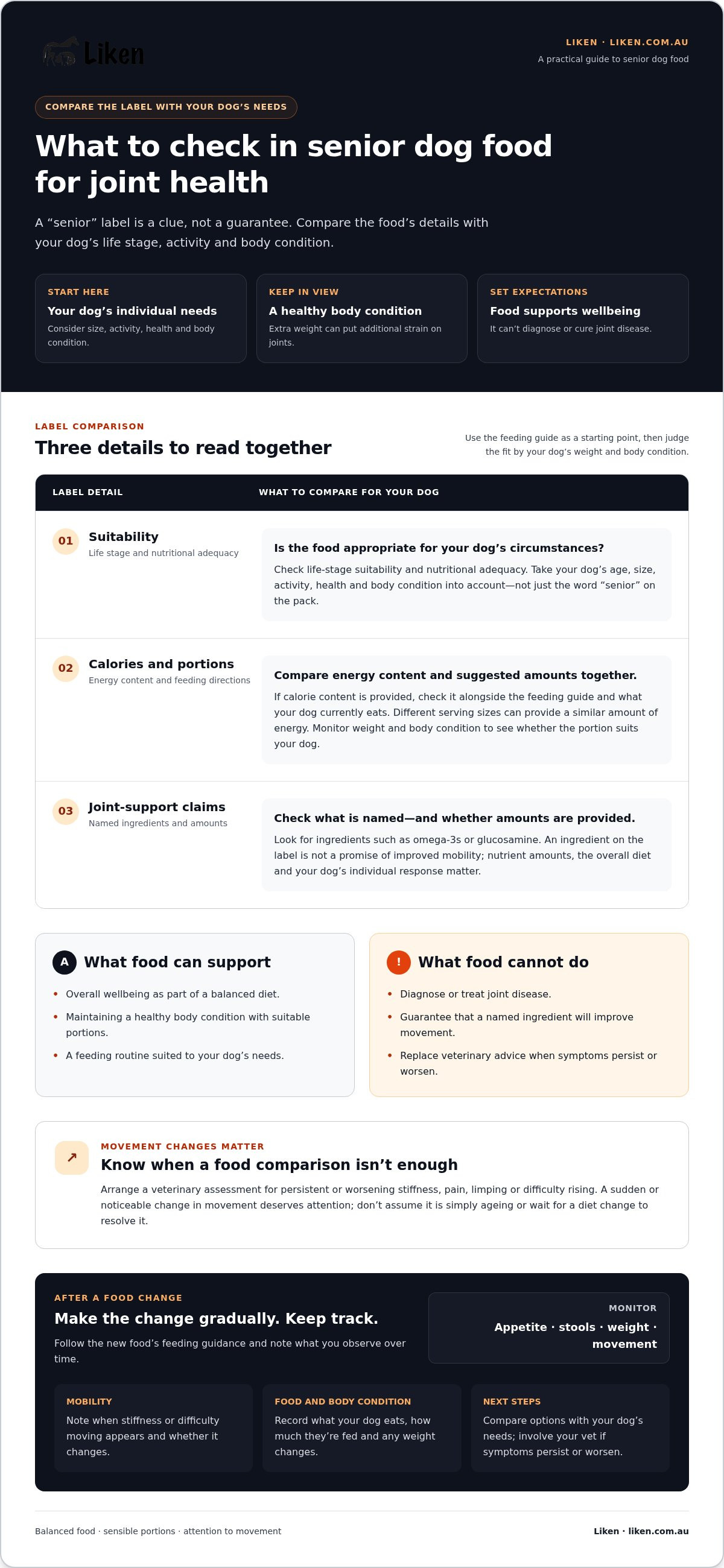
Check the life-stage suitability and nutritional adequacy information, then compare the feeding directions with what your dog currently eats. Look at calorie content too, if it’s provided. Two foods can have different serving sizes while providing a similar amount of energy. Use the feeding guide as a starting point, then monitor your dog’s weight and body condition to judge whether the portion suits them.
Check life-stage suitability, calorie content and feeding directions together, then judge the fit by your dog’s needs and body condition.
- Suitability: Is the food appropriate for your dog’s life stage and circumstances?
- Calories and portions: How does the energy content compare, and what amount does the feeding guide suggest?
- Joint-support claims: Are ingredients such as omega-3s or glucosamine named, and are amounts provided?
An ingredient on a label isn’t a promise of improved mobility. Nutrient amounts and the overall diet matter, and individual results can vary. If your dog has ongoing stiffness, use the signs of osteoarthritis in dogs as a prompt to discuss the changes with your vet, rather than trying to diagnose the cause from a food label.
Use your dog’s needs and the label details to guide your comparison, including when you explore ADVANCE senior food options.
Putting joint-friendly feeding into practice with ADVANCE
A short record can help you spot patterns and explain changes to your vet. Note what you observe, rather than trying to diagnose the cause:
- Note mobility: Write down when stiffness or difficulty moving appears and whether it changes over time.
- Review food and body condition: Record what your dog eats and how much they’re fed, and keep track of any weight changes.
- Plan a suitable next step: Compare food options against your dog’s needs, and involve your vet if symptoms persist or worsen.
If you change foods, make the transition gradually rather than switching all at once. Follow the new food’s feeding guidance and monitor appetite, stools, weight and movement. These checks can help you notice whether your dog is settling into the new routine. For broader guidance, see Cornell University on senior dog nutrition.
When should a change of food come with a vet visit?
Arrange a veterinary assessment for persistent or worsening stiffness, pain, limping or difficulty rising. A vet can assess possible causes and discuss an overall care plan, rather than relying on food alone. Don’t wait for a diet change to resolve a movement problem that’s getting worse.
ADVANCE dog food is one option to compare when reviewing your dog’s feeding routine. Choose based on the label and your dog’s individual circumstances, without assuming a senior formula will treat joint problems. You can explore ADVANCE dog food through Liken.
Build a feeding routine that supports your senior dog
Choosing senior dog food for joint health starts with your dog’s individual needs, not a promise on the pack. Focus on a complete, balanced diet, sensible portions and a healthy body condition. Compare feeding guidance and calorie content, then monitor your dog’s weight and movement. Food can support wellbeing, but persistent or worsening stiffness, limping, pain or difficulty rising calls for veterinary assessment.
Once you’ve worked out what suits your dog, Liken’s Australian online store offers ADVANCE alongside other animal feed and supplement options. Flexible delivery and digital standing orders can help make a consistent feeding routine easier to maintain.
Explore ADVANCE dog food through Liken and choose a feeding option that suits your older mate. Keep your dog’s comfort and health front of mind as you build the routine.
Frequently Asked Questions
Can senior dog food help with joint health?
Senior dog food for joint health may support overall wellbeing, but it isn’t a guaranteed fix for stiff or sore joints. Choose a complete, balanced diet that suits your dog’s age, activity, health and body condition. Maintaining a healthy weight can help avoid extra strain on joints. If stiffness continues or worsens, seek veterinary advice rather than relying on food alone.
What ingredients should I look for in senior dog food for joint health?
Look for a complete diet that suits your dog, and treat joint-support ingredients as details to compare, not promises of results. Marine-sourced omega-3 fatty acids, including EPA and DHA, have evidence supporting their use for canine osteoarthritis. Evidence for glucosamine and chondroitin is mixed. Check the label for named ingredients and amounts, and ask your vet whether a particular food suits your dog’s needs.
Should I change my older dog’s food if they seem stiff?
Not automatically. Stiffness can have different causes, so arrange a veterinary assessment if it persists, worsens, or comes with limping, pain or difficulty rising. A vet can assess your dog and advise whether a food change is appropriate. If you do switch, transition gradually and monitor appetite, stools, weight and movement. Don’t let a diet change delay care for concerning symptoms.
Does senior dog food cure arthritis?
No. Senior dog food doesn’t cure arthritis or replace veterinary care. A suitable diet may help support general health and a healthy body condition as part of an overall approach to wellbeing. If arthritis is suspected or diagnosed, your vet can discuss a care plan for your dog. Don’t treat a food label or joint-support ingredient as a substitute for assessment and treatment.


