

Did you know that roughly 4 to 10 per cent of horses will face a colic episode at some point in their lives? It’s a statistic that keeps many of us up at night, especially when the Aussie weather turns or feed supplies get low. We understand that deep-seated fear of a sudden episode and the confusion that often comes with balancing grain to roughage ratios. That’s why mastering a horse colic prevention diet is the most important step you can take for your mate’s long-term health.
We all want our horses to feel their best, but managing nutrition during our local weather extremes is no small feat. You deserve the peace of mind that comes with a stable feeding routine and a happy, healthy gut. In this guide, we’ll show you how to structure a clear feeding framework using expert nutritional strategies. We’ll cover everything from the 60 per cent forage rule to the importance of gradual 14-day transitions. Get ready to learn how to keep their digestive system running smoothly so you can spend less time worrying and more time out in the paddock.
Key Takeaways
- Understand why your horse's unique "trick" digestive system needs constant movement to stay healthy and avoid painful blockages.
- Master the golden rules of a horse colic prevention diet by making high-quality forage the absolute foundation of every single meal.
- Learn how to feed "little and often" to mimic natural grazing and keep the stomach from becoming overloaded.
- Discover why regular dental health checks and smart deworming plans are critical partners to your nutritional strategy.
- Find out how ensuring a steady, consistent supply of feed helps you avoid the sudden dietary changes that often lead to trouble.
Understanding the Gut: Why Your Horse is Colicing and How Diet Intervenes
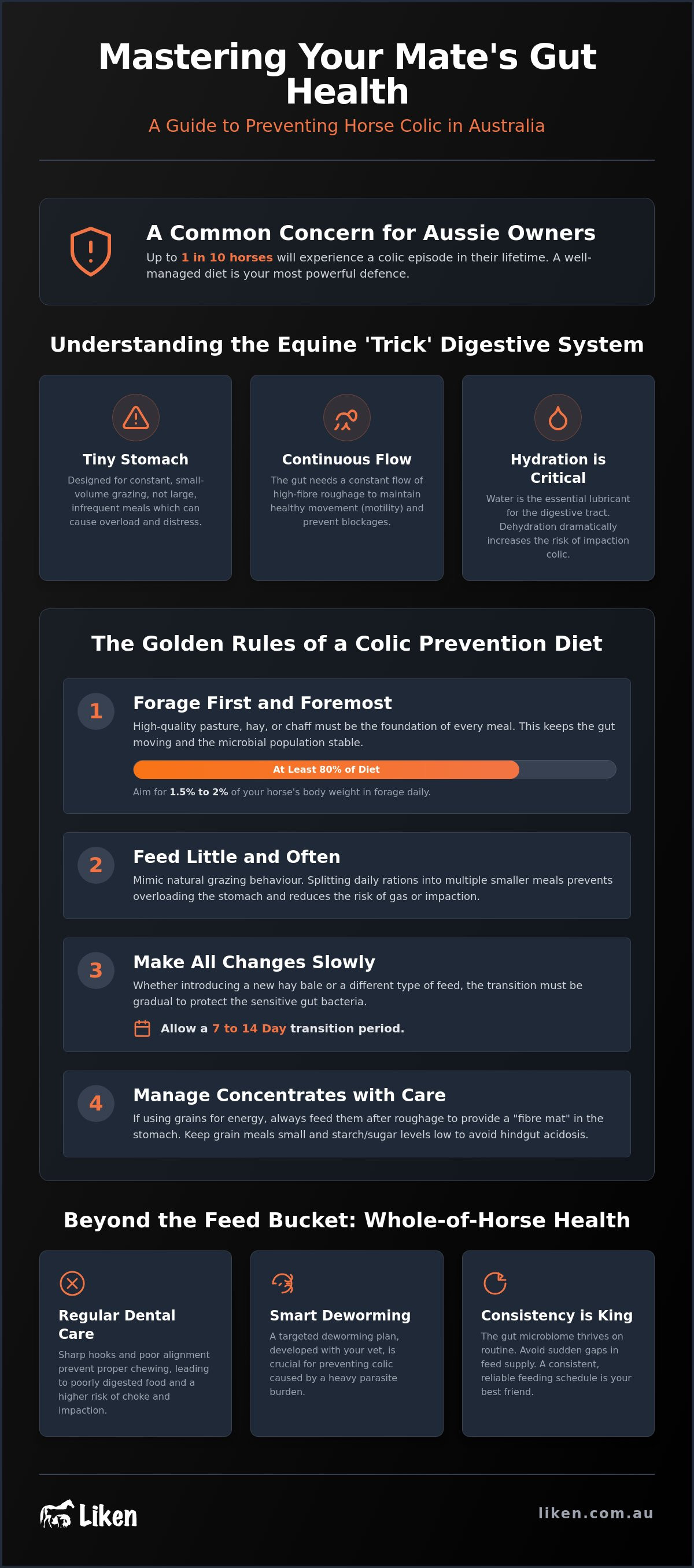
Horse colic is a word that sends a shiver down any owner's spine, but it's helpful to remember it's a description of pain rather than a single disease. Think of it as a catch-all term for abdominal distress. Statistics show that roughly 4 per cent of horses will experience an episode every year. The reason they're so prone to tummy trouble lies in their unique "trick" digestive system. Horses have relatively tiny stomachs designed for continuous grazing, not large, infrequent meals. When this natural rhythm is disrupted, the gut can quickly become upset.
Most issues stem from three primary triggers: sudden feed changes, low fibre intake, and poor hydration. These factors lead to different types of distress. Impaction colic happens when feed gets stuck and forms a blockage. Gas colic occurs when excess fermentation creates pressure. In many parts of Australia, sand colic is also a major worry, caused by horses picking up dirt while grazing on sparse paddocks. A well-planned horse colic prevention diet is your best tool to manage these risks and keep your mate comfortable.
The Role of Roughage in Digestive Motility
Fibre is the absolute engine room of the equine hindgut. To keep the digestive tract moving properly, most horses need to consume between 1.5 per cent and 2 per cent of their body weight in forage every day. This steady flow of roughage prevents the gut from "falling asleep" and keeps the microbial population stable. High-quality pasture or hay doesn't just fill them up; it also encourages chewing, which produces saliva to buffer stomach acid and prevent ulcers.
Hydration: The Unsung Hero of Colic Prevention
Water is the lubricant that keeps everything sliding through the digestive tract. When a horse becomes dehydrated, the material in their gut (ingesta) becomes dry and firm, making an impaction much more likely. This is a huge risk during scorching Aussie summers or surprisingly cold winters when horses might go off their water. You can encourage drinking by keeping troughs scrubbed clean or adding a bit of salt to their daily feed to stimulate thirst. Always ensure they have a reliable, fresh supply, especially when you're feeding dry hay.
Building a Horse Colic Prevention Diet: The Golden Rules
Creating a reliable horse colic prevention diet doesn't have to be a guessing game. It starts with one simple rule: forage first. High-quality pasture, hay, or chaff should make up the bulk of every meal. This foundation keeps the gut moving and mimics how horses eat in the wild. Experts agree that preventing colic in horses relies heavily on these consistent management practices that prioritises fibre over everything else.
Aim to feed your mate "little and often." Large, heavy meals can quickly overload a horse's small stomach and lead to serious trouble. By breaking daily rations into smaller portions, you ensure the digestive tract isn't under sudden pressure. You should also keep starch and sugar levels as low as possible. High-grain diets can cause a nasty build-up of lactic acid in the hindgut, which often triggers gas or displacement issues. Finally, never rush a change. Whether you're starting a new bag of pellets or switching to a different batch of hay, do it over 7 to 10 days. This gives the gut bacteria plenty of time to adjust without causing a flare-up.
Managing Concentrates and Grains
If your horse needs extra energy from concentrates, safety is paramount. Never feed grains on an empty stomach. Always make sure there's a "mat" of fibre in the gut first by feeding hay or chaff beforehand. Grain overload is a serious risk that can lead to both colic and laminitis, so keep these portions small and well-spaced throughout the day. Stick to high-quality brands like STOCKMAN & PADDOCK or HYPRO to ensure you're providing balanced nutrition without the guesswork.
Consistency is King: Avoiding Sudden Swings
The microbial population in your horse's gut is surprisingly sensitive. These tiny bugs thrive on routine. A sudden gap in feed supply or a missed delivery can be enough to throw the whole system out of whack. To make life easier, many Aussie owners use Liken's standing order system to ensure they never run out of their essential supplies. Keeping your feed room consistently stocked is the easiest way to maintain a successful horse colic prevention diet across every season.
Strategic Management and Supplements for Equine Gut Health
Managing your mate's health goes beyond what's in the feed bucket. Even the best horse colic prevention diet can fail if your horse can't chew their food properly. Sharp dental hooks lead to partially chewed forage, which is a fast track to an impaction. Plan for regular dental check-ups at least once a year to keep their grinding surfaces smooth. Similarly, stay on top of your deworming. High parasite loads cause inflammation and physical blockages that trigger serious pain, so use an evidence-based program to keep the gut clear.
In many parts of Australia, sand colic is a constant threat that often gets overlooked. When pastures get short during a drought or if you're grazing on sandy coastal soils, horses often ingest dirt while picking at the grass. This sand settles in the large colon and stays there, causing irritation and potential obstructions. While supplements are a great targeted tool, they should always support high-quality forage rather than act as a "quick fix" for poor paddock management.
Psyllium and Digestive Aids
Psyllium husk is a fantastic tool for clearing out stubborn sand and debris. It forms a thick gel in the gut that sweeps material through the large colon. You might also consider probiotics and prebiotics to keep the microbiome in balance, especially after a course of antibiotics. For a deeper look at what works best for your setup, check out our guide on horse feed supplements Australia to see the latest 2026 nutrition strategies.
Simplifying Your Logistics with Liken
Keeping your supplies steady is the best way to avoid emergency feed changes that upset the gut. Our bulk animal feed delivery in Australia ensures you always have plenty of roughage on hand, even when the local shops are low. Maintaining a consistent horse colic prevention diet is much easier when you aren't stressed about logistics. Plus, if you're ever unsure about which additives to choose, you can access expert advice on animal supplements Australia with just a quick click. We're here to help you keep your horse's gut happy and healthy all year round.
Take the Next Step Toward a Healthier Gut
Keeping your horse's digestive system in top shape is a journey that starts with the right choices every morning and night. By focusing on a high-forage foundation and keeping up with regular dental checks, you're giving your mate the best possible protection. We know that a consistent horse colic prevention diet is the most powerful tool you have to avoid those midnight vet calls and keep your horse feeling their absolute best.
While preventative care is the primary focus, being prepared for the financial side of equine health is also vital. For owners looking for ways to manage the potential costs of emergency veterinary treatments for their mate, Pixie Loans is a helpful resource for exploring personal finance and credit options during unexpected situations.
Consistency shouldn't be a chore, and you don't have to manage it alone. As a 100% Australian owned and operated business, we're dedicated to helping you maintain a stable routine with high-quality supplies and expert technical advice. Our standing order system is designed to ensure you never run out of the essentials, even when life gets busy. You can rest easy knowing your feed room is always stocked with the brands you trust like STOCKMAN & PADDOCK or HYPRO.
Organise your horse's nutrition with Liken's premium feed and supplements today. We're excited to support you and your horse through 2026 and beyond. Here's to many more happy, healthy days out in the paddock!
Frequently Asked Questions
What should I do immediately if I think my horse is colicing?
Call your vet straight away because early intervention is the best way to ensure a positive outcome. While you wait for them to arrive, remove all access to feed and hay but keep fresh water available. If your mate is trying to roll violently or could injure themselves, walk them slowly to keep them on their feet. It's also helpful to monitor their heart rate and gum colour so you can give the vet a clear update when they get to the paddock.
Can a horse get colic from drinking too much water?
It's almost impossible for a horse to drink too much water on its own. Dehydration is a much bigger threat to gut health than over-hydration. The only time to be careful is if a very hot horse gulps down a massive amount of freezing cold water immediately after heavy exercise. In almost every other situation, you want to encourage your horse to drink as much as they like to keep the digestive tract lubricated and moving.
Is lucerne hay better or worse for colic prevention compared to grass hay?
Lucerne hay can be a brilliant part of a horse colic prevention diet because its high calcium content helps buffer stomach acid. This protection is great for horses prone to gastric ulcers. However, grass hay is still the king of "chew time" and provides the bulk fibre needed to keep the hindgut functioning. Most Aussie owners find that a mix of both provides the best balance of nutrition and digestive safety.
How often should I feed psyllium to my horse to prevent sand colic?
The standard approach is to feed psyllium for one full week every month. If you feed it every day, the bacteria in the horse's gut actually learn to break it down, which means it stops being effective at sweeping out sand. This "one week on, three weeks off" cycle is the most reliable way to clear debris from the large colon, especially for horses grazing on sandy coastal soils or sparse winter paddocks.


