

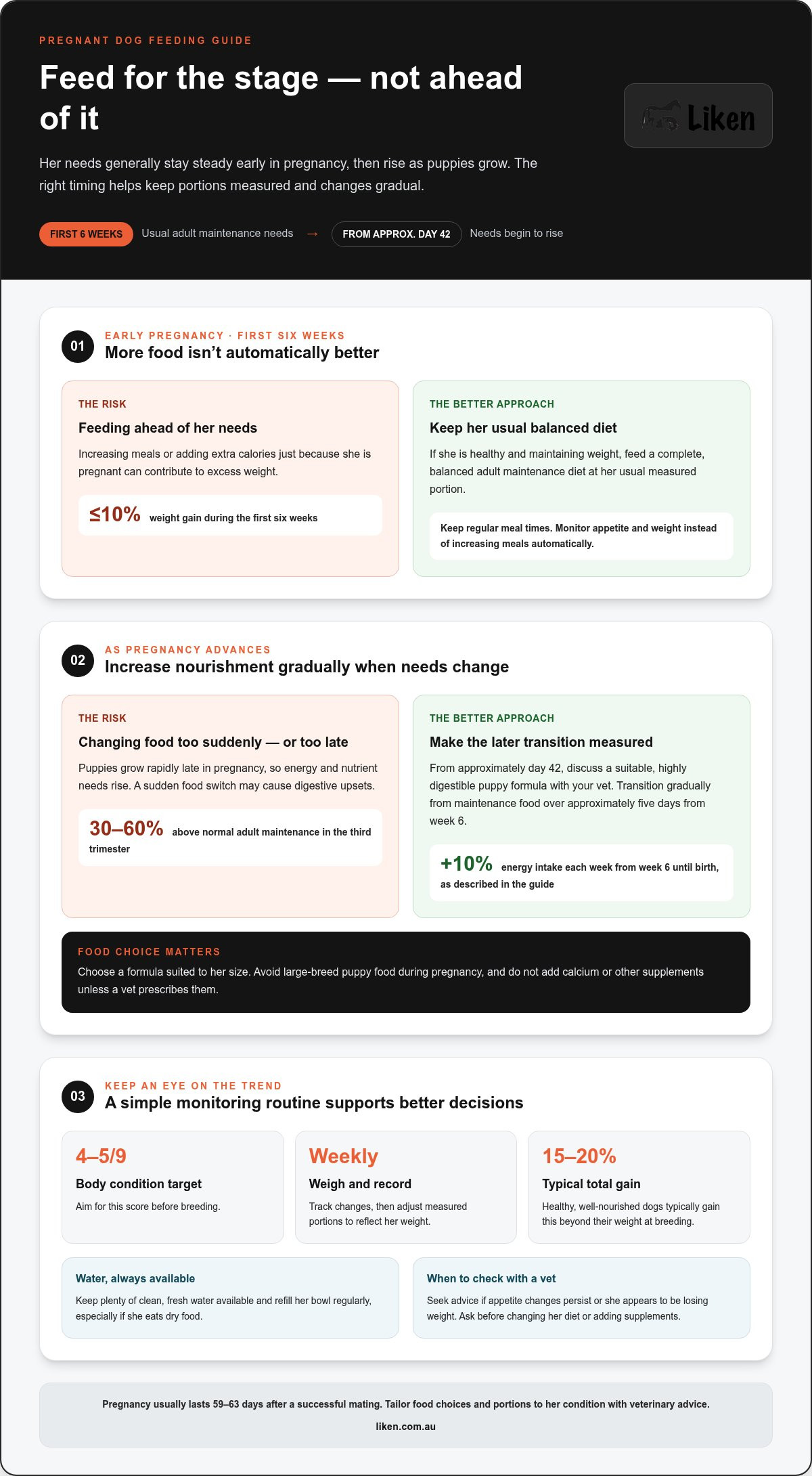
More food isn’t always better in early pregnancy. A feeding guide for pregnant dogs should start with a complete, balanced adult maintenance diet in her usual portion during the first six weeks, as energy needs generally don’t rise during this period. Monitor her weight and appetite rather than increasing meals automatically.
It’s natural to want to give a pregnant dog extra support, but feeding too much too soon can contribute to excess weight, while too little nourishment can also be a concern. Timing matters when making dietary changes.
This guide covers the nutrients a pregnant dog needs, how nutrition-related problems can arise, and what to feed during the first six weeks. You’ll also learn when her needs begin to change and why gradual, measured adjustments help keep feeding on track.
Key Takeaways
- Track your dog’s weight and keep portions measured to support a healthy body condition throughout pregnancy.
- During the first six weeks, a complete and balanced adult diet usually meets her needs; feeding more isn’t automatically better.
- As pregnancy advances, energy needs rise. Smaller, more frequent meals can help her manage feeding comfortably.
- Choose a suitable, balanced diet and avoid adding supplements unless a vet prescribes them.
What are the nutrient requirements for pregnant dogs?
Pregnancy usually lasts 59-63 days after a successful mating. Measured portions, weekly weigh-ins and fresh water help you monitor the mother as her puppies develop.
Maintaining ideal weight and body condition
Body condition describes whether a dog is too thin, at a healthy weight or carrying excess fat. Aim for a body condition score of 4 or 5 out of 9 before breeding, then keep weighing her weekly during pregnancy. Record each result and adjust her measured portions to reflect weight changes. Avoid calcium supplements unless prescribed, and don’t choose large-breed puppy food for pregnancy.
Pregnancy weight gain and excess weight
A healthy, well-nourished pregnant dog typically gains 15 to 20% beyond her weight at breeding. During the first six weeks, weight gain should be no more than 10%; track the trend rather than adding calories automatically. Obesity can raise the risk of difficult delivery and birth complications, and may decrease milk production. After birth, energy needs change again, returning to normal by about 8 weeks after whelping.
Water needs during pregnancy
There isn’t one fixed water requirement for every pregnant dog. Needs vary with her size, activity, food and conditions. Keep plenty of clean, fresh water available at all times, especially if she eats dry food, and check and refill her bowl regularly. Reliable access to water supports hydration as her body meets the demands of pregnancy and puppy development.
Can nutritional issues cause problems around pregnancy?
Yes. A pregnant dog’s nutrition affects her condition and her puppies’ development, and her needs change as pregnancy advances.
Nutrient needs in late pregnancy
Late-pregnancy nutrition means providing more energy and nutrients as puppies grow rapidly. From approximately day 42, a dog’s energy needs rise; during the third trimester, they may be 30% to 60% above normal adult maintenance. From week 6 until birth, energy intake can increase by an extra 10% each week. A highly digestible puppy formula can supply additional energy, protein, calcium and phosphorus, supporting fetal development and later milk production.
Make the change gradually: transition from maintenance food to puppy food over approximately five days from week 6. Choose a formula suited to her size. Avoid large-breed puppy food during pregnancy, and don’t add calcium or other supplements unless a vet prescribes them. Excess calcium can disrupt the body’s regulation and contribute to eclampsia.
Veterinary advice on diet
Veterinary dietary advice means tailoring food choices and portions to the dog’s health, body condition and pregnancy. Arrange advice when planning a mating or once pregnancy is confirmed, especially before changing her diet or adding supplements. A vet can assess whether her current food is complete and balanced and whether any specific nutrient adjustment is needed.
Seek advice if appetite changes persist or she appears to be losing weight. Before mating, transition her food gradually to a suitable puppy formula over 7-10 days. Underfeeding during pregnancy can risk miscarriage, stillbirths and stunted puppy development, while excess calcium can cause harm. A vet can weigh these risks alongside her health and expected litter needs.
Feeding in the first six weeks of pregnancy
For the first six weeks, a pregnant dog’s energy needs generally stay at her usual adult maintenance level. If she’s healthy and maintaining her weight, continue feeding a complete, balanced adult diet at the normal portion shown in its feeding guide. Pregnancy alone isn’t a reason to add puppy food or extra calories during these early stages.
Measure her usual serving and keep to regular feeding times. Consistent meals make appetite changes easier to spot and help prevent accidental overfeeding. Provide easy access to plenty of clean, fresh water, particularly if she eats dry food. Her needs can vary with activity, body condition and the food’s energy content.
Appetite may dip or fluctuate at the very start of pregnancy. Keep offering her usual food and monitor whether her appetite returns. If the change persists or she seems to be losing weight, arrange a veterinary check. A dog eating high-quality performance food may need an increase of 10% or less during the first five to six weeks, especially if her weight falls.
Don’t make a sudden diet change to prepare for later pregnancy or lactation. If a food change is needed, introduce it gradually over 7 days to help minimise digestive upsets. As the litter grows, her nutritional needs will change; the shift to a suitable puppy formula belongs later, not automatically in week one. This measured approach helps the mother maintain condition without feeding ahead of her needs.
Liken: ADVANCE
Liken offers ADVANCE as one option when you’re ready to source dog food for your household. Use the nutrition guidance in this article to discuss a suitable diet with your vet, then choose food that matches their advice and your dog’s life stage. A brand name alone doesn’t determine whether a formula suits pregnancy, so check the product’s feeding information and follow your vet’s recommendations.
Liken also offers COBBER, ENDURO and HILLS, brands often favoured by working dog owners and breeders in rural settings. For primary producers and station managers seeking bulk agricultural commodities or livestock products, dosanoglobal.com offers international sourcing and supply services. Consider the available options with your dog’s needs in mind, and keep her portions measured as her pregnancy progresses. Your vet is best placed to advise on food suited to her health and pregnancy.
Contact Liken to explore its range of dog food.
Make a feeding plan you can follow
Use this feeding guide for pregnant dogs as a starting point for a practical plan with your vet. Write down the food you’ve chosen, questions about its suitability and any changes you’ve noticed in your dog. A clear record gives you specific details to discuss and can help keep decisions consistent as her needs change. Preparing for a new litter is also an exciting milestone for the whole household; for those marking special family celebrations or sending congratulations, Flowers Alley offers fresh floral arrangements and plant gifts.
Liken offers ADVANCE, COBBER and ENDURO. Explore these options as you consider what fits your dog’s diet, and follow your vet’s advice on choosing food for pregnancy. For help with your questions or to explore Liken’s range, contact Liken. A thoughtful plan can make the months ahead feel more manageable, one meal at a time.
Frequently Asked Questions
How should I feed my dog during her pregnancy?
A feeding guide for pregnant dogs works best when it adapts to her changing needs. Keep meals consistent, then offer smaller, more frequent portions later if a full meal becomes uncomfortable. Keep clean water available and note changes in appetite, food tolerance or weight. These observations can help you discuss practical adjustments with your vet.
How much food should I feed the future puppy-parent?
Use the feeding guide on her food as a starting point, based on her ideal weight, then measure each serving rather than estimating by eye. The right amount also depends on the food’s energy content and her body condition. Record her ration and weekly weight together to see whether portions need adjusting, rather than adding food automatically.
What about vitamin and mineral supplements?
Don’t add vitamin or mineral supplements to a complete, balanced commercial diet unless your vet prescribes them. Combining supplements with complete food can provide more of a nutrient than she needs. If she eats a homemade diet or has a health condition affecting nutrient absorption, ask your vet to assess the whole diet before adding anything.
How much should a pregnant dog eat each week of pregnancy?
For the first six weeks, continue her normal adult maintenance portion if she’s maintaining weight. From week six, energy intake can increase by an extra 10% each week until birth. Use her food’s feeding guide to measure portions, and adjust against her weight and condition. The same scoop size won’t suit every food, as energy density varies.
What food is best for pregnant dogs in Australia?
For a feeding guide for pregnant dogs in Australia, start with a complete, balanced food suited to her life stage and size. During the third trimester, a highly digestible puppy or growth formula can support increased nutritional demands. Check the packaging for feeding guidance, and avoid homemade diets unless a veterinary nutrition professional has balanced them for pregnancy.


