

Could your cat’s sudden food refusal be more than a picky streak? It’s natural to worry when meals go untouched, especially after you’ve tried several different foods. Before deciding what to feed a fussy cat, look for changes in appetite or behaviour that could point to a health issue. If your cat hasn’t eaten for more than 24 hours, seek immediate veterinary attention.
If your cat is otherwise well, a steady routine can make mealtimes calmer and help you understand what they’ll eat. This guide explains when to contact a vet, how to offer meals consistently and how to choose a suitable complete cat food. You’ll also find practical tips for introducing a new food gradually, so you can support your cat without adding more stress at mealtimes.
Key Takeaways
- When deciding what to feed a fussy cat, start with a nutritionally suitable food, then consider your cat’s preferences for wet or dry food and texture.
- Measured portions and a quiet, consistent feeding spot can make mealtimes easier to manage.
- If you change foods, introduce the new option gradually and adjust the pace to your cat’s response.
- Keep a simple record of what you offer, what your cat eats and any changes in appetite or behaviour.
What to feed a fussy cat: first check why their appetite has changed
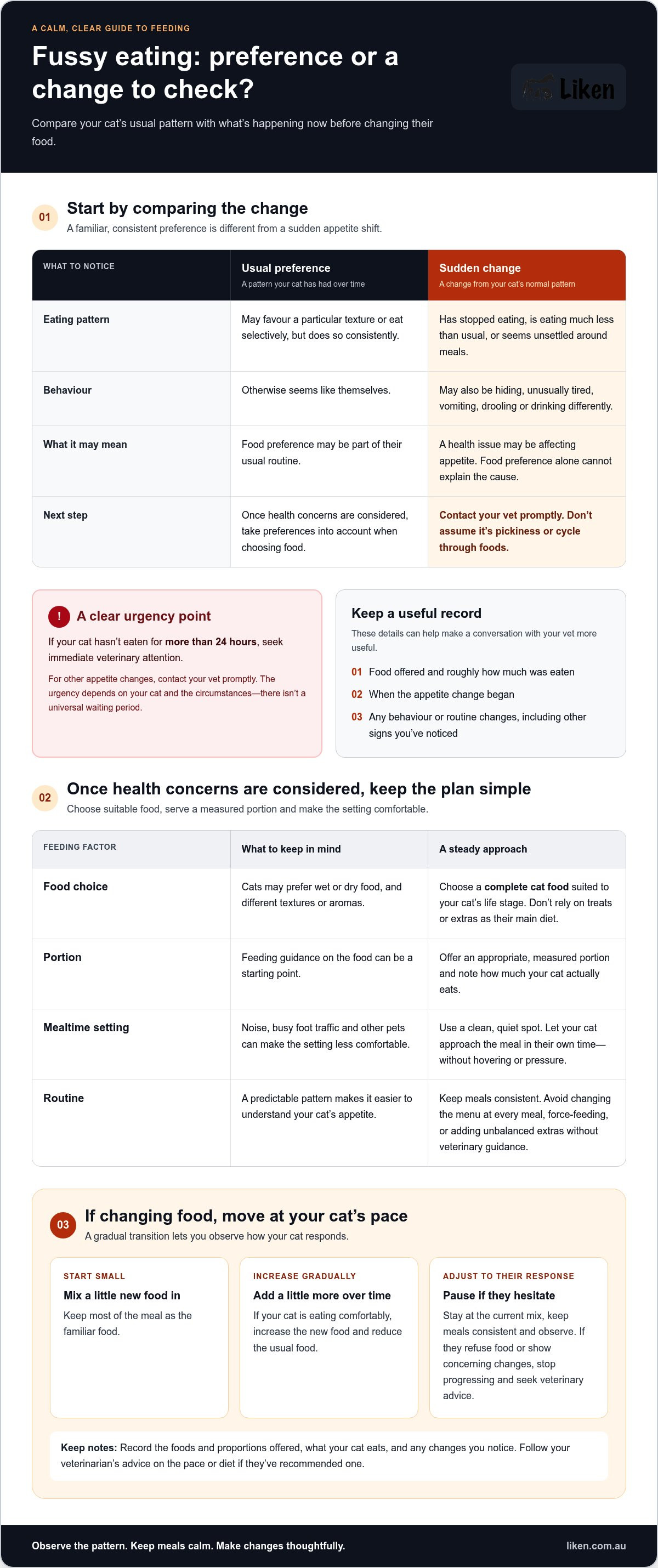
Some cats have clear preferences. If yours has always favoured a particular texture, eaten selectively but consistently, and otherwise seems like themselves, fussiness may simply be part of their usual routine. A sudden change is different. Notice whether your cat has stopped eating, is eating much less than usual or seems unsettled around meals. Before deciding what to feed a fussy cat, compare their appetite with their normal pattern.
A sudden appetite change is a reason to call your cat’s veterinarian. That’s especially true if eating less comes with signs such as hiding, unusual tiredness, vomiting, drooling or altered drinking habits. Don’t assume it’s just a food preference or try to address a sudden refusal by cycling through different foods.
When is a fussy cat’s eating change a reason to call the vet?
Contact your vet promptly if your cat stops eating, markedly reduces their intake or shows other changes in behaviour. Dental discomfort, illness and other causes can affect appetite, but food preferences alone can’t explain what’s behind the change. A vet can assess your cat and advise what to do next. The urgency depends on your cat and the circumstances, so don’t rely on a universal waiting period.
To make that conversation more useful, keep track of what’s happening rather than guessing:
- Note what food you offered and roughly how much your cat ate.
- Record when the appetite change began and any changes to behaviour or routine.
- Share any other signs you’ve noticed, even if they seem unrelated to meals.
Once health concerns have been considered, you can look at food preferences and feeding habits. For background on food types and nutritional needs, see Cat food composition and nutritional requirements.
How to choose food and make mealtimes easier for a fussy cat
Once you’re ready to focus on food, keep the plan simple: check that it’s nutritionally suitable, serve a measured portion and make the setting comfortable. Cats can have different preferences for wet or dry food, texture and aroma. Preference matters, but choose food labelled as complete for your cat’s life stage so it can provide the nutrition they need. For more help comparing options, explore this cat food buying guide.
- Check the food. Choose a complete cat food suited to your cat’s life stage, rather than relying on treats or extras as their main diet.
- Measure the meal. Use the feeding guidance on the food as a starting point, then note how much your cat actually eats.
- Set the scene. Offer food in a clean, quiet spot away from busy foot traffic, noise and other pets.
What feeding routine can help a fussy cat?
Predictable mealtimes give you a clearer picture of your cat’s appetite. Put down a fresh, appropriate portion and let your cat approach it in their own time. Notice what they eat without hovering or pressuring them. If they prefer one texture, factor that into your choice while keeping nutritional completeness at the centre of the decision. Cornell University’s expert advice on feline feeding and appetite issues offers more background on feeding practices.
Try not to change the menu at every meal, force-feed or add unbalanced extras without veterinary guidance. A steady approach makes it easier to spot patterns and avoids turning mealtimes into a negotiation. When you’re ready to compare suitable options, Liken’s online range includes cat food from brands such as ADVANCE.
How to introduce new food and what to do next
If you’ve chosen a suitable new food, introduce it gradually rather than replacing your cat’s usual meal all at once. A slower transition gives you time to see how your cat responds and can make the change more manageable. Follow your veterinarian’s advice if they’ve recommended a particular pace or diet.
- Start with a small amount. Mix a little of the new food into the familiar food, keeping most of the meal unchanged.
- Increase gradually. If your cat is eating comfortably, add a little more new food over time and reduce the amount of their usual food.
- Adjust to your cat. If they hesitate or eat less, pause at the current mix instead of pushing ahead. Keep meals consistent while you observe their response.
How can you change a fussy cat’s food without adding stress?
Keep the transition calm and predictable. Offer the mixed meal in the usual spot, and avoid masking repeated food changes with a stream of new extras. If your cat refuses food or develops concerning changes in appetite or behaviour, stop progressing the transition and seek veterinary advice. Your vet can guide the next step based on your cat’s circumstances.
Keep a simple note of the foods and proportions offered, what your cat eats and any changes you notice. This record can help you spot patterns and give your veterinarian useful details if concerns arise. If you’re considering ADVANCE, the ADVANCE pet food guide provides product information. No food should be treated as a guaranteed fix for fussiness.
Once you’ve settled on a suitable choice, Liken’s online cat food range makes it easy to browse cat food options.
Make your cat’s next meal a calm step forward
Your cat doesn’t need a completely new menu every time they hesitate. Keep observing their usual eating habits and make changes thoughtfully rather than chasing a quick fix. When deciding what to feed a fussy cat, focus on a suitable complete food your cat can settle into, not a promise that one particular option will solve pickiness.
When you’re ready to browse, Liken supplies ADVANCE and other cat food brands, with online ordering, flexible delivery and digital standing orders. Choose an option that suits your cat’s needs and your household routine, then give them time and consistency. Explore cat food at Liken and find an option for your cat’s next meal. Small, steady choices can make feeding feel more manageable for both of you.
Frequently Asked Questions
How long can a fussy cat go without eating?
There isn’t one safe waiting period for every cat. A sudden refusal or a marked drop in food intake can be serious, especially if your cat seems unwell or has other symptoms. Contact your veterinarian promptly rather than waiting to see if fussiness passes. Mention any existing health conditions or medicines, as these may affect the advice your cat needs.
Can I add tuna or milk to encourage my fussy cat to eat?
It’s best not to rely on tuna, milk or table scraps to tempt your cat. They may not provide balanced nutrition, and some cats don’t tolerate certain foods well. If you’re unsure what to feed a fussy cat, keep their main meals complete and suitable for them. Ask your veterinarian before adding toppers if appetite changes continue.
Should I keep changing food until my cat finds one they like?
No. Frequent switches can make it difficult to tell whether your cat prefers a certain food or is responding to another change. After considering health concerns, settle on a suitable option and offer it consistently. If you need to change foods, introduce the new one gradually. Seek veterinary advice if your cat eats less or refuses food.
Is wet food better than dry food for a fussy cat?
Neither wet nor dry food is automatically best for every cat. Some prefer a smooth texture, while others show more interest in chunks or kibble. Whichever format you offer, choose a complete food that suits your cat’s needs and observe how they respond. If a health condition could affect their diet, ask your veterinarian for guidance on suitable choices.


