

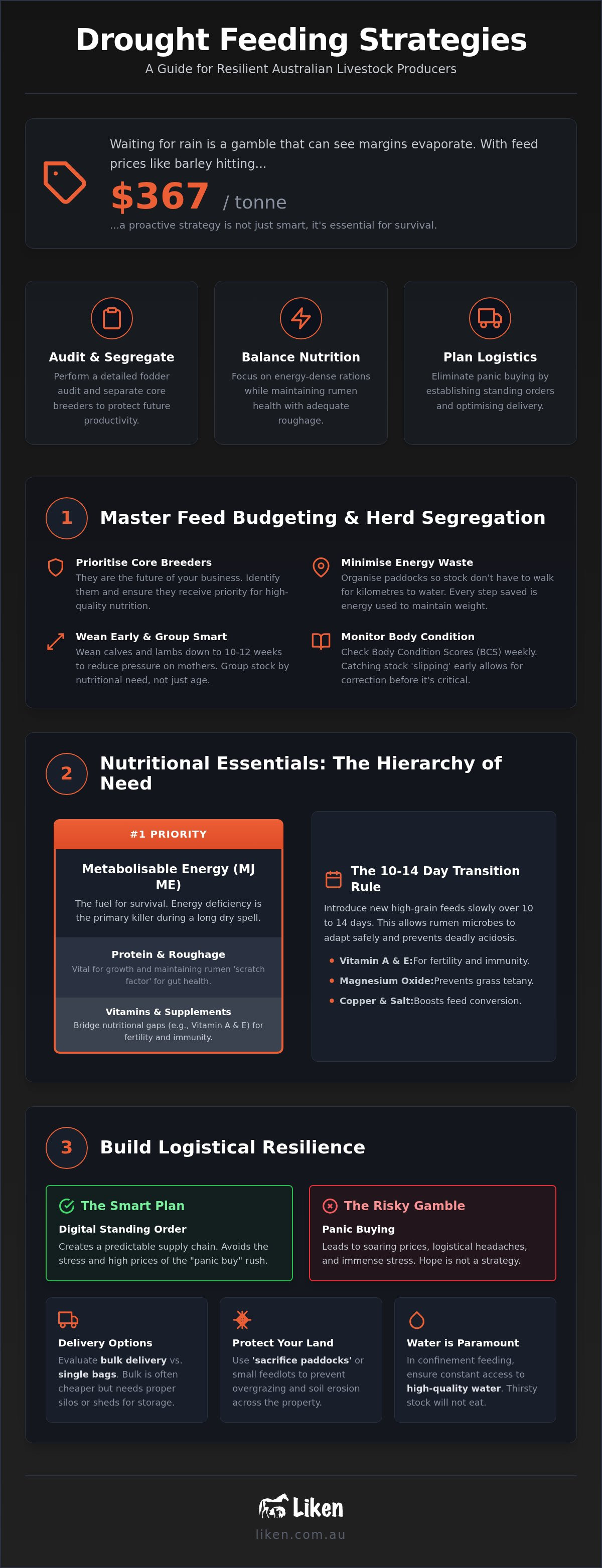
Waiting for the rain to break isn't just a gamble; it's the fastest way to see your hard-earned margins evaporate into the dust. We all know the stress of watching the paddock turn brown while feed prices like barley hit $367 per tonne. It's a massive logistical headache just getting bulk delivery to your gate without breaking the bank, and the fear of stock losing condition is enough to keep any producer up at night.
You can protect your herd and your bottom line with the right drought feeding strategies for livestock australia. This guide shows you how to organise herd segregation and choose supplements with the best ROI. We'll also look at reliable feed delivery options to take the stress out of your logistics, so you can focus on what matters most. Let's get a plan in place to keep your animals healthy and your business resilient.
Key Takeaways
- Perform a detailed fodder audit to calculate your remaining feed days and separate core breeders from trade stock to protect your future productivity.
- Implement proven drought feeding strategies for livestock australia by focusing on energy-dense rations while maintaining essential rumen health through adequate roughage.
- Eliminate the risk of "panic buying" by establishing a digital standing order for a reliable, weekly or monthly supply of high-quality feed.
- Evaluate bulk delivery options against single-bag logistics to find the most efficient and cost-effective way to source feed for your specific storage setup.
Master the Art of Feed Budgeting and Herd Segregation
Success starts with a clear-eyed look at your paddocks. Given the recurring history of Drought in Australia, we know hope isn't a strategy. Kick things off with a "fodder audit" to count exactly how many days of feed you've got left on the ground. It's about data, not guesswork. This is the foundation of smart drought feeding strategies for livestock australia.
Once you know your numbers, it's time to triage. Identify your "core" breeders; they are the future of your business. These animals get the priority for high-quality nutrition. Compare your options using a feed cost calculator on a cents-per-megajoule basis. It's the only way to see if that "cheap" hay is actually a bargain compared to high-energy pellets. Monitor Body Condition Scores (BCS) weekly. If you catch stock "slipping" early, you can fix it before they hit a critical point.
Strategic Weaning and Grouping for Efficiency
Effective drought feeding strategies for livestock australia rely on reducing demand. Wean calves and lambs early, down to 10 or 12 weeks, to take the nutritional pressure off the mothers. Draft your stock into groups based on what they actually need to eat, not just their age. This stops the big, dominant animals from hogging all the tucker. Finally, organise your paddocks so stock don't have to walk miles to water. Every extra step is energy they aren't using to maintain weight.
Nutritional Essentials: Balancing Energy, Protein, and Key Supplements
Metabolisable Energy is the fuel that keeps a beast’s heart beating and muscles moving during a dry spell. When planning drought feeding strategies for livestock australia, you must prioritise energy (MJ ME) above all else. Energy deficiency is the primary killer during a long dry. While protein is vital for growth, your stock simply won't survive without enough fuel in the tank. You also need to keep the rumen healthy. Ensure a minimum amount of "scratch factor" or roughage is always present. This keeps the gut moving and prevents the digestive system from shutting down.
Be patient with new rations. Moving stock onto high-grain diets too quickly is a recipe for acidosis and lost animals. Getting your drought feeding strategies for livestock australia right means managing this transition carefully. Introduce any new feed slowly over a period of 10 to 14 days. This window allows rumen microbes to adapt safely. It's a small time investment that prevents a major disaster in the yards. Steady changes keep the animals settled and growing during tough times.
The Role of Magnesium, Copper, and Vitamins in Dry Times
Dry, dusty feed is often stripped of Vitamin A and E. These are critical for maintaining high fertility and a strong immune system in your breeders. Strategic use of animal supplements australia helps bridge this nutritional gap. Magnesium Oxide is another essential tool. It prevents grass tetany when you finally move stock onto lush "break" growth after the first rains. Copper Sulfate and saltlicks are also great for boosting feed conversion efficiency. They ensure your stock get the most out of every single mouthful. Our friendly team can help you source the best additives for your specific conditions.
Logistical Resilience: Sourcing and Managing Bulk Feed
Sourcing feed during a dry spell is often a race against time and rising prices. To stay ahead, avoid the stress of a "panic buy" by setting up a pet food standing order australia. This creates a predictable supply chain so you aren't left scrambling when every other producer is doing the same. Effective drought feeding strategies for livestock australia rely on this kind of forward planning. You should also weigh up whether bulk animal feed delivery australia suits your setup better than single bags. While bulk is often cheaper, you need the right silos or sheds to keep it dry and pest-free.
Preparation makes the delivery day run smoothly. Ensure your unloading area is truck-ready with clear access and solid ground. No driver wants to get bogged or waste time navigating tight gates. Don't forget the team helping you muster, either. Brands like COBBER are perfect for keeping your working dogs fuelled for the extra kilometres they'll cover during a drought. It's about keeping every part of the farm moving.
Confinement Feeding and Infrastructure
Protecting your land is just as vital as feeding the herd. Set up "sacrifice paddocks" or small feedlots to prevent overgrazing and soil erosion across the rest of the property. In these tight quarters, water quality is paramount. Thirsty stock simply won't eat, and poor-quality water often leads to salt toxicity when everything else is dry. Use digital systems to track your inventory. It's the best way to ensure you never run out of feed on a long weekend. These smart drought feeding strategies for livestock australia keep your operation resilient when things get tough.
Secure Your Property's Future
Drought is a tough reality of the Australian landscape, but it doesn't have to break your business. By starting with a rigorous fodder audit and focusing on high-energy rations, you can maintain stock condition even when the paddocks are bare. Remember that precision with supplements like Magnesium and Vitamin A makes every mouthful count. The secret to staying ahead is removing the stress from your supply chain through reliable logistics and bulk delivery. Implementing these drought feeding strategies for livestock australia gives you the control you need to protect your herd and your bottom line.
Since 2016, we've helped Aussie farmers with everything from single bags to full truckloads and expert technical advice. Browse our range of bulk livestock feed and supplements at Liken to get your plan in place. We're here to help you get through the dry times together.
Frequently Asked Questions
How much grain should I feed my sheep per day during a drought?
Adult dry ewes generally need between 400 and 600 grams of high-quality grain daily for maintenance. This amount varies based on the animal's weight and the energy content of the grain. Lactating ewes or growing lambs require much higher levels to stay healthy. Always start with small amounts and increase the ration slowly over two weeks to prevent digestive upsets like acidosis.
Can I feed livestock only on hay during dry times?
While hay provides the essential "scratch factor" for rumen health, it's often too low in energy to be the only feed source. Most cereal hays don't have enough metabolisable energy to keep stock from losing condition. Effective drought feeding strategies for livestock australia usually involve a mix of roughage and energy-dense grains or pellets to ensure your animals stay productive and resilient.
What are the first signs of nutritional deficiency in cattle?
A dull, rough coat and lethargy are usually the first indicators that your cattle aren't getting enough nutrients. You might also notice "pica," where animals chew on wood, stones, or old bones to find missing minerals. Keep a close eye on their ribs and tail head; if these areas start looking prominent, it's a sign they need an immediate boost in their energy intake.
Is it cheaper to buy in bulk or bag-by-bag during a drought?
Bulk delivery is typically more cost-effective per tonne because it cuts out the expense of packaging and individual handling. It's a great option if you have silos or dry sheds ready for a large load. If you have limited storage or a smaller herd, buying by the bag helps manage your cash flow and reduces the risk of feed spoiling in the weather.


