

A fast meal can be more than a messy habit. Eating too quickly may be associated with problems such as choking, vomiting or bloating, so slower-feeding methods may be worth trying. Deep-chested dogs face a greater risk of bloat.
If your dog finishes in seconds, it’s understandable to wonder whether changing their food or feeding routine could help. The right approach depends on more than what’s in the bowl: how food is served and the pace around mealtimes matter too.
Read on to learn about the risks of fast eating, why a calm mealtime matters, and which food choices and practical feeding methods may help slow your dog down.
Key Takeaways
- Fast eating can lead to choking, vomiting and dangerous bloating. Deep-chested dogs are at higher risk.
- Keep play and exercise away from mealtimes, then give your dog one to two hours to rest after eating.
- Try a slow feeder, lick mat or smaller meals to encourage a calmer pace. Start with a small portion and supervise the first few meals.
- If your dog keeps eating too quickly despite changes, consult a veterinarian to explore possible medical causes.
1. What are the implications of fast eating?
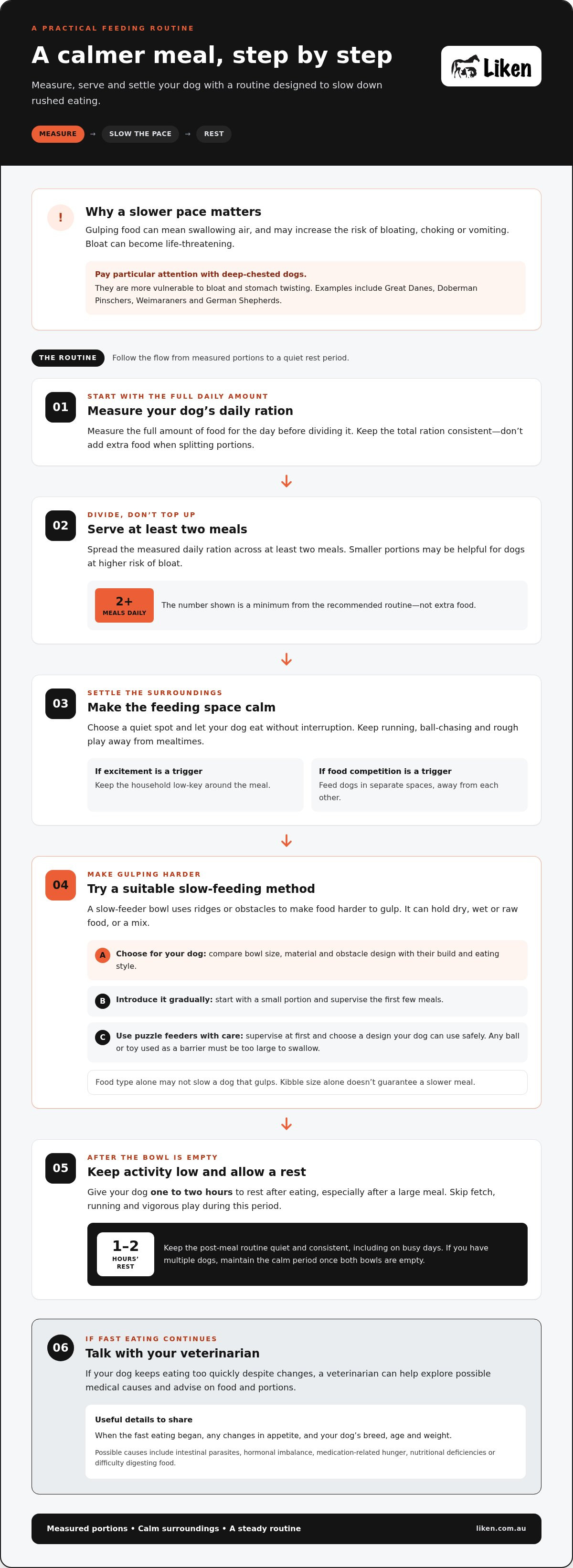
Fast eating can cause a dog to swallow air, which may lead to bloating. Bloat can become life-threatening, and gulping food also increases the risk of choking or vomiting. Rapid eating can be a concern for some dogs. These risks make a rushed meal more than a messy habit.
Deep-chested dogs are particularly vulnerable to bloat and stomach twisting. Great Danes and Doberman Pinschers are examples of deep-chested breeds. Weimaraners and German Shepherds are also susceptible. If your dog eats quickly and has a deep chest, take the behaviour seriously and establish calmer feeding habits.
Measure your dog’s daily food ration, then divide it into at least two meals. For dogs at higher risk of bloat, dividing food into smaller meals may be helpful. Don’t add extra food when splitting portions: spread the measured daily amount across meals instead. A veterinarian can advise on diet with your dog’s breed, age and weight in mind.
Competition for food, stress or anxiety, going without food and strong enthusiasm can all prompt fast eating. Feed dogs separately if competition is a trigger, and keep mealtimes predictable. If your dog continues to eat too quickly despite attempts to slow them down, arrange a veterinary visit.
A veterinarian can help rule out medical causes, including intestinal parasites, hormonal imbalance, medication-related hunger, nutritional deficiencies or difficulty digesting food. Share when the fast eating began and any changes in appetite. These details, along with your dog’s breed, age and weight, can help guide advice on food and feeding portions.
2. Avoiding play or exercise around mealtimes
Keep mealtimes calm and separate from energetic activity. Don’t encourage running, chasing a ball or rough play while your dog eats or immediately afterwards. A lively game can disrupt a settled feeding routine with a burst of movement just after a meal. Instead, set up a quiet place for the bowl and let your dog eat without interruption.
After eating, give your dog one to two hours to rest. This is especially important after a large meal, because exercise soon afterwards may contribute to bloat. Skip fetch, running and vigorous play during that rest period. Keep the household routine low-key too, so visitors or other pets don’t prompt an excited dash around the home.
Plan mealtimes around your dog’s usual activity. For example, take a walk before dinner, then let your dog settle before serving food. After the meal, choose a quiet activity at home rather than another walk or an energetic game. For pet owners who appreciate structured habits and broader support with household stress or family caregiving, platforms like modifyego.com provide downloadable guides on personal wellbeing. Keep the rest period consistent, including on busy days.
If you have more than one dog, feed them in separate spaces where they can eat without competition or excitement. Once both bowls are empty, maintain the same calm period instead of letting them chase each other. A predictable routine helps make eating and resting distinct parts of the day.
For a fast eater, calm surroundings are one part of a safer mealtime routine. Combine a quiet feeding space with the recommended rest after meals, and keep play away from mealtimes. If your dog has a history of bloat or you’re unsure how activity fits their needs, discuss their routine with a veterinarian.
3. Food for fast eaters
A slow-feeder bowl uses ridges or obstacles to make food harder to gulp. No single bowl is best for every dog, so compare its size, material and design with your dog’s build and eating style. If you are looking for practical bowls and everyday pet supplies, online retailers such as deesstyle.myshopify.com offer a variety of options. Australian prices vary by product, so consider how the bowl will fit into your regular feeding routine.
How food is served matters more than its type. Slow feeders can hold dry, wet or raw food, or a mix. Kibble designed for fast eaters, or food high in fibre, may take longer to eat. Kibble size alone doesn’t guarantee a slower meal, so consider dog food for fast eaters alongside how you serve it.
Puzzle feeders can slow eating, but supervise your dog at first and choose a design they can use safely. If you put a ball or toy in the bowl as a barrier, make sure it’s too large to swallow. Introduce a slow feeder with a small portion, then monitor your dog during the first few meals.
To divide meals, measure the full daily ration first, then serve it in smaller portions throughout the day. Keep the total ration consistent rather than adding food to each meal. If dogs eat each other’s food, feed them separately and supervise until both have finished.
Try a slow feeder with a small portion of your dog’s usual food, then observe whether it eases gulping. A suitable dog food for fast eaters is only one part of a calmer feeding routine. Explore dog food options as you consider what works for your dog.
Choose a bowl whose size, material and obstacle design suit your dog’s build and eating style. Slow feeders can hold dry, wet or raw food. Australian prices vary by product, so compare options with your regular feeding routine in mind.
Liken: ADVANCE
Liken offers ADVANCE as one food option to consider while establishing a calmer feeding routine. Changing food alone won’t slow a dog that gulps meals, so pair your choice with practical steps such as measured portions and a slow feeder.
Compare ADVANCE with COBBER, ENDURO and HILLS when exploring food choices for your dog. Choose based on your dog’s needs, and keep their daily ration consistent as you divide it into smaller meals. For advice about health concerns or a diet suited to your dog, speak with your veterinarian.
Visit Liken online to explore ADVANCE and other available dog food options.
Make your next mealtime a thoughtful one
Use your next few mealtimes to notice what helps your dog settle and eat at a steadier pace. Treat food choice and feeding method as separate decisions: choose a suitable diet for your dog, then use a bowl or routine that makes gulping less likely. The best dog food for fast eaters still needs to fit your dog’s individual needs, rather than being chosen on kibble size alone.
If you’re considering a food change, compare options such as ADVANCE, COBBER and ENDURO, keeping your dog’s usual needs in mind. Liken offers these choices for Australian pet owners exploring dog food options. A steady routine gives you a practical way to see what suits your household and your dog.
Contact Liken for help exploring dog food options. Take the next step towards calmer, more considered mealtimes.
Frequently Asked Questions
What are the implications of fast eating?
Fast eating can affect more than how quickly a bowl is emptied. A dog may swallow air while gulping, which can lead to bloating, and a rushed meal can increase the risk of choking or vomiting. Bloat can be life-threatening. Notice how quickly your dog finishes and whether the behaviour changes. These details can help you describe the issue clearly to your vet.
What can happen if your dog eats too fast?
Eating too quickly may make mealtimes riskier for some dogs. Fast eating may have serious health consequences. Deep-chested dogs, including Great Danes and Weimaraners, are particularly susceptible to bloat. If your dog continues eating quickly despite changes to how meals are served, arrange a veterinary check to rule out medical causes.
What causes dogs to eat fast?
Competition for food, stress, anxiety, going without food and enthusiasm for a meal can all prompt rapid eating. For example, a dog may rush through dinner if another pet is nearby. Notice whether the pace changes when your dog eats alone or follows a predictable routine. A sudden or persistent change in appetite is useful information to share with your vet.
What dog food is best for dogs that eat too fast?
There isn’t one food that suits every fast eater. Choose food with your dog’s breed, age and weight in mind, and ask your vet about their dietary needs. A slow feeder can work with dry, wet or raw food, or a combination. For dogs who gulp, how you serve their meal may matter as much as the food itself.
Do slow-feeder dog foods or kibble shapes help slow eating?
Slow-feeder bowls use ridges or obstacles to slow eating, and kibble designed for fast eaters may take longer to finish. A particular kibble shape or size alone doesn’t guarantee a calmer meal. Introduce a feeder with a small portion, watch your dog use it, and see whether it slows their eating without causing frustration.


