

That vibrant blue crystal in your shed is often the difference between a thriving mob and a flock struggling with faded coat colour and persistent lameness. We all know how frustrating it is to watch your cattle lose their shine or deal with the headache of footrot after a heavy soak. It's tough seeing your hard work dampened by health issues that seem to linger in the damp soil of your paddocks.
This guide shows you how to safely use copper sulfate to boost growth and manage hoof health without the guesswork. We'll break down the best ways to set up an effective footbath, how to spot the early signs of deficiency, and how to source your bulk supplements easily online. Let's get your stock back to their best with some practical, expert advice from your local team.
Key Takeaways
- Understand how this soluble salt helps maintain enzyme function and corrects mineral gaps in your soil and stock.
- Learn to use copper sulfate as a powerful tool for managing footrot and scald during those damp Aussie winters.
- Get the facts on precise measurement to ensure your stock stays healthy while avoiding the risks of mineral toxicity.
- Find out how to handle supplements safely and source bulk supplies alongside your favourite feed brands like COBBER or ADVANCE.
Copper Sulfate in Australian Agriculture: More Than Just a Blue Mineral
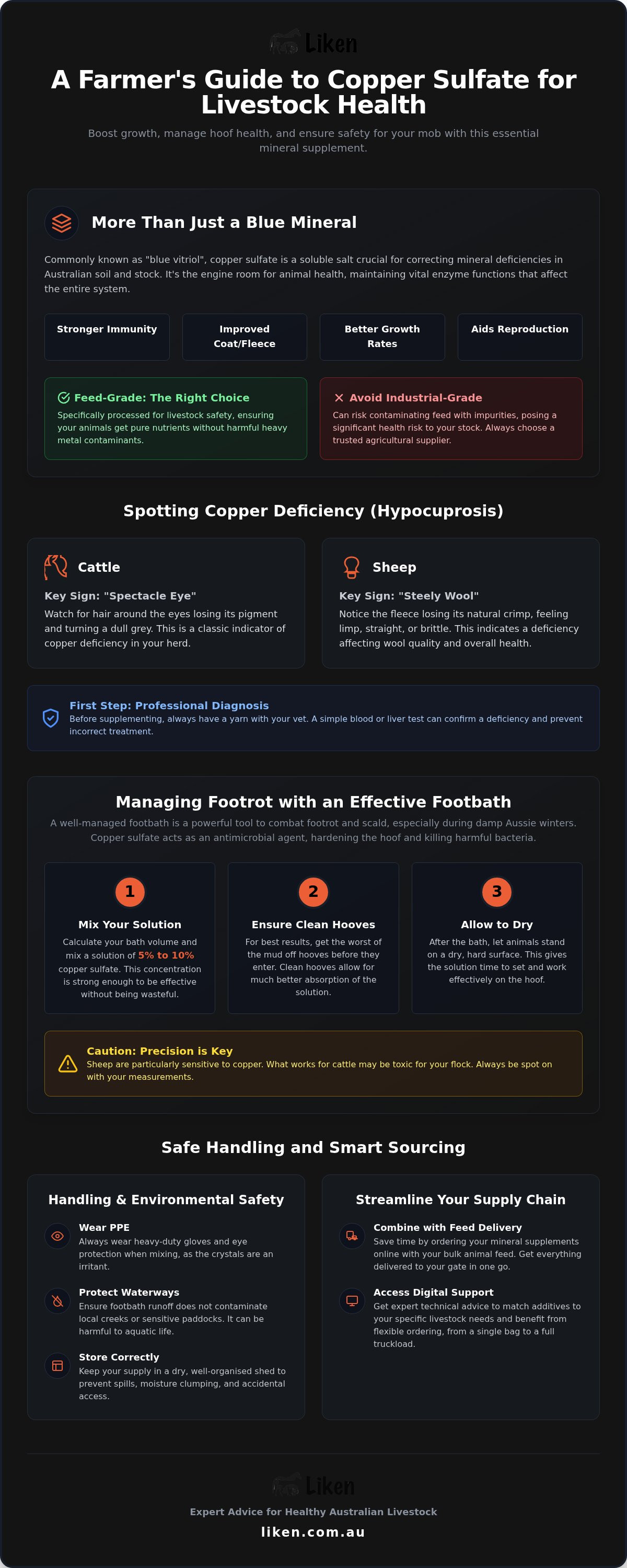
Copper sulfate is a soluble salt used to correct mineral deficiencies in Aussie soil and stock. Often called "blue vitriol" by experienced producers, it's a critical supplement for maintaining livestock enzyme function. Think of copper as the engine room of animal health. It affects everything from the strength of an immune response to the lustre of a fleece. When copper levels drop, the whole system slows down. This leads to stunted growth and poor reproductive performance in your mob.
It's vital to choose the right grade for your property. While Copper(II) sulfate is common in many industries, feed-grade crystals are specifically processed for safety. Using industrial-grade alternatives can risk contaminating your feed with heavy metals. We always recommend sticking with high-quality sources to keep your animals safe and thriving. It's a simple way to ensure they get the nutrients they need without the nasty extras.
Identifying Copper Deficiency (Hypocuprosis) in Your Herd
Spotting a deficiency early can save you plenty of heartache. In cattle, keep an eye out for "spectacle eye," where the hair around the eyes loses its pigment and turns a dull grey. Sheep owners should watch for "steely wool," which loses its natural crimp and feels limp or straight. These issues often stem from our varied soil types; some paddocks are naturally low in minerals, while others contain high levels of molybdenum that block copper absorption. Before you jump into heavy supplementation, have a yarn with your vet. A blood or liver test is the first step to confirm if your stock really needs a boost.
Managing Footrot and Health: Practical Applications in the Paddock
When the winter rains set in and paddocks turn into a bog, footrot and scald become a real headache for Aussie farmers. Using copper sulfate as an antimicrobial agent is a tried-and-true method to combat these issues. It acts fast to harden the hoof and kill off the bacteria that love damp conditions. You've got to be spot on with your measurements, though. Sheep are particularly sensitive to copper, and what works for cattle might be toxic for your flock. Precision is your best friend here.
It's smart to look at this as part of your total animal supplements Australia strategy. By integrating mineral licks or water medication, you ensure your stock gets a steady supply of nutrients year-round. Organise your maintenance schedule so you aren't just reacting to problems when they pop up. If you need to stock up on bulk supplies, you can order your stock supplements online to keep your shed ready for the season ahead.
Setting Up an Effective Footbath for Sheep and Cattle
A well-managed footbath is one of the most effective ways to treat a mob. Follow these steps for the best results:
- Step 1: Calculate your bath volume and mix a solution of 5% to 10% copper sulfate. This concentration is strong enough to work without being wasteful.
- Step 2: Try to get the worst of the mud off their hooves before they enter the bath. Clean hooves allow for much better absorption of the solution.
- Step 3: After they've walked through, let the animals stand on a dry, hard surface. This gives the solution plenty of time to set and start working its magic on the hoof.
Safe Handling and Sourcing Your Supplements Online
Handling copper sulfate safely is just as important as getting the dose right. Those blue crystals are an irritant, so wearing heavy-duty gloves and eye protection is non-negotiable when you're mixing a batch. It's also about being a good neighbour to the land. Make sure your footbath runoff doesn't wash into local creeks or contaminate sensitive paddocks. While your cattle thrive on it, aquatic life and certain soil microbes aren't so keen. Keep your storage shed organised and dry to prevent any accidental spills or clumping.
You can make life much easier by streamlining your supply chain. Instead of making a special trip to town, combine your supplement needs with your regular feed run. We specialise in bulk animal feed delivery Australia wide, meaning your minerals arrive right at your gate alongside premium brands like COBBER or STOCKMAN & PADDOCK. It's a simple way to save time and ensure you never run short during a wet spell.
Why Choosing a Digital Partner Like Liken Makes Sense
Going digital for your farm supplies isn't just about convenience. It's about getting expert support when you need it most. We offer technical advice to help you match additives to your specific livestock needs, whether you're managing a small hobby farm or a large-scale operation. Our flexible ordering means you can grab a single bag for a few head of sheep or organise a full truckload for the whole station. We're here to help you keep your stock healthy and your property running smoothly without the stress of extra travel.
Keeping Your Mob Moving and Healthy
Getting your mineral balance right doesn't have to be a guessing game. By understanding the role of copper sulfate in your stock's diet and hoof health, you're setting your property up for long-term success. Whether you're mixing a precise footbath to tackle seasonal lameness or correcting a deficiency, small steps lead to big results in the paddock. We're here to help you keep your sheep and cattle in peak condition with the right tools and local expertise.
As a 100% Australian owned business, Liken supports regional producers with fast national delivery and expert technical advice on all additives. You can easily browse our range of livestock supplements and get delivery to your gate alongside your regular feed. Let's work together to keep your stock thriving and your farm running smoothly. Cheers to a productive season ahead!
Frequently Asked Questions
Is copper sulfate safe for all livestock?
Copper sulfate is safe when used correctly, but tolerance levels differ significantly between species. Cattle handle much higher doses than sheep, who are notoriously sensitive to this mineral. Always double-check your concentrations before treating a mixed mob. It's about finding that sweet spot. You want to prevent deficiency without risking the health of your more sensitive animals.
How often should I use a copper sulfate footbath for my sheep?
During a wet Aussie winter, you might use a copper sulfate footbath once a week to stay on top of footrot. For general maintenance in drier weather, once a fortnight or even monthly is usually plenty. Keep the bath clean and free of manure. This ensures the blue crystals can reach the hoof and do their job effectively.
Can I mix copper sulfate directly into my cattle feed?
Yes, you can mix it, but it requires extreme care and thorough mixing to prevent "hot spots" in the ration. Most producers find it much simpler to rely on professionally balanced feeds like COBBER or STOCKMAN & PADDOCK. These brands take the guesswork out of mineral ratios. If you mix your own, use a high-quality additive and ensure it's evenly distributed.
What are the signs of copper poisoning in sheep?
Signs of poisoning include jaundice, which shows up as yellowing in the whites of the eyes or gums. Other red flags include dark, tea-coloured urine and sudden weakness. Because sheep store copper in the liver, poisoning often looks like a sudden crisis rather than a slow decline. If you're worried, pull the supplements and call your vet immediately.


