

What if the best dog food for your dog isn’t the one with the flashiest label or biggest claims? If you’re wondering how to choose the right dog food, you’re not alone. Conflicting advice, unfamiliar formats and words like “natural” or “premium” can make the choice feel harder than it needs to be. Start with your dog’s age, size, health, activity and the way your household manages meals.
This guide will help you match food to your dog’s needs, compare labels and formats, and settle on a feeding routine that works day to day. We’ll cover life stage, nutritional suitability and practical details such as storage and regular supplies, while separating useful label information from marketing language. You’ll also learn when to speak with your vet, especially if your dog has health concerns or you’re considering a specialised diet.
Key Takeaways
- Learning how to choose the right dog food starts with your dog’s life stage, size, activity and individual needs, not a universal bestseller.
- Compare foods by suitability and feeding directions before weighing up claims such as “premium” or “natural”.
- Consider how dry and wet food fit your dog’s serving preferences, storage needs and household routine.
- Shortlist suitable options, choose a manageable feeding routine, then keep an eye on appetite and tolerance. Seek veterinary advice about health concerns.
How to choose the right dog food: start with your dog’s needs
There isn’t one everyday food that suits every dog. A suitable choice matches your dog’s nutritional needs and life stage, while also working with their appetite and your household routine. Start with the dog in front of you, rather than a bestseller or a bold claim on the pack.
Which details about your dog should guide the choice?
Before comparing products, make a quick profile of your dog. Note their:
- Life stage: Puppies, adult dogs and senior dogs can have different nutritional needs. Look for food intended for your dog’s current life stage.
- Size and activity: A small, less active dog and a large, energetic dog may need different feeding amounts and energy levels. Use the feeding directions as a starting point.
- Appetite and preferences: Consider what your dog will readily eat, including whether they prefer dry or wet food. A nutritionally suitable option needs to be acceptable to your dog, too.
- Tolerance: Pay attention to how your dog responds to their food over time, including their appetite and any changes that concern you.
Age, size and activity can help narrow your shortlist. If your dog has a known health condition, a suspected food reaction or another health concern, speak with your dog’s veterinarian before changing their diet. Don’t try to diagnose a problem by switching foods alone. For broader background on food types and nutrition, explore Dog food on Wikipedia.
The right food depends on the individual dog and their needs. That’s the starting point for how to choose the right dog food: first assess whether a food suits your dog, then weigh up their preferences and what fits your routine.
Compare dog food labels and formats without getting distracted by claims
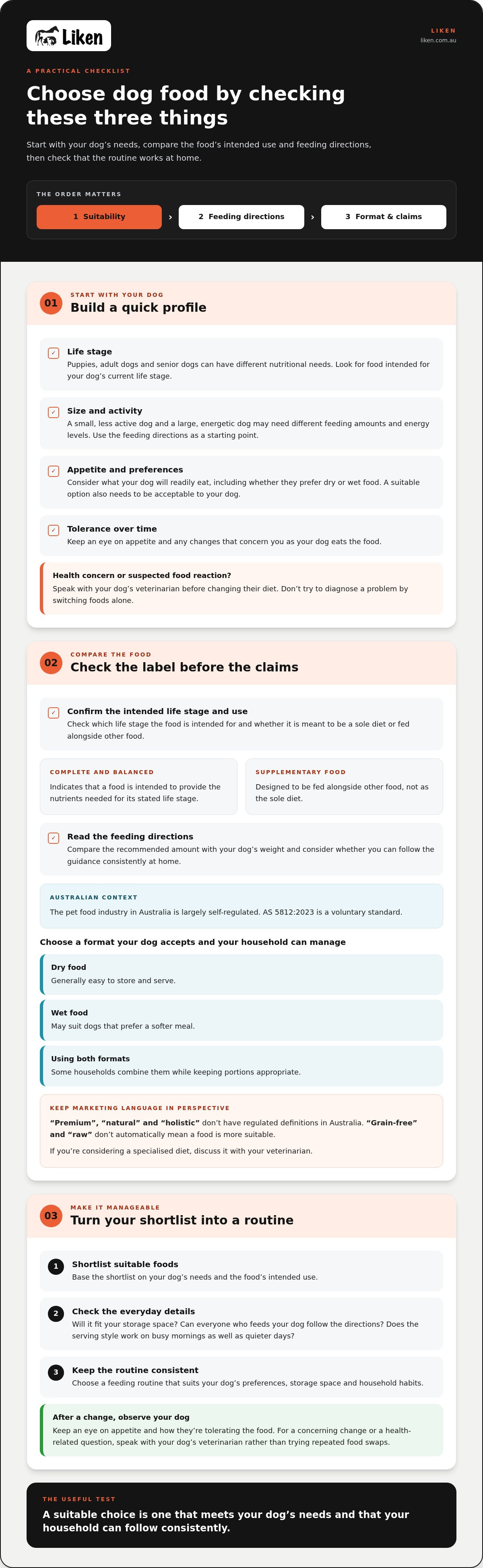
Once you’ve identified what your dog needs, compare options in the same order: suitability, feeding directions, then format and marketing claims. In Australia, the pet food industry is largely self-regulated, and AS 5812:2023 is a voluntary standard. The words “complete and balanced” indicate that a food is intended to provide the nutrients needed for its stated life stage. A supplementary food is designed to be fed alongside other food, not as the sole diet.
What should you look for when reading a dog food label?
Check the life stage the food is intended for, then read the feeding directions. Compare the recommended amount with your dog’s weight and consider whether you can follow the guidance consistently at home. For brand-specific information, Liken’s ADVANCE pet food guide can help you explore the range.
Next, choose a format that suits both your dog and your day. Dry food is generally easy to store and serve, while wet food may suit dogs that prefer a softer meal. Consider your storage space, your dog’s serving preferences and how each option fits your usual feeding routine. Some households use one format; others combine them while keeping portions appropriate.
Don’t treat “premium”, “natural” or “holistic” as proof that a food is right for your dog. These terms don’t have regulated definitions in Australia. “Grain-free” and “raw” don’t automatically mean a food is more suitable, either. If you’re considering a specialised diet, discuss it with your veterinarian. The AAHA Nutritional Assessment Guidelines also outline factors that can inform a nutritional assessment.
In practice, check the food’s intended use and feeding directions first. Then choose a format your dog accepts and your household can manage. If ADVANCE is on your shortlist, explore dog food at Liken.
Choose a dog food that fits your routine and make the next step simple
After comparing what suits your dog, check that the choice is practical to maintain. A food that fits your household makes it easier to follow feeding directions consistently, store it properly and keep regular supplies on hand. Use this sequence to turn your shortlist into a workable plan:
- Shortlist suitable foods based on your dog’s needs and the food’s intended use.
- Compare feeding directions so you understand the recommended amount and can serve it reliably.
- Choose a manageable routine that suits your dog’s preferences, storage space and household habits.
How can you make your dog food choice easier to maintain?
Think through the everyday details. Will the food fit in your storage space? Can everyone who feeds your dog follow the same directions? Does the serving style work on busy mornings as well as quieter days? If you’re exploring natural food choices, Liken’s natural dog food guide offers more to consider as you compare options.
After a change, keep an eye on your dog’s appetite and how they’re tolerating the food. If you notice a concerning change or have questions related to a health issue, speak with your dog’s veterinarian rather than trying to solve it through repeated food swaps.
Online ordering and digital standing orders from Liken can help make regular supplies easier to manage. As you compare options, explore ADVANCE dog food through Liken and assess whether it suits your dog’s needs and your household routine. The best answer to how to choose the right dog food is a suitable choice you can follow consistently day to day.
Make your next food choice with confidence
You don’t need to solve every nutrition question in one go. Let how to choose the right dog food guide your next step, then notice how the routine works for your dog and household. Keep a brief note of servings, appetite and anything you want to discuss at your next vet visit. A considered choice is more useful than chasing every new claim or changing food at the first sign of uncertainty. If you have ongoing concerns about your dog’s health or response, share your observations with your veterinarian before making another change.
ADVANCE is Liken’s priority pet food offering. Liken’s flexible delivery options and digital standing orders can help you organise regular supplies around your routine. Explore ADVANCE dog food through Liken and take the next step at a pace that feels right for you and your dog.
Frequently Asked Questions
Is expensive dog food always better?
No. A higher price doesn’t automatically mean a food is a better match for your dog. Check whether it’s intended as a complete food for your dog’s life stage, then compare its feeding directions and ingredients with other suitable options. The best value is a food your dog can eat appropriately and that fits your household’s budget over time.
Should I choose grain-free dog food?
Not unless there’s a clear reason to do so. Grain-free isn’t automatically healthier, and removing grains doesn’t by itself show that a food is more suitable. If you’re considering it because of a suspected reaction or a health concern, speak with your dog’s veterinarian first. They can help you decide whether a dietary change makes sense.
How much food should I feed my dog?
Use the food’s feeding guide as a starting point, because the right amount depends on the particular food and your dog. Measure each serve rather than estimating, and include treats in your dog’s overall daily intake. Keep track of changes in weight or body shape, and ask your veterinarian for guidance if you’re unsure whether the portion is appropriate.
Can I feed my dog both wet and dry food?
Yes, you can combine wet and dry food if both suit your dog. Account for both portions rather than serving the full recommended amount of each, which could mean feeding more than intended. Follow each food’s feeding guidance when working out the combined amount, and watch how your dog responds to the change.


