

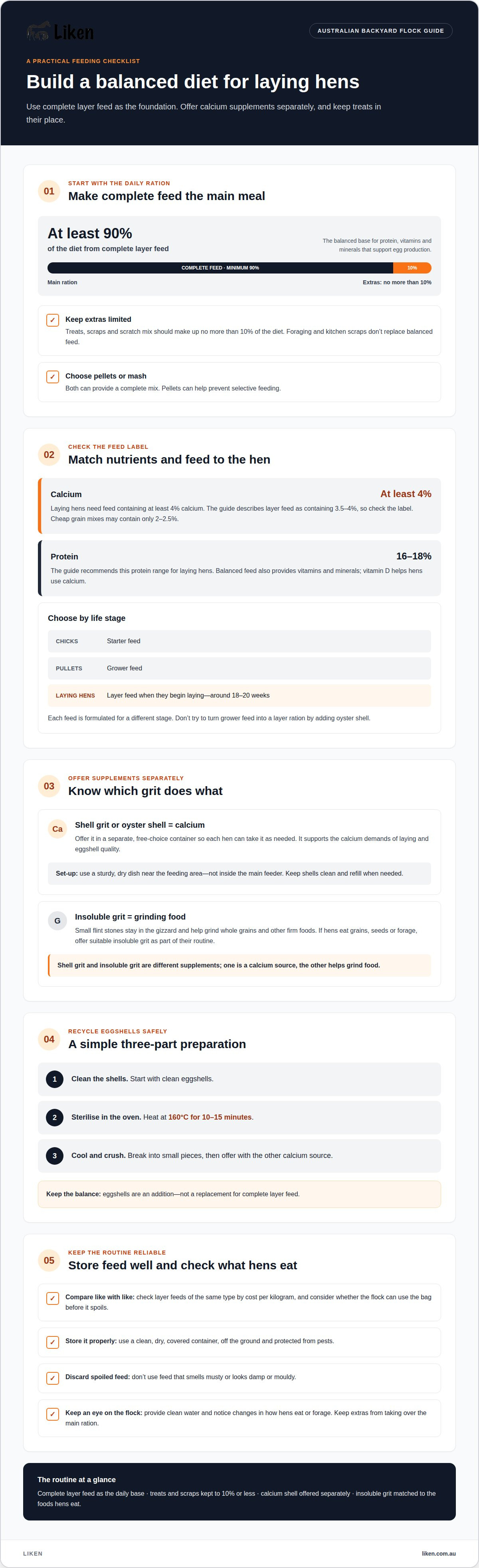
The best feed for laying hens in Australia is a complete layer feed, with complete feed making up at least 90% of a hen’s diet. Keep treats, scraps and scratch mix to no more than 10%. Shell grit and sterilised eggshells can add calcium, but they’re not a substitute for balanced feed.
It’s easy to assume a grain mix or a few kitchen scraps will cover the basics, especially when your hens forage around the yard. The key is giving them a reliable nutritional foundation, then understanding which extras have a useful role. This guide breaks down three choices: complete feed as the main meal, grit and oyster shell as calcium supplements, and sterilised eggshells as another way to offer calcium. You’ll also learn how to serve shell grit separately and prepare eggshells safely, so you can build a simple, practical feeding routine for your flock. Just as balanced nutrition supports your birds, maintaining daily personal wellness is equally important for keepers, with home health resources like Pureffect offering modern ways to support overall vitality.
Key Takeaways
- Choose layer pellets or mash as the everyday ration, and use scratch mix and scraps only as extras.
- Offer shell grit in a separate container so hens can take it when they need it.
- If you return eggshells to the flock, sterilise them in the oven at 160°C for 10-15 minutes first.
- Introduce layer feed when hens reach around 18 to 20 weeks and begin laying.
1. Calcium from shell grit and sterilised eggshells
Calcium supports eggshell quality, so a laying chicken needs a reliable daily source. Layer feed should contain 3.5 to 4% calcium, and laying hens need feed containing at least 4%. Cheap grain mixes may contain only 2-2.5%, leaving less calcium available for strong shells. Check the feed label rather than relying on grain, scratch or scraps to supply this mineral.
Calcium works alongside other nutrients. Laying-hen feed should provide protein and keep fibre in balance. Vitamins matter too, including vitamin D, which helps hens use calcium. A backyard flock that enjoys foraging still needs a balanced diet; treats and kitchen scraps don’t replace those nutrients.
Shell grit and oyster shell are calcium sources to offer alongside the main ration. Put shell grit in a separate container so hens can eat it as needed. It helps meet the calcium demands of laying and supports eggshell quality. Don’t confuse shell grit with insoluble grit, which helps chickens grind food.
You can also recycle eggshells, but sterilise them first. Heat clean shells in an oven at 160°C for 10-15 minutes, then let them cool and crush them into small pieces. Offer the pieces with the other calcium source, not as a replacement for complete layer feed. This simple step makes eggshells a useful addition to your flock’s feeding routine.
2. Grit and oyster shell supplements
Laying hens need feed containing at least 4% calcium, and oyster shell can be offered separately in a free-choice container. This lets each hen take shell as needed, while layer feed remains the balanced base. Keep the supplement separate rather than mixing it through grains or mash.
Insoluble grit and shell grit serve different purposes. Insoluble grit, such as small flint stones, stays in the gizzard and helps grind whole grains and other firm foods. Oyster shell and shell grit provide calcium instead. If hens eat grains, seeds or forage, offer suitable insoluble grit as part of their feeding routine.
Place shell grit in a sturdy, dry dish near the feeding area, not inside the main feeder. Keep the shells clean and refill the dish when needed. This free-choice approach suits a backyard flock because each hen can take calcium individually, rather than receiving a fixed amount mixed into every meal.
Choose feed for your hens’ life stage: grower feed is designed for pullets, while layer feed suits hens once they start laying. Don’t try to turn grower feed into a layer ration by adding oyster shell; each feed is formulated for a different stage. Hens that forage for seeds still need suitable complete feed, with grit matched to what they eat.
Check the feed label and observe what your poultry actually eat. If the flock gets whole grains or scratch, offer insoluble grit as well as separate shell grit. Treats and scraps may change what hens forage for, but they don’t replace balanced layer feed or its protein and vitamins.
3. Complete feed as the main part of a laying hen’s diet
For Australian laying hens, choose a complete layer feed as the daily foundation. Aim for at least 90% of the diet from complete feed; keep treats, scraps and scratch to no more than 10%. This helps each chicken get a balanced mix of protein, vitamins and minerals that supports egg production.
Compare layer feeds by their intended life stage and label, rather than brand name alone. The guide recommends 16-18% protein for laying hens. Pellets can help prevent selective feeding, while mash provides a complete mix too. Starter feed is for chicks, not laying hens; grower feed serves pullets before lay. Choose the type that matches your flock’s stage of growth.
Prices vary by brand and bag size, so compare layer feeds of the same type by cost per kilogram. Also consider whether your flock can use the bag before the feed spoils. Store feed in a clean, dry, covered container, off the ground and protected from pests. Discard feed that smells musty or looks damp or mouldy.
Free-ranging hens still need complete feed because pasture and foraging vary. Scraps can add variety, but shouldn’t displace the balanced ration. Complete feed remains the main source of nutrients, even when hens roam.
For medicated poultry feed, match the product’s stated purpose and bird life stage; medicated chick starter is an aid in preventing coccidiosis, not a layer ration. Explore animal feed options for your wider feeding needs.
Liken: ADVANCE
Liken offers ADVANCE as part of its animal-feed range, but a feed for another animal is not a substitute for a complete layer ration. For laying hens, choose feed specifically suited to poultry, and offer calcium supplements separately when needed. Keep this distinction in mind when shopping for more than one kind of animal.
Match the ration to your flock’s life stage and follow the product label. Feed intended for another animal isn’t a substitute for a balanced poultry layer ration. Liken also offers COBBER, ENDURO and HILLS across its animal-feed range.
For your hens, stick with complete layer feed as their main diet. If you’re choosing feed for other animals too, explore Liken’s range and select products for their stated purpose. Shop Liken online for animal feed and supplements.
Set up a feeding routine that works for your flock
Choosing the best feed for laying hens in Australia is the first step; a consistent routine helps you put that choice into practice. Keep feed fresh, provide clean water, and notice changes in how your hens eat or forage. Make adjustments without letting extras take over their main ration. Regular checks can help you spot when a feeder needs cleaning or supplies need replenishing. For smallholders turning a productive flock into a local egg-selling venture, creating an effective online presence with Mosster Services can help reach nearby customers.
Liken offers ADVANCE, COBBER and ENDURO as part of its animal-feed range. Match any feed to its stated purpose and the animal it’s made for. For help with your next step, contact Liken about your hens. Keep your flock’s needs at the centre of each choice, and build a routine that feels manageable.
Frequently Asked Questions
Which feed is best for my chickens?
Choose feed according to each bird’s life stage: starter for young chicks, grower for pullets, and layer feed for hens producing eggs. Don’t feed a mixed-age flock layer feed just because one hen has started laying. Where practical, separate groups by age and provide each with feed formulated for its stage.
How much food do chickens need?
An adult hen generally eats roughly 120 to 150 grams of feed per day. Treat this as a guide, then watch how much your flock leaves behind and adjust to reduce waste. Chickens prefer small meals throughout the day, so keep feed available and make sure every bird can reach the feeder without being pushed aside.
What is the best feed for laying hens?
The best feed for laying hens in Australia is a complete layer ration suited to birds in lay. Choose pellets if your hens tend to pick out favourite ingredients, or mash if that texture suits your flock. Check the product label for the intended bird type and feeding directions, then introduce any change gradually to help hens adjust.
When should I switch from starter to layer feed?
Move chicks from starter to grower feed as they mature, and introduce layer feed when they are ready to lay. Don’t rush the change simply because pullets look nearly adult. Grower feed is intended for birds still developing, while layer feed is formulated for hens that have begun laying.
What nutrients should a complete layer feed contain for laying hens?
Look for a balanced feed with protein, calcium, vitamins and minerals. Layer feed is commonly recommended to provide 16-18% protein and 3.5 to 4% calcium, supporting the demands of egg production and shell formation. Fibre also matters: keep the overall diet within the recommended limit, and avoid letting low-nutrient extras displace the complete ration.


