


What if the secret to a prize-winning 5kg fleece isn't just in the genetics, but in the hidden mineral levels of your local soil? Most Aussie owners know that keeping an alpaca healthy involves much more than just a patch of green grass and a bit of luck. You’ve likely spent plenty of time worrying about mineral deficiencies in your paddock or trying to balance the specific needs of pregnant hembras against the rest of your wethers.
We agree that managing a herd should be a joy, not a constant struggle with heavy bags and complicated schedules. You want high-quality fleece and thriving animals, but you also want a reliable way to get the job done. This guide will show you how to choose the right nutritional products to keep your animals productive in our unique Australian conditions.
We'll explore premium feeds like Barastoc and Laucke, tackle local nutritional gaps, and explain how a simple standing order can deliver exactly what you need right to your gate. It’s about expert advice and easy access so you can get back to enjoying your property and your animals.
Key Takeaways
- Understand why the alpaca is a "pseudo-ruminant" and how to adjust their diet as Australian seasons impact your pasture quality.
- Learn which essential vitamins and minerals are non-negotiable for supporting healthy crias and high-quality fleece production.
- Find out how to choose between maintenance pellets, breeder mixes, and mineral blocks to suit different life stages and herd needs.
- Discover a simple way to automate your stockfeed management so you never have to worry about running low during a dry spell.
Understanding Alpaca Nutrition & Care in Australia
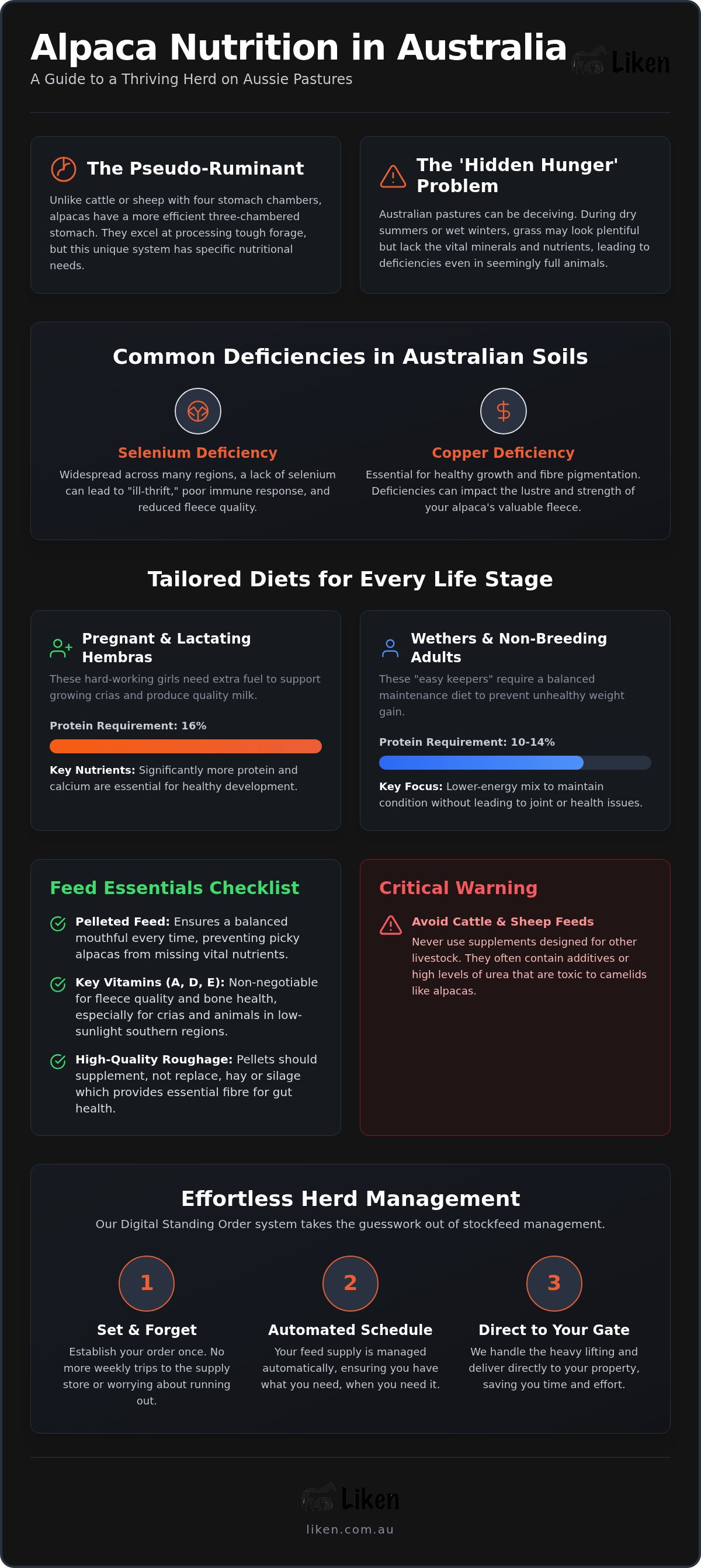
Alpacas are remarkably efficient animals, but they aren't just small sheep. The Alpaca is actually a pseudo-ruminant. This means they have a three-chambered stomach rather than the four found in cattle or sheep. While they're great at processing tough forage, our Australian climate throws some serious curveballs. During a dry summer or a soggy winter, the nutritional value of your pasture can drop faster than the temperature. Many owners fall into the trap of thinking grass is enough. It isn't. Relying solely on grazing often leads to "hidden hunger." Your animals might look full and content, but they could be missing the vital fuel needed for high-quality fleece and strong bones.
The Role of Trace Minerals in Aussie Soil
Our local soils are famous for being ancient and weathered, which often means they're lacking in key elements. Selenium and Copper deficiencies are widespread across many Australian regions. Without these, your herd can suffer from "ill-thrift" or a poor immune response. Integrating animal supplements Australia wide helps bridge this gap. It ensures your alpaca isn't just surviving, but actually thriving with a lustrous, healthy coat. It's a simple step that makes a massive difference to their long-term well-being.
Breeding vs. Maintenance: Different Needs for Different Mates
Feeding your herd isn't a one-size-fits-all job. Different animals have vastly different requirements based on their life stage. We need to be mindful of what each animal actually needs to stay in peak condition:
- Pregnant and Lactating Hembras: These girls are the hard workers of the paddock. They need significantly more protein and calcium to support a growing cria and produce quality milk.
- Wethers and Non-Breeding Adults: These mates are generally "easy keepers." They require a lower-energy maintenance diet. If you feed them like a pregnant female, they'll pack on the weight quickly, which can lead to joint issues and other health problems.
Getting this balance right keeps your animals easy to manage and your fleece production at its peak. It's all about providing the right fuel for the right job.
Choosing the Right Alpaca Feed and Supplements
Selecting the right bag of feed can feel like a bit of a puzzle when you're standing in the shed. You generally have three main choices: maintenance pellets, breeder mixes, and mineral blocks. Pelleted feed is usually the best bet for an alpaca. It stops them from picking out the "tasty" bits and leaving the vital nutrition behind. Every mouthful is perfectly balanced. Watch out for cattle supplements, though. They often contain additives or urea levels that are toxic to camelids. Always stick to mixes designed specifically for their unique needs.
Vitamins A, D, and E are non-negotiable for a healthy herd. This is especially true for growing crias and stock in southern parts of Australia where winter sun is scarce. Vitamin D deficiency can lead to serious bone issues like rickets. Ensuring your feed is fortified with these essentials is a must for long-term health and fleece quality. Check out our range of premium stockfeed options to find the perfect fit for your property.
Key Features to Compare Before You Buy
Check the protein levels on the back of the bag. Aim for 10 to 14 percent for your wethers and non-breeding adults. If you have growing youngsters or pregnant hembras, bump that up to 16 percent. Remember that these pellets should work alongside your bulk animal feed delivery australia of hay or silage. High-quality roughage provides the necessary fibre to keep their gut moving. If you're introducing a new brand, do it slowly over a week to keep their sensitive stomachs happy.
Top Picks from the Liken Alpaca Collection
Our collection focuses on quality and ease of use. We offer several options to suit your herd's specific life stages:
- Alpaca Maintenance Pellets: These are perfect for keeping the whole herd in steady condition throughout the year.
- High-Protein Breeder Mix: We recommend this for busy hembras and developing crias who need that extra nutritional kick.
- Weather-Resistant Mineral Lick: This is a brilliant way to provide 24/7 paddock supplementation without the rain washing your investment away.
Effortless Herd Management: Delivery and Standing Orders
Keeping your farm running shouldn't feel like a second full-time job. We know the hassle of realising the feed bin is empty just as a dry spell sets in. That's why we've built a system that takes the guesswork out of stock management. You can skip the weekly trek to the rural supply store and focus on your animals instead. Whether you're looking after a single backyard pet or managing a large commercial stud, we handle the heavy lifting for you.
Our "Digital Standing Order" is a game-changer for busy owners. It's a set-and-forget system that ensures your alpaca mob always has exactly what they need. If you're unsure about the best mix for your specific paddock, our technical experts are ready to help. We can provide a tailored nutritional match to ensure your animals stay in peak condition year-round. It's about making high-quality care accessible for every Aussie owner.
Setting Up Your Standing Order
Getting started is simple and entirely online. You can choose your preferred volume and delivery frequency with just a few clicks. We recommend reviewing your order as the seasons shift. As we mentioned earlier, pasture quality changes throughout the year. You might need to increase your protein levels for breeding hembras during winter or scale back for wethers when the spring flush arrives. You have total control to adjust or pause your order whenever you need.
National Delivery to Your Gate
Distance shouldn't be a barrier to premium nutrition. We've been a 100% online operation since 2016, perfecting a high-speed logistics network that reaches even the most remote areas. We deliver everything from a single 20kg bag to a full truckload directly to your gate. This digital-first approach means you get the best products without the logistical headache. It's reliable, efficient, and designed for the modern alpaca farmer who values their time as much as their herd.
Take the Guesswork Out of Your Paddock Management
Keeping your alpaca herd in top shape doesn't have to be a guessing game. By matching your feed to the specific life stages of your animals and bridging the mineral gaps in our Aussie soil, you're setting your mob up for success. Whether it's the lustrous fleece of a healthy wether or a thriving cria in the nursery, the right nutrition makes all the difference. We've seen how a few simple changes in diet and a reliable supply chain can transform a property's productivity.
As a proudly Australian owned and operated business, we're here to support you with expert technical advice on all our supplements. We offer flexible delivery that scales with you, from a single bag for your backyard mates to a full truckload for a commercial operation. Ready to simplify your farm routine? Shop the Full Alpaca Collection at Liken Today and discover how easy it is to manage your stock with our digital-first approach. We're excited to help your herd thrive under the Australian sun.
Your Alpaca Nutrition Questions Answered
Do alpacas need supplementary feed if there is plenty of green grass?
Yes, they usually do. While green grass provides energy, it often lacks the essential trace minerals and vitamins found in high-quality alpaca pellets. Australian soils are frequently deficient in Selenium and Copper, which grass alone can't replace. Supplementary feeding ensures your mob stays in peak condition, especially during pregnancy or when you're aiming for a high-quality fleece. It bridges the gap between "looking full" and being truly nourished.
What are the signs of mineral deficiency in an alpaca?
Look out for a dull or brittle fleece, crusty skin, or a general lack of energy often called "ill-thrift." In more serious cases, you might notice weight loss despite having plenty of pasture, or even "bent legs" in crias due to Vitamin D deficiency. If your animals aren't thriving as they should, it's often a sign they're missing vital elements like Zinc or Selenium. Regular supplementation helps prevent these issues before they start.
Can I feed my alpacas sheep or cattle pellets?
We don't recommend it. Cattle and sheep pellets are formulated for different digestive systems and can contain additives like urea or copper levels that are toxic to an alpaca. Using a product designed specifically for camelids ensures they get the right protein balance without any hidden nasties. It's much safer to stick with a dedicated maintenance or breeder pellet to keep your herd healthy and happy.
How much pellet feed should I give an adult alpaca per day?
Most adults only need about 100 to 200 grams of pellets per day as a supplement to their hay and pasture. This amount can vary depending on their life stage; pregnant hembras or growing crias will need a bit more to support their development. Always check the specific feeding guide on the bag and monitor their body condition score regularly. If they're getting a bit too round, you can easily scale back the volume.


