


You head out to the nesting boxes expecting a basket of fresh eggs, but instead, you find a sticky mess of soft, broken shells. It's a common frustration for backyard keepers and aviary enthusiasts alike, often signalling that your birds aren't getting enough calcium. Adding the right shell grit to their routine is the simplest way to fix this. It provides the essential minerals needed for sturdy eggs while helping your birds grind down their food properly in the gizzard.
We agree that keeping a healthy flock should be straightforward and rewarding, not a constant worry. This guide will help you choose the perfect grade of shell grit to ensure your birds stay in peak condition throughout 2026. We will walk through the different sizes available, the best ways to offer it free-choice, and how you can organise reliable delivery of those heavy bags directly to your gate. Whether you are in a regional centre or a suburban street, getting the right nutrients to your birds has never been easier.
Key Takeaways
- Understand why shell grit is the secret to strong, crack-resistant eggshells and healthy digestion for your flock.
- Identify the perfect grit size for your birds, ensuring fine grades for small aviary birds and mixed blends for larger poultry.
- Learn the "free-choice" feeding method to let your birds naturally regulate their own calcium intake without the guesswork.
- Discover how to simplify your supply run by adding heavy bags to a standing order for reliable delivery straight to your gate.
Understanding Shell Grit: Why Your Flock or Aviary Needs It
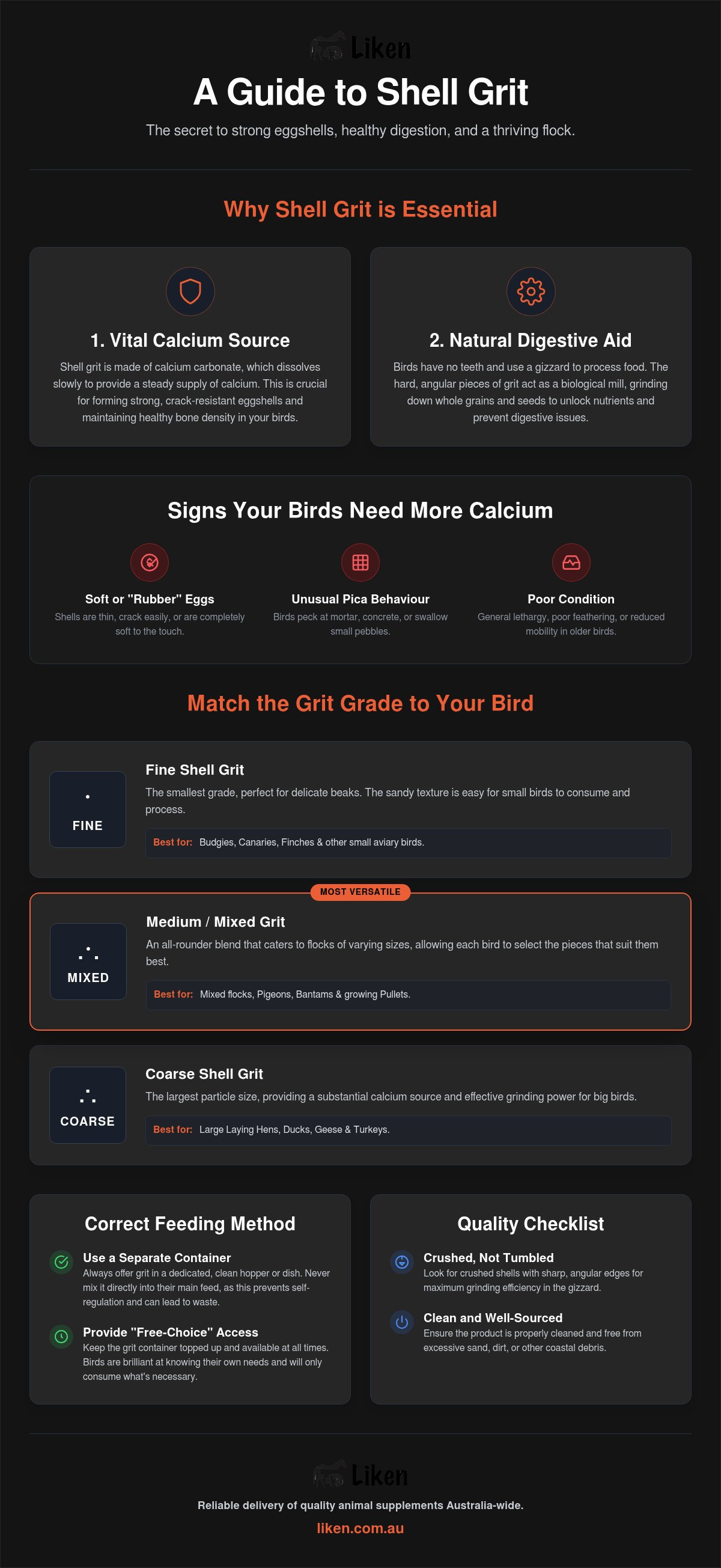
Shell grit is more than just a handful of crushed beach leftovers. It's a carefully cleaned, crushed, and graded supplement designed specifically for bird health. For anyone keeping layers or managing an aviary, it serves as a vital tool for both nutrition and survival. Think of it as a two-in-one health boost that keeps your birds' skeletons strong and their bellies working properly. To get a better grip on Understanding Shell Grit, we look at how it functions as both a mineral source and a mechanical tool.
While birds don't have teeth to chew their food, they rely on a specialised organ called the gizzard to do the heavy lifting. By consuming shell grit, birds provide their gizzard with the hard, angular surfaces needed to grind whole grains and seeds into a digestible paste. Without this mechanical help, your birds can't unlock the energy in their feed. This often leads to wasted nutrients and poor overall condition.
Calcium vs. Digestion: The Two-in-One Supplement
It helps to know that not all grit is the same. Soluble grit, like shell grit, is made of calcium carbonate. This mineral dissolves slowly in the digestive tract, providing a steady stream of nutrients into the bloodstream. It's essential for laying hens, who use a massive amount of calcium every time they create an eggshell. In contrast, insoluble grit like flint or granite doesn't dissolve; it stays in the gizzard to act as a biological mill. Using a high-quality shell product gives your birds the best of both worlds by supporting digestion before eventually breaking down to nourish the body.
Signs Your Birds Are Missing Out
If your hens are laying "rubber eggs" or shells that crack at the slightest touch, they're likely crying out for calcium. You might even see them desperately picking at the mortar between bricks or swallowing small pebbles in the yard. This "mineral hunger" is a clear signal that their diet is out of balance. Keeping a consistent supply of animal supplements Australia ensures your flock doesn't have to scavenge for the basics. It supports long-term bone density, making sure your older birds stay mobile and healthy for years to come.
Choosing the Right Grade: Fine, Mixed, or Coarse Shell Grit
Choosing the right size is about more than just convenience; it's about making sure your birds can actually eat what you're providing. If you offer coarse chunks to a tiny finch, they'll simply ignore it, leaving your supplement to sit in the dirt. Conversely, a large Brahma hen might find fine dust unsatisfying and messy. Picking the right grade ensures every bird in your care gets the calcium they need without the waste. We've seen that matching the texture to the beak size is the quickest way to improve intake across the board.
Matching Grit Size to Bird Type
Different beaks require different textures. To keep things simple, we've broken down the best options for your specific feathered friends:
- Fine Shell Grit: This is the go-to for small aviary birds like budgies, canaries, and finches.
- Medium or Mixed Grit: A versatile all-rounder that works wonders for pigeons, bantams, and pullets that are still growing.
- Coarse Shell Grit: Essential for the big hitters like large laying hens, ducks, geese, and turkeys.
If you're managing a mixed flock in a single coop, a mixed grade is a fantastic way to cover all bases at once. It allows the smaller birds to pick out the fine pieces while the larger hens go for the chunky bits. You can browse the shell grit collection to see which size fits your current setup best.
Key Features to Look For in Quality Grit
Quality matters when it comes to supplements. You want a product that is clean and free from excess sand or coastal debris. Look for "crushed" shells rather than "tumbled" ones. Crushed shells maintain those sharp, angular edges that are so effective for grinding food in the gizzard. This physical structure, combined with the slow release of minerals, is backed by a Scientific review of poultry calcium nutrition which highlights how particle size directly affects shell quality and bone strength. Most keepers find that 20kg bags are the sweet spot; they are durable enough to handle and provide the best value. At Liken, we've spent years organising reliable delivery of these heavy bags to ensure the right grade arrives right at your gate.
How to Feed Shell Grit and Common Mistakes to Avoid
Feeding shell grit isn't complicated, but doing it right makes a world of difference for your birds. Follow these simple steps to keep your flock in top shape. First, always offer the grit in a separate, dedicated container or a weather-proof hopper. This stops the supply from getting trampled into the dirt or contaminated by droppings. Second, give your birds "free-choice" access. Their bodies are incredibly clever at self-regulating; they'll take exactly what they need based on their current laying cycle or digestive requirements.
Keep the grit clean and dry at all times. If it gets wet and clumps together, birds are less likely to eat it, which defeats the purpose of the supplement. Finally, keep a close eye on consumption levels. You'll notice they go through much more during peak laying seasons or when the weather shifts. Being proactive ensures your birds never hit a mineral deficit when they need support the most.
Why You Should Never Mix Grit with Feed
One of the most common mistakes is mixing shell grit directly into the daily grain ration. If you force birds to eat grit every time they're hungry for food, they can easily over-consume calcium. This can lead to kidney issues and other health complications over time. Providing it on the side allows for natural biological regulation. For those managing larger properties or multiple aviaries, bulk animal feed delivery Australia makes it easy to keep every station topped up. This method is the gold standard for calcium supplements for poultry, ensuring each bird gets its own custom dose.
Ordering and Logistics: Getting Grit to Your Gate
Many local shops only offer heavy 20kg bags for in-store pickup, which is a real hassle if you don't have the right vehicle or the time to spare. We specialise in taking the heavy lifting out of the equation. Our team handles national delivery for everything from single bags to full truckloads, reaching even the most regional areas. You can even set up a digital standing order to ensure you never run out. It's the simplest way to keep your flock healthy without the constant trips to the shop. Ready to top up? Order your premium shell grit here for fast delivery straight to your gate.
Give Your Birds the Best Start in 2026
Ensuring your birds have a steady supply of shell grit is one of the simplest ways to support their long-term health. By matching the grit grade to your bird's beak size and offering it as a free-choice supplement, you eliminate the risk of soft eggshells and poor digestion. It's all about giving them the right tools to thrive; whether they're tiny finches or heavy-laying hens, the right minerals make the difference.
As a 100% Australian digital-first retailer, we're here to make your life easier. We provide expert technical advice on all additives to ensure you're getting exactly what your flock needs. Whether you need a single bag for a backyard coop or a full truckload for a larger property, our flexible delivery system brings the supplies right to your gate. Shop the full range of premium shell grit at Liken today and keep your feathered friends in peak condition. Your birds will certainly thank you for it!
Common Questions About Shell Grit
Can I use crushed eggshells instead of shell grit?
You can use crushed eggshells, but they aren't a complete substitute for professional shell grit. If you choose to use them, you must wash and bake the shells first to kill bacteria and prevent your hens from developing a taste for their own fresh eggs. While eggshells provide calcium, they break down very quickly in the digestive tract. Commercial grit is much harder and provides a superior slow-release mineral boost that lasts longer in the bird's system.
When should I start giving shell grit to my chickens?
The best time to introduce shell grit is when your pullets reach point of lay, which is usually between 16 and 18 weeks of age. Don't offer it to young chicks or growers, as the high calcium levels can lead to serious kidney damage in developing birds. Once those first eggs start appearing, your hens' calcium requirements will skyrocket, making it the perfect time to set up a dedicated grit station in your coop.
How much shell grit do chickens actually eat per day?
Chickens are excellent at self-regulating, so there isn't a single fixed amount they will eat every day. A typical laying hen might only consume a few grams daily, though this amount often increases during peak laying seasons or periods of heat stress. Because their needs change constantly, the best approach is to keep a weather-proof container full at all times so they can help themselves whenever their bodies signal a deficiency.
Is shell grit the same as poultry grit or insoluble grit?
No, shell grit is considered a "soluble" grit because it eventually dissolves to provide essential calcium. Insoluble grit, which is often made from crushed granite or flint, does not dissolve and stays in the gizzard to help grind up whole grains and tough seeds. While shell grit provides some mechanical help before it breaks down, providing both types ensures your birds have the best tools for both sturdy eggshells and efficient digestion.


