


Imagine walking out to the paddock on a crisp spring morning only to find your best breeder down with grass tetany. It's a devastating sight that many Australian producers know all too well, especially when lush pastures look their best. Using magnesium oxide is one of the most effective ways to stop this "silent killer" before it strikes your herd. We know you want to protect your stock without the headache of complicated mixing or unreliable supply chains.
This guide shows you how to implement a cost-effective supplementation strategy that keeps your livestock healthy. You'll learn about correct dosage rates and the best delivery methods for your farm. We also look at how to organise bulk deliveries directly to your gate so you're never caught short. Let's dive into the practical steps to keep your cattle and sheep thriving.
Key Takeaways
- Safeguard your herd's nerve and muscle function by learning why magnesium is a non-negotiable seasonal boost for ruminants.
- Master practical ways to encourage intake and compare the best delivery methods, including loose licks, blocks, and grain rations.
- Understand the importance of using feed-grade magnesium oxide and how bulk delivery can streamline your seasonal farm management.
- Build a cost-effective prevention plan to protect your cattle and sheep from the risks of grass tetany during lush growth periods.
Understanding Magnesium Oxide: Why Your Livestock Need a Seasonal Boost
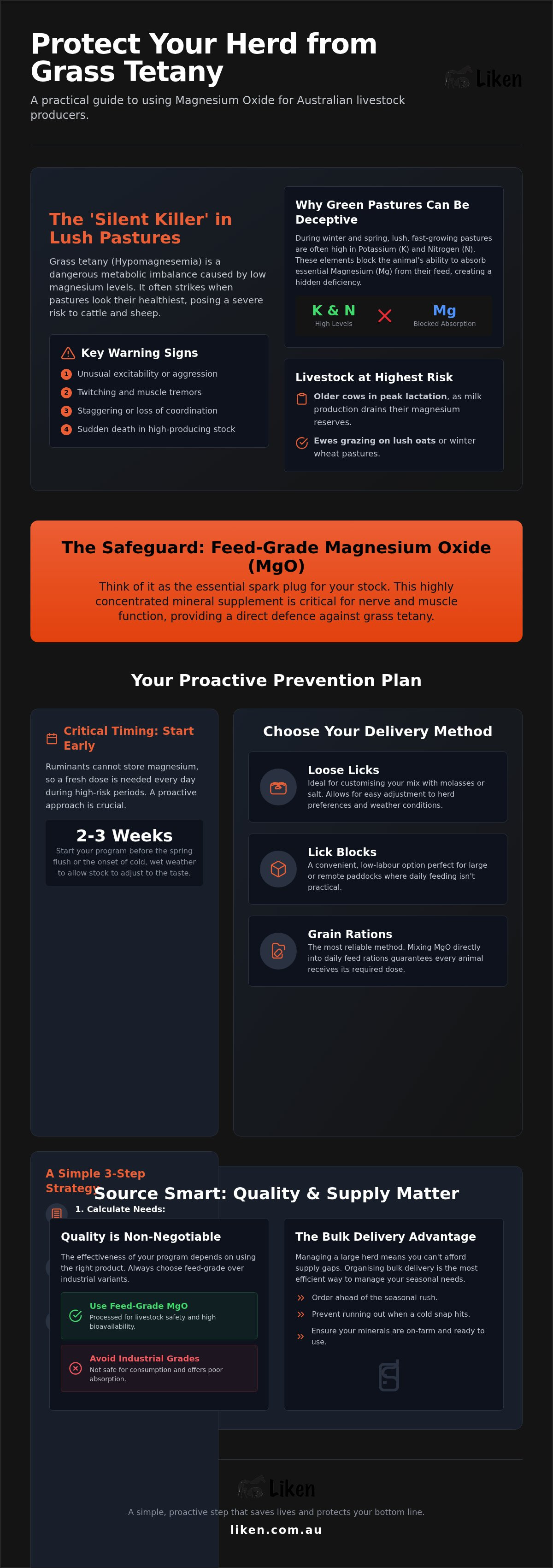
Magnesium oxide is a powerhouse mineral additive. It's a highly concentrated source of magnesium specifically designed for ruminants like cattle and sheep. Think of it as an essential spark plug for your stock. Magnesium is critical for keeping nerve and muscle functions running smoothly. Without a steady supply, your animals can't regulate their internal systems properly, leading to a dangerous metabolic imbalance.
The challenge usually starts when pastures are at their greenest. This is the Grass tetany phenomenon. While those lush paddocks look nutritious, they often lack the magnesium your herd needs to stay healthy. Deficiency shows up in scary ways, including:
- Unusual excitability or aggression
- Twitching and muscle tremors
- Staggering or loss of coordination
- Sudden death in high-producing stock
Identifying the Risks of Grass Tetany (Hypomagnesemia)
It isn't just about what's missing from the soil. High levels of potassium and nitrogen in winter and spring pastures actually block an animal's ability to absorb magnesium through the rumen wall. This creates a "hidden" deficiency even if some minerals are present. Older cows in peak lactation are particularly vulnerable because they're putting everything into milk production. Ewes grazing on lush oats or winter wheats are another high-risk group you'll want to watch closely during the cooler months.
Managing these risks is a key part of your seasonal plan. Incorporating high-quality animal supplements Australia can help bridge the gap during these tricky months. By providing magnesium oxide as part of a broader nutritional strategy, you give your stock the best chance to thrive through the spring flush. It's a simple, proactive step that saves lives and protects your bottom line.
Practical Supplementation Strategies for the Modern Australian Farm
Getting your stock to eat magnesium oxide isn't always easy. It has a naturally bitter taste that cattle and sheep often avoid. Because ruminants can't store magnesium in their bodies, they need a fresh dose every single day. If they skip a day during high-risk weather, the danger of grass tetany returns immediately. You've got to make it part of their daily routine.
Proactive timing is your best friend here. Start your program at least 2 to 3 weeks before the spring flush or the onset of cold, wet weather. This gives your animals time to adjust to the taste. It also ensures their levels are topped up before the grass takes off. You can browse our range of additives to ensure you're prepared for the season ahead.
Best Practices for Feeding Magnesium Oxide to Grazing Stock
Follow these simple steps to manage your supplementation effectively:
- Step 1: Calculate your daily needs based on stock type. Lactating cows generally require higher amounts than dry stock.
- Step 2: Mix magnesium oxide with tasty palatants. Salt is a common choice, but molasses is excellent for masking the bitter flavour and ensuring consistent consumption.
- Step 3: Monitor your herd closely. If you notice rapid pasture growth after rain, check that your lick troughs are being used. You might need to adjust the molasses ratio to keep intake levels steady.
Different delivery methods suit different setups. Loose licks are great for customising the mix, while lick blocks offer convenience for remote paddocks. If you're already feeding out grain, mixing the powder directly into the ration is the most reliable way to guarantee every head gets their dose.
Sourcing Quality Magnesium Oxide and Managing Your Supply
When you're shopping for supplements, quality matters. Don't be tempted by industrial variants meant for construction or manufacturing. You need feed-grade magnesium oxide. This version is specifically processed to ensure it's safe for livestock consumption and has high bioavailability. Using the wrong grade can lead to poor absorption, which means your stock won't get the protection they need during those high-risk spring months.
Managing a large herd means you can't afford supply gaps. Buying in bulk is the most efficient way to handle your seasonal needs. It reduces the risk of running out just as a cold snap hits. We recommend proactive ordering. Don't wait for the first signs of grass tetany in the district to place your order for magnesium oxide. Getting ahead of the seasonal rush ensures your minerals are on-farm and ready to use when the grass starts to bolt.
Why Direct Bulk Delivery is the Smart Choice for Aussie Farmers
We've made sourcing premium additives simpler than ever. Liken provides a direct link to top suppliers, ensuring you get high-purity minerals without the middleman hassle. Our bulk animal feed delivery Australia service is designed to fit your specific operation. Whether you need a single bag for a small mob or a full truckload for a large-scale property, we handle the logistics effortlessly.
You can even set up digital standing orders for your seasonal supplements. This means your magnesium supply arrives exactly when you need it every year. It's one less thing to worry about during a busy calving or lambing season. By partnering with a reliable delivery expert, you can focus on your stock while we ensure your mineral licks are never empty.
Secure Your Herd’s Future This Season
Protecting your livestock from the sudden impact of grass tetany doesn't have to be a struggle. By making these essential minerals a regular part of your seasonal routine, you're giving your cattle and sheep the vital support they need when pastures are bolting. Remember to start your supplementation early and keep intake consistent to see the best results across your property.
We're here to help you get the job done. As a 100% Aussie owned and operated team, Liken provides expert technical advice and flexible delivery options for everything from single bags to full truckloads. Organise your bulk magnesium oxide delivery with Liken today and get your farm ready for the spring flush. With the right strategy and a reliable supply partner, you can graze your stock with confidence and peace of mind.
Frequently Asked Questions
Is magnesium oxide safe for all types of livestock?
Magnesium oxide is safe for all ruminants, including cattle, sheep, and goats. It's a natural mineral supplement that doesn't fall under the Australian ban on feeding restricted animal material to ruminants. You'll find it's particularly beneficial for pregnant and lactating stock, as they have the highest mineral demands. Always ensure you're using a high-quality feed-grade version to maintain safety and effectiveness across your whole herd.
How much magnesium oxide should I feed to my cattle daily?
Adult cattle typically need about 60 grams of magnesium oxide per head each day during high-risk periods. This amount ensures they maintain the necessary levels for healthy nerve and muscle function. Because every property and pasture type is different, you should always check the specific inclusion rates for your herd. You can reach out to our team for technical advice to ensure your stock get the perfect nutritional match.
What is the best way to feed magnesium oxide to sheep?
The most effective way to feed sheep is by mixing the powder into a loose lick or a grain ration. Since sheep can be fussy eaters, combining the supplement with salt or molasses helps encourage them to take it in daily. This method ensures consistent intake across the mob. Setting up a standing order for these additives makes it easy to keep your lick troughs topped up throughout the season.
When is the best time to start supplementing with magnesium oxide?
You should start your supplementation program at least two to three weeks before the high-risk period begins. This timing allows your livestock to adjust to the taste and build up their levels before the lush spring growth or cold winter rains arrive. Being proactive helps prevent sudden deficiencies when pasture conditions change rapidly. Ordering your supplies early ensures you have everything on-farm before the seasonal demand peaks.


