


A sudden drop in daily egg collection is rarely down to bad luck; it is almost always an unseen dietary mismatch. Mastering the nutritional requirements for laying hens is the quickest way to turn brittle shells and patchy laying into vibrant flock health and full egg cartons every morning.
We all know how frustrating it is to deal with cracked eggs or watch feed intake plummet when the harsh Australian summer heat hits. You shouldn't have to guess your way through feed tags or worry about hidden amino acid deficiencies dragging down your birds. This guide steps you through the exact protein, vitamin, and mineral benchmarks your flock needs to prevent metabolic issues like cage layer fatigue and keep egg production thriving across every season.
Key Takeaways
- Master the precise nutritional requirements for laying hens to balance key amino acids like methionine and lysine for reliable egg size and daily laying rates.
- Protect your flock against brittle shells and cage layer fatigue by maintaining the ideal calcium-to-phosphorus ratio as hens enter full production.
- Implement simple phase-feeding strategies to match nutrient density with your birds' changing life stages while reducing costly feed waste.
- Adjust ration timing and feed management during intense Australian summer heat to keep daily intake steady and protect flock welfare.
Core Nutritional Requirements for Laying Hens: Energy and Amino Acids
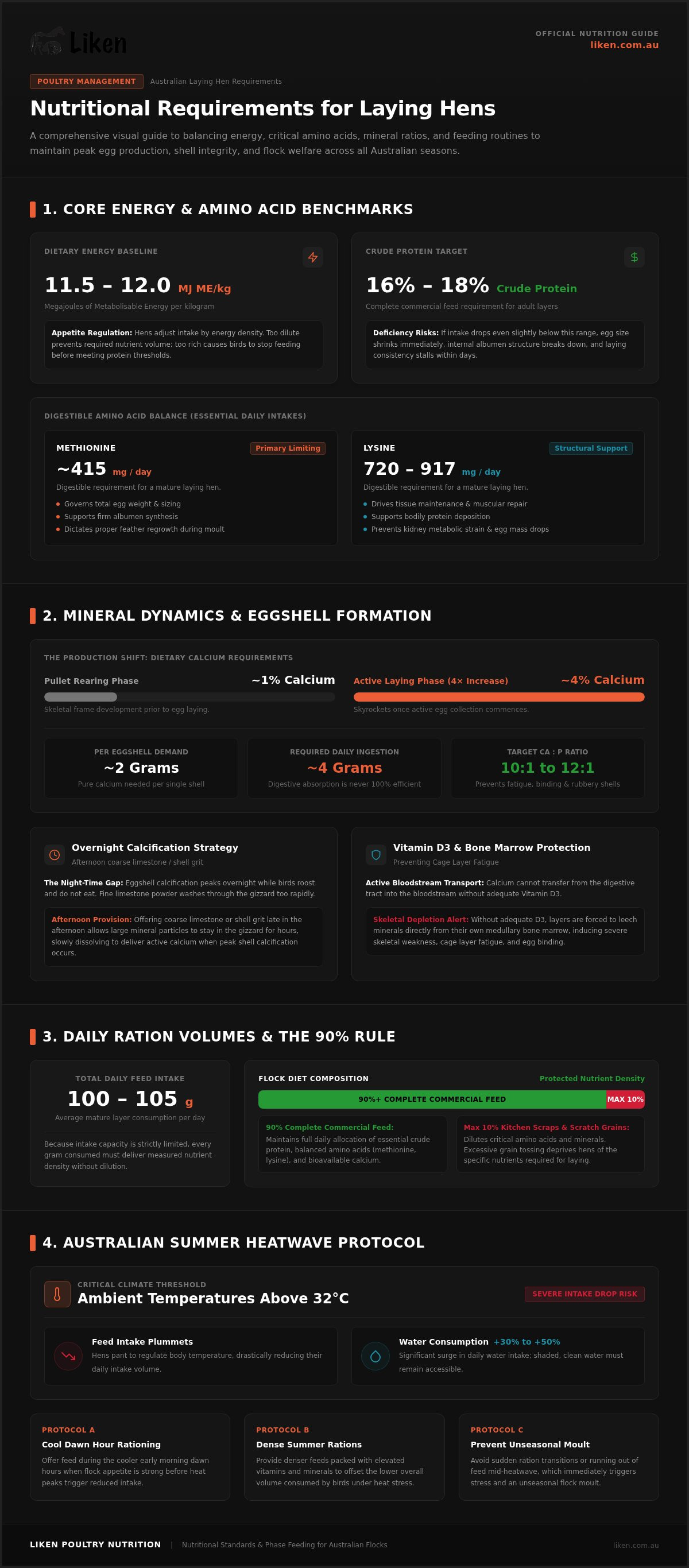
Every egg your flock produces demands precise fuel. Dietary energy forms the baseline of proper feeding, with laying hens typically requiring between 11.5 and 12.0 MJ ME/kg (megajoules of metabolisable energy per kilogram). Hens naturally adjust how much they eat based on dietary energy density. If a ration is too dilute, birds simply cannot consume enough volume to meet their physical needs; if it is too rich, they stop eating before hitting crucial protein thresholds.
Energy powers the bird's metabolism, but proteins build the egg. Getting the baseline nutritional requirements for laying hens right means looking beyond raw crude protein figures on a bag tag. An adult layer consuming standard nutritionally complete poultry feed needs approximately 16% to 18% total crude protein to sustain daily laying. If this intake drops even slightly, egg size shrinks immediately, internal albumen breaks down, and laying consistency stalls within days.
The Critical Role of Methionine and Lysine in Egg Production
Protein is only as useful as its building blocks. For poultry, methionine sits as the primary limiting amino acid; it governs total egg weight and dictates proper feather regrowth during the moult. A mature layer needs around 415 milligrams of digestible methionine daily to support firm albumen synthesis.
Lysine works hand-in-hand with methionine. Supporting tissue maintenance and protein deposition, birds require roughly 720 to 917 milligrams of digestible lysine each day. Balancing these precise amino acids rather than simply overloading raw crude protein reduces metabolic strain, keeps kidneys healthy, and prevents sharp drops in egg mass.
Mineral and Vitamin Essentials for Eggshell Quality and Skeletal Health
Mineral demands undergo a massive shift once a hen starts laying. Pullets thrive on roughly 1% dietary calcium during their rearing phase, but their needs skyrocket to roughly 4% once egg production kicks off. A single eggshell takes about two grams of pure calcium to form; to supply that, a hen must ingest around four grams of calcium daily because digestive absorption is never one hundred percent efficient.
Calcium never works in isolation. Maintaining the correct ratio between calcium and available phosphorus is essential to prevent cage layer fatigue, egg binding, and rubbery shells. In mature layers, target a calcium-to-phosphorus ratio between 10:1 and 12:1. You also need adequate vitamin D3 in the ration to metabolise these minerals properly. Without D3, birds cannot move calcium from their digestive tract into their bloodstream, forcing them to deplete their own medullary bone marrow instead.
Managing Coarse Limestone and Grit for Sustained Calcium Release
Shell formation occurs mainly overnight when birds are roosting and not eating. Fine limestone powder washes through the gizzard too rapidly, leaving the hen short of active calcium in the early morning hours. Providing coarse limestone or shell grit late in the afternoon solves this problem nicely; larger mineral particles remain in the gizzard for hours, slowly dissolving to deliver steady blood calcium right when calcification peaks.
Understanding these mineral interactions is a cornerstone of meeting the nutritional requirements for laying hens. If you want to explore targeted premixes and mineral balancers in more detail, check out our practical guide to animal supplements. For steady rations delivered right to your property gate, you can always rely on Liken to keep your feed shed stocked.
Phase-Feeding Strategies and Feed Management for Australian Flocks
Feeding birds according to their stage of life ensures they receive the right nutrients without throwing money away on wasted feed. Chicks build their skeletal frame on a high-protein starter, transition to a grower ration to steady their growth rate, and shift into peak layer feed just as the first eggs arrive.
Watch out for feed dilution. A mature hen eats only about 100 to 105 grams of feed each day. Tossing out handfuls of mixed scratch grains or garden scraps dilutes their intake, robbing them of the measured amino acids and calcium they need for continuous laying. Keeping complete commercial feed as 90% or more of their daily intake protects overall flock production. Alongside a balanced diet, housing birds in a secure, well-structured environment from builders like Southern Chicken Coops ensures feeders stay protected from pests and weather, keeping daily rations clean and accessible.
Maintaining Nutritional Consistency Through Seasonal Australian Climate Fluctuations
Summer heatwaves present a major test for poultry keepers across the country. When temperatures climb past 32°C, hens pant to stay cool, their daily feed intake plummets, and water consumption surges by 30% to 50%. Offering feed during the cooler dawn hours and ensuring clean, shaded water helps your flock cope with extreme weather.
Meeting the precise nutritional requirements for laying hens during heat stress requires denser rations packed with vitamins and minerals to offset lower intake. Sudden feed changes or running out of feed mid-heatwave will send birds straight into an unseasonal moult. Setting up scheduled bulk animal feed delivery keeps rations consistent and takes the stress out of your flock management year-round.
Fuel Your Flock for Peak Egg Production
Getting the daily ration right pays dividends every time you open the nesting boxes. Balancing digestible amino acids like methionine with reliable slow-release calcium protects your birds against physical exhaustion and weak shells. By aligning feeding routines with seasonal conditions, you meet the essential nutritional requirements for laying hens while preventing costly feed waste.
Ready to give your layers the best daily support? Explore premium rations and order online with Liken for quality poultry feeds and supplements, featuring dependable delivery from single bags right up to full truckloads across Australia. You will also enjoy direct access to expert technical advice on feed additives and nutrition to keep your flock healthy, happy, and laying strong all year round.
Frequently Asked Questions
How much crude protein do laying hens require in their daily diet?
Laying hens require a balanced diet containing 16% to 18% crude protein to support consistent egg production. Total protein isn't the only factor that matters; birds also need specific amounts of critical amino acids like methionine and lysine. Without these essential building blocks, hens struggle to synthesise albumen, leading to smaller eggs and lower overall laying rates.
Why do laying hens need coarse limestone instead of fine powder calcium?
Coarse limestone breaks down slowly in the gizzard, providing a sustained release of calcium into the bloodstream overnight while eggshells form. Fine powder passes through the digestive tract too quickly, leaving birds short during peak calcification hours. Incorporating coarse particles satisfies the nutritional requirements for laying hens by maintaining steady blood mineral levels through the night.
What happens if laying hens experience a vitamin D3 deficiency?
A vitamin D3 deficiency prevents hens from absorbing dietary calcium, leading to soft-shelled eggs, reduced laying rates, and severe skeletal disorders like cage layer fatigue. Even with adequate limestone in the feeder, birds can't transport calcium across the gut wall without D3. The hen's body then leaches minerals from its own bones, quickly causing lameness.
How should I adjust laying hen feed during hot Australian summer conditions?
Boost the nutrient and mineral density of your flock's ration to offset the natural drop in daily feed intake during extreme heat. Shift feeding times to the cooler dawn and evening hours. Supporting the nutritional requirements for laying hens during heatwaves also demands cool, shaded water, as birds drink up to 50% more fluid once ambient temperatures pass 32°C.


