

“Filler” doesn’t automatically mean harmful. What fillers in dog food are depends on how the ingredient is used: the term often describes ingredients added to bulk out food, but it isn’t a formal nutrition term, and ingredients labelled this way can still provide fibre, energy or other useful nutrients. The real question is what each ingredient contributes to your dog’s diet.
It’s understandable to pause when you see grains, fibre sources or by-products on a dog-food label. These ingredients can serve useful purposes, though an ingredient that doesn’t suit your dog may cause problems. This guide explains what “fillers” means in dog food, how to read ingredient lists and nutritional information, and what may make an ingredient a concern. You’ll be better equipped to assess the whole food instead of ruling out an ingredient by name alone.
Key Takeaways
- An ingredient called a “filler” may still contribute useful nutrition or serve a purpose in the food, so judge its role rather than its label alone.
- Corn can provide digestible carbohydrates and protein, while beet pulp supplies fibre; the value of each depends on the overall recipe and your dog’s needs.
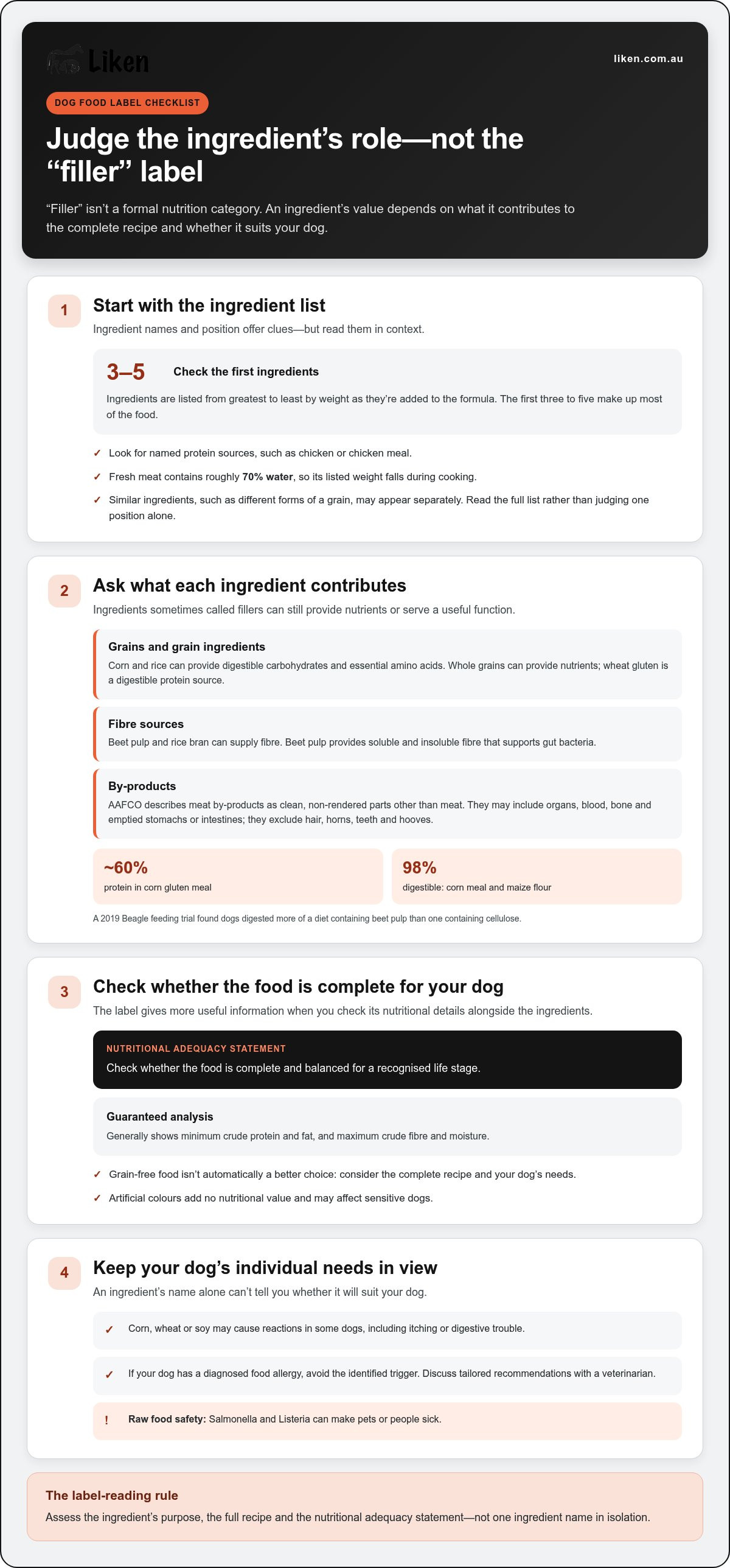
- Read the first ingredients and the nutritional adequacy statement to understand what makes up most of the food and whether it’s complete for your dog’s life stage.
- Explore ADVANCE when comparing dog foods, and use the ingredient list and nutritional information to guide your choice.
Dog Food Fillers - Good or Bad?
So, what are fillers in dog food? “Fillers” isn’t a formal nutrition category, and an ingredient’s value depends on its role in the complete recipe. Corn, wheat and rice can be nutritious ingredients; they aren’t automatically fillers.
Nutritional roles of common ingredients
Ingredients can supply nutrients or support digestion, so their role matters more than the label people give them. Corn gluten meal is roughly 60% protein, while beet pulp provides soluble and insoluble fibre that supports gut bacteria. A 2019 Beagle feeding trial found dogs digested more of a diet containing beet pulp than one containing cellulose.
Whole grains can provide digestible carbohydrates and essential amino acids. AAFCO defines meat by-products as clean, non-rendered parts other than meat. These may include organs, blood, bone and emptied stomachs or intestines, but exclude hair, horns, teeth and hooves.
Grains as fillers or nutritious ingredients
If you’re asking “what are fillers in dog food?”, consider what each ingredient contributes. Corn and rice provide digestible carbohydrates and essential amino acids; corn meal and maize flour are described as 98% digestible. Wheat gluten is also a digestible protein source. These ingredients can supply energy, while whole grains contribute useful nutrients.
Check the food’s nutritional adequacy statement to see whether it’s complete and balanced for a recognised life stage. In cat food, adding 10-20% apple pomace reduces energy density and protein absorption; this finding isn’t about dog food.
Reading dog food ingredient labels
Read the label in context rather than judging a food by one ingredient. In Australia, the ingredient order and nutritional adequacy statement can help you understand what the food provides.
Ingredient order and splitting
Ingredients appear from greatest to least by weight as they’re added to the formula. Check the first three to five, which make up most of the food, and look for named protein sources, such as chicken or chicken meal. Fresh meat contains roughly 70% water, so its listed weight falls during cooking. Similar ingredients, such as different forms of a grain, can also appear separately, so read the full list rather than judging one position alone.
Fillers, grains and fibre sources
Ingredients often called fillers include corn, soy, wheat, rice, potato and tapioca. Their names alone don’t show whether they provide useful nutrition. Beet pulp and rice bran, for instance, can supply fibre, while grains may provide nutrients or serve a functional purpose. Compare the ingredient list with the guaranteed analysis, which generally shows minimum crude protein and fat, and maximum crude fibre and moisture. Artificial colours add no nutritional value and may affect sensitive dogs.
Grain-free food and ingredient choices
Grain-free food isn’t automatically a better choice. Focus on the complete recipe and your dog’s needs. In Australia, the ingredient order and nutritional adequacy statement help you assess a label; the statement indicates whether the food is complete and balanced for a recognised life stage. If your dog has a diagnosed food allergy, avoid the identified trigger. Corn, wheat or soy may cause reactions in some dogs, including itching or digestive trouble, so discuss tailored recommendations with a veterinarian. Raw food also carries food-safety risks: Salmonella and Listeria can make pets or people sick.
Definition of fillers in animal feed
“Filler” sounds like a precise category, but it has no formal nutrition definition in pet food. AAFCO does not define “fillers”, so the term alone can’t tell you whether an ingredient benefits an animal or simply adds bulk. What matters is the ingredient’s purpose in the formula.
Historically, “filler” referred to secondary products from grain milling, such as hulls, husks, chaff, cleanings, weeds, dust and stalks. Today, people may use it more broadly for ingredients they consider low in nutritional value. Yet ingredients described this way can provide dietary fibre, bulk or another useful function. Beet pulp and cellulose, for example, are fibre sources; their presence doesn’t automatically make a food poor quality.
Consider the role an ingredient plays in the finished food. Corn and rice can provide digestible carbohydrates, while fibre sources can support digestive function. Dry kibble also needs carbohydrates for the extrusion process that shapes it. Preservatives serve a different purpose: they help protect food quality rather than add bulk. No single ingredient name reveals whether the whole formula is balanced.
Excessive amounts of some ingredients may cause digestive problems, and corn, wheat or soy can trigger reactions in sensitive dogs. A diagnosed allergy calls for avoiding its identified trigger, not rejecting every ingredient called a filler. Judge the ingredient’s function alongside the food’s overall nutritional adequacy. Explore dog food options as you compare formulas for your dog.
Liken: ADVANCE
Liken offers ADVANCE as one option to consider when comparing dog foods. Use the ingredient list and nutritional adequacy statement to assess how a formula fits your dog’s needs, rather than judging it by one ingredient labelled a filler. Look closely at the named ingredients and the nutrients the food provides. For dog-specific dietary advice, speak with your veterinarian, especially if your dog has a diagnosed allergy or health condition. Explore ADVANCE alongside other available dog food options, COBBER, ENDURO and HILLS. Visit liken.com.au to browse.
Make your next food choice with confidence
Let your dog’s individual needs guide your next step. Keep track of what suits them, including ingredients they tolerate and any specific dietary needs. This gives you a practical starting point for comparing foods instead of relying on a label or trend alone.
Understanding what fillers in dog food are can help you ask better questions when comparing formulas. Liken offers ADVANCE, COBBER and ENDURO, giving you options to explore while considering your dog’s needs. Browse the available choices or get in touch with Liken for help finding your way around them.
Contact Liken with your questions, and take your next step towards a food choice that feels right for your dog.
Frequently Asked Questions
Are By-Products Fillers?
No, meat by-products aren’t automatically fillers. AAFCO defines them as clean, non-rendered animal parts other than meat; examples include organs, blood and bone. When checking a label, note whether the ingredient names the animal, such as chicken by-product, or uses a broader description. The name alone doesn’t tell you its value in the full recipe.
Are Fillers Bad for Dogs?
No, an ingredient called a filler isn’t automatically harmful. The concern is whether the food suits your dog and whether an ingredient triggers a reaction. If itching or digestive signs appear after a food change, record the product and ingredients, then discuss the pattern with your veterinarian. A gradual transition over 7 to 10 days can help avoid an abrupt change.
What does “filler” mean in dog food?
“Filler” is an informal label, not a formal nutrition category. It may describe an ingredient someone thinks adds little value, but it doesn’t explain that ingredient’s role in a particular recipe. For example, the term doesn’t tell you whether an ingredient supplies fibre or supports food texture. Assess the named ingredient alongside the food’s overall nutritional information.
Which ingredients are commonly called fillers in dog food?
Corn, cornmeal, soy, soybean meal, wheat, wheat gluten, rice, rice bran, potato and tapioca are often called fillers. You may also see beet pulp, corn fibre or fruit fibre on ingredient lists. Ingredients can appear in different forms, so scan the whole list and consider each ingredient’s role instead of treating every grain or fibre source alike.
Do dog food fillers provide nutritional value?
Some do. Corn and rice can supply digestible carbohydrates and essential amino acids, while beet pulp provides fibre. Other ingredients may mainly contribute bulk or serve a formulation purpose. An ingredient’s role can vary with its amount and the recipe around it, so assess the finished food’s nutritional adequacy instead of relying on the word “filler”.


