


Feeding your alpacas standard sheep or cattle nuts might seem like an easy shortcut, but it can quickly trigger dangerous mineral imbalances. You already know how rapidly Australian pastures shift from lush spring growth to dry summer feed, leaving your herd vulnerable to seasonal condition loss, fleece deterioration, and deficiencies like rickets. Sourcing a balanced alpaca feed mix Australia wide shouldn't mean second-guessing every mineral tag or worrying about running out of supplies on the farm.
This 2026 buyer's guide shows you how to evaluate, compare, and select the ideal feed mix to keep your alpacas thriving through every season. We'll walk you through species-specific energy benchmarks, essential vitamin D requirements, and practical ways to establish dependable supply routines delivered straight to your property gate.
Key Takeaways
- Protect your herd's unique three-compartment stomach by prioritising digestible fibre and moderate crude protein levels over high-starch grains.
- Customise rations across different life stages, ensuring growing crias and lactating hembras thrive without overfeeding adult wethers.
- Evaluate any alpaca feed mix Australia wide for species-safe mineral ratios and essential vitamin D3 to prevent conditions like rickets.
- Calculate your herd's dry matter intake to set up dependable, scheduled feed deliveries straight to your property gate.
Key Nutritional Benchmarks in an Australian Alpaca Feed Mix
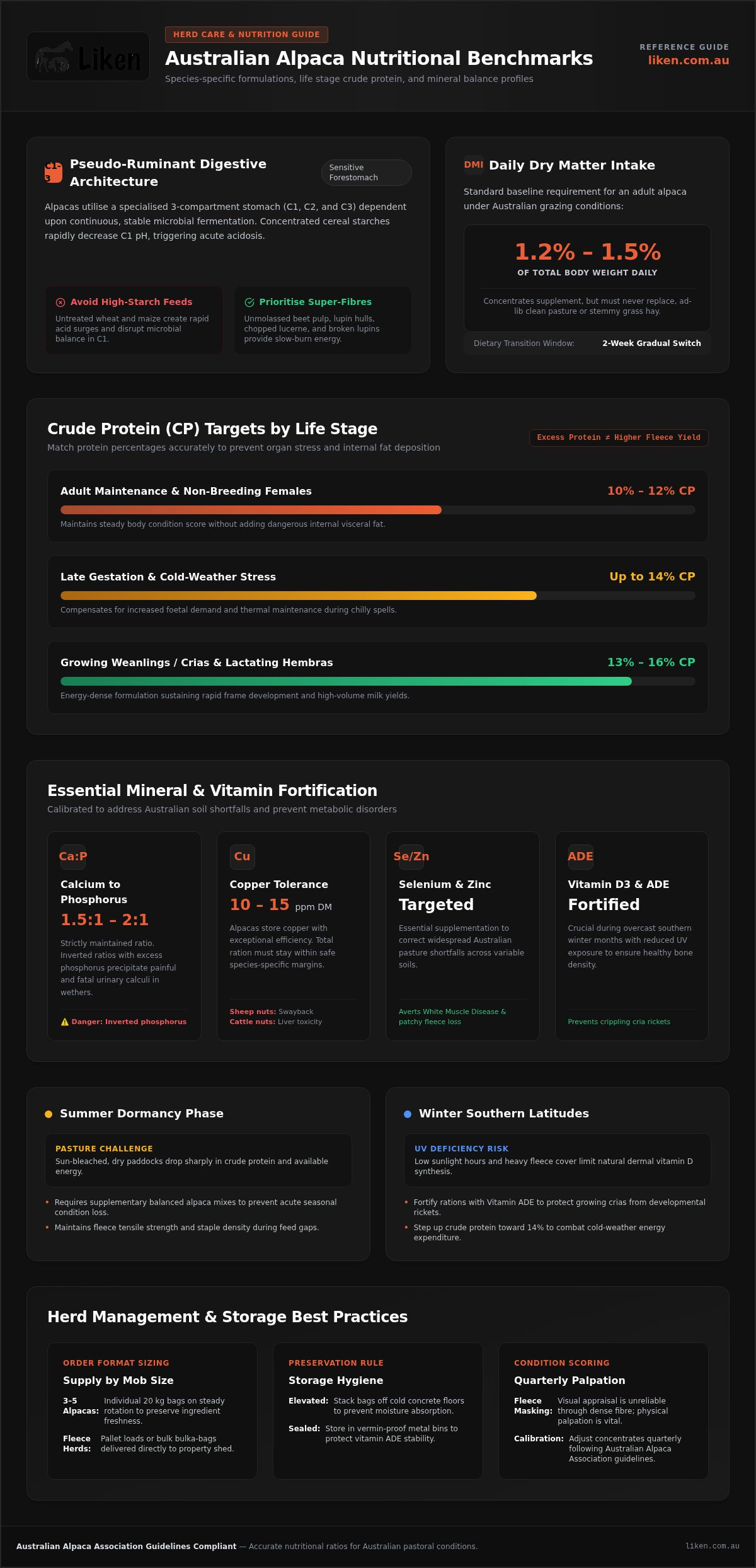
Alpacas are pseudo-ruminants with a sensitive three-compartment stomach (C1, C2, and C3). Because their forestomach relies on steady microbial fermentation, learning about alpaca digestive physiology and feeding habits makes it obvious why starchy livestock grains fail them. Rapidly fermentable starches like untreated wheat or maize drop C1 pH levels fast, triggering dangerous acidosis. A high-calibre alpaca feed mix Australia herds thrive on prioritises fermentable 'super-fibres' like unmolassed beet pulp, lupin hulls, and chopped lucerne over cereal grains.
For adult maintenance, target a crude protein level between 10% and 12%, stepping up to 14% only for late pregnancy or cold-weather stress. High-protein dairy feeds simply deposit internal fat, stressing internal organs without improving fleece yield. Instead, look for cool digestible energy derived from broken lupins, which deliver clean protein and slow-burn energy without sugar spikes.
Critical Trace Minerals and Australian Soil Deficiencies
Australian soils are notorious for uneven mineral profiles, meaning supplementary rations must carry species-specific mineral balances:
- Strict 2:1 Ca:P Ratio: Keep calcium and phosphorus ratios strictly between 1.5:1 and 2:1. Inverted ratios with excess phosphorus cause painful, fatal urinary calculi in wethers.
- Safe Copper Margins: Alpacas store copper with exceptional efficiency. Total rations must sit tightly between 10 and 15 ppm DM. Never feed sheep nuts (which induce copper deficiency swayback) or cattle nuts (which trigger toxic liver failure).
- Selenium and Zinc: Pair your hard feed with targeted animal supplements australia graziers rely on to correct local pasture shortfalls, averting White Muscle Disease and patchy fleece loss.
Comparing Alpaca Feed Formulations Across Life Stages and Seasons
A single feeding strategy rarely works for an entire herd. Growing weanlings alongside late-gestation and lactating hembras demand energy-dense rations offering 13% to 16% crude protein with higher metabolizable energy to sustain milk production and frame growth. Non-breeding females and wethers, however, easily gain excess weight on rich rations. For these animals, choose a high-fibre maintenance mix to keep body condition steady. Regardless of age or reproductive status, supplementary concentrates must never replace roughage. Always supply clean pasture or stemmy grass hay ad-lib to ensure healthy forestomach motility.
Managing Seasonal Feed Shifts Under Australian Conditions
Pasture nutritional value fluctuates drastically across the calendar year. When dry summer dormancy sets in, sun-bleached paddocks lose crucial protein, making a dependable alpaca feed mix Australia herds thrive on essential to prevent sharp weight drops. In contrast, overcast winter months in southern latitudes reduce natural UV exposure, raising the risk of cria rickets. Aligning your property management with the Australian Alpaca Association nutritional guidelines helps you monitor body condition and provide sufficient vitamin ADE fortification throughout dark, chilly spells.
Whenever you change feed formulations, make the switch gradually over two weeks. Slow transitions give sensitive gut microflora adequate time to adjust, preventing digestive upsets. If you want to streamline your herd's nutritional calendar, explore the options at Liken's online feed supply to keep your barn organised year-round.
Sourcing Quality Alpaca Feed Mix and Setting Up Delivery
Calculating herd intake accurately stops you from running short between paddock rotations. An adult alpaca generally consumes 1.2% to 1.5% of their body weight in daily dry matter, with supplementary pellets or hard feeds balancing out seasonal pasture gaps. For small lifestyle mobs of three to five animals, ordering individual 20 kg bags on a steady rotation keeps ingredients fresh and active. Larger fleece operations benefit from ordering whole pallets or bulka-bags directly to the shed. Review our complete breakdown of bulk animal feed delivery australia properties rely on to streamline access and truck unloading logistics.
Automating Herd Nutrition with Flexible Digital Orders
Managing feed supplies across rural properties doesn't need to involve frantic trips to town. Setting up scheduled online standing orders ensures a premium alpaca feed mix Australia wide arrives right at your farm gate on a dependable weekly or monthly rhythm. When your bags arrive, stack them off cold concrete floors in sealed, vermin-proof metal bins. This simple habit preserves vitamin ADE stability, keeps moisture out, and stops curious rodents from ruining valuable rations.
Finally, keep your replenishment schedule flexible by palpating your animals quarterly. Grounding your feeding rates in the Australian Alpaca Association's herd care and nutrition guide helps you track body condition through dense fleece. When pasture dries out or mothers start lactating, adjust your digital deliveries with a few quick clicks to keep every animal thriving.
Power Your Herd's Health Across Every Season
Getting herd nutrition right protects your alpacas from gut upsets, balances dry summer pastures, and keeps fleeces dense and lustrous. Sourcing a species-specific alpaca feed mix Australia herds thrive on takes the guesswork out of managing unique mineral sensitivities and winter vitamin needs.
Consistency is the secret to herd vitality, and you don't need to spend your weekends hauling heavy sacks home from town. Supplying Australian properties nationwide since 2016, Liken makes stock management simple with flexible delivery ranging from individual bags to full truckloads. Set up easy automated standing orders so your feed sheds never run dry. Ready to keep your herd thriving? Explore premium livestock feed and supplements at Liken for hassle-free delivery straight to your property gate.
Frequently Asked Questions
Can alpacas eat standard sheep or cattle pellets safely?
No, standard cattle and sheep feeds pose severe health risks to alpacas. Cattle feeds frequently contain high copper levels or ionophores that cause fatal muscle damage and liver toxicity in camelids. Meanwhile, sheep nuts lack enough copper, causing debilitating neurological deficiencies. Choosing a specialised alpaca feed mix Australia herds require ensures balanced, species-safe mineral thresholds.
How much supplementary feed mix does an adult alpaca need daily?
An adult alpaca generally needs 100 to 200 grams of supplementary concentrate per day to maintain healthy condition alongside ad-lib roughage. Total daily dry matter intake sits around 1.2% to 1.5% of body weight, which equals roughly 0.9 to 1.2 kg total. Lactating hembras and growing weanlings require higher rations of 300 to 400 grams daily.
Why is vitamin D supplementation essential for alpacas in southern Australia?
Alpacas evolved under intense equatorial sunlight and struggle to absorb adequate UV radiation during cloudy southern Australian winters. Dense fleeces block low-angle sunlight, causing hypovitaminosis D. Without adequate vitamin D, alpacas cannot metabolise calcium properly, triggering painful cria rickets, bent legs, and adult bone density loss. Fortified feeds help protect vulnerable herds through cold, overcast months.
How should I transition my herd to a new feed mix?
Introduce any new feed slowly over a full 14-day window to protect delicate forestomach microflora. Begin by mixing 75% of the current diet with 25% of the new mix for four days. Shift to an even 50/50 split, then 25% old feed, before transitioning completely to your chosen alpaca feed mix Australia wide distributors supply. This prevents sudden digestive shock.


