


Switching your puppy to adult food on their first birthday is actually a mistake for millions of dogs. With endless conflicting advice online and the dread of messy tummy upsets, working out the right timing feels stressful. That's where this practical transitioning puppy to adult food guide comes in, giving you straightforward, reliable advice for your four-legged mate.
Every breed matures at a unique pace, meaning a Kelpie and a Great Dane have vastly different nutritional timelines. In this guide, you'll learn the exact milestones for your dog's adult weight, along with a gentle 7-day feeding schedule designed to stop digestive troubles before they start. We'll also help you choose the ideal adult maintenance formula so you can fill their bowl with complete confidence.
Key Takeaways
- Pinpoint the exact age to make the switch based on your puppy's breed size and projected adult weight, avoiding early joint stress or unwanted weight gain.
- Protect your dog's gut health using our practical transitioning puppy to adult food guide, featuring a gentle 7-day meal-mixing routine.
- Understand the vital nutritional differences between growing puppy recipes and adult maintenance feeds, including adjusted calcium and calorie levels.
- Select the best adult food tailored to your dog's unique breed profile, daily activity level, and long-term vitality.
When to Switch: Determining Your Puppy's Breed Maturity Timeline
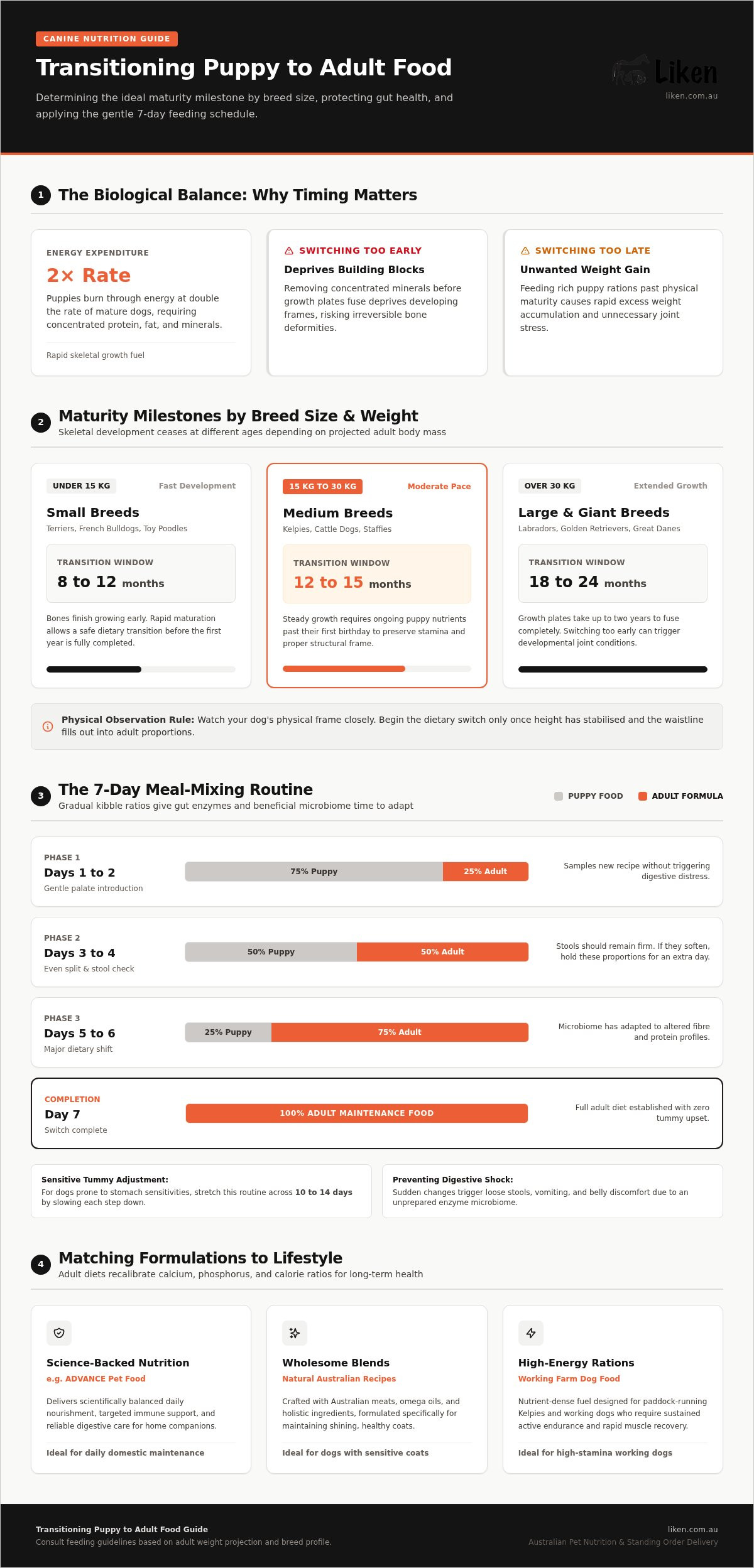
Puppy kibble is packed with concentrated protein, fat, and minerals to fuel rapid skeletal growth. Puppies burn through energy at double the rate of mature dogs, meaning dense nutrition is non-negotiable. Switching to adult food too early deprives developing bodies of essential building blocks, potentially leading to irreversible bone deformities. On the flip side, feeding rich puppy formulas past physical maturity leads quickly to excess weight gain and joint stress. Aligning dietary changes with the distinct nutritional requirements for dogs ensures your mate stays lean and healthy. Use this transitioning puppy to adult food guide to match meals to your dog's physiological finish line.
Maturity Milestones by Dog Size and Weight Category
A dog's skeleton stops growing based on their projected adult weight, whether they are a purebred or an energetic mixed breed:
- Small breeds (under 15kg): Terriers, French Bulldogs, and Toy Poodles develop fast. Their bones finish growing early, making them ready for adult food between 8 and 12 months.
- Medium breeds (15kg to 30kg): Kelpies, Cattle Dogs, and staffies steady their growth later, needing puppy nutrients until 12 to 15 months.
- Large and giant breeds (over 30kg): Labradors, Golden Retrievers, and Great Danes grow enormous bone structures. Their growth plates take between 18 and 24 months to fuse completely. Switching too early can trigger developmental joint conditions.
Watch your dog's physical frame closely alongside their age. When their height stabilises and their waistline fills out into adult proportions, you are ready to begin the switch.
The 7-Day Transition Schedule: Step-by-Step Meal Balancing
Rushing a bowl swap shocks your puppy's sensitive digestive tract. Their internal microbiome relies on specific enzymes built up over months of processing puppy recipes. Suddenly introducing adult proteins and altered fibre ratios triggers loose stools, vomiting, and belly discomfort. Following a structured 7-day transition guide gives beneficial gut bacteria ample time to adapt smoothly without missing a beat.
Daily Kibble Ratios to Prevent Tummy Upsets
Measuring your mate's meals accurately eliminates the guesswork. Here is the exact daily breakdown to keep mealtime calm and trouble-free:
- Days 1 to 2: Mix 75% puppy food with 25% adult formula. This gentle introduction lets their palate and digestive tract sample the new recipe without distress.
- Days 3 to 4: Serve an even split of 50% puppy food and 50% adult maintenance food. Stools should remain firm; if they soften, hold these proportions for an extra day.
- Days 5 to 6: Shift to 25% puppy food and 75% adult feed.
- Day 7: Serve 100% adult food. The switch is now complete!
If your pup has a sensitive tummy, stretch this transitioning puppy to adult food guide across 10 to 14 days by slowing each step down. Keeping their feeding routine steady is simple with digital standing orders for adult dog food, ensuring new bags arrive at your door before puppy reserves run completely empty.
Choosing the Right Adult Dog Food for Long-Term Health
Adult canines simply don't need the intense mineral and protein concentrations required during early puppyhood. As highlighted in trusted RSPCA puppy feeding advice, continuing high-energy puppy feeds past maturity quickly leads to unwanted weight gain and joint strain. Switching to an adult maintenance diet recalibrates calcium, phosphorus, and calorie ratios, protecting internal organs while maintaining a lean, agile frame.
Matching Formulations to Your Dog's Daily Lifestyle
Every companion thrives on a bowl tailored to their daily activity levels, body condition, and physical build. As you work through this practical transitioning puppy to adult food guide, select a recipe that complements your dog's everyday routine:
- Science-backed nutrition: Select proven options like ADVANCE pet food for balanced daily nourishment, immune support, and reliable digestive care.
- Wholesome blends: Explore quality natural dog food formulas crafted with Australian meats, omega oils, and holistic ingredients, perfect for keeping sensitive coats shining.
- High-energy rations: Paddock-running Kelpies and working dogs burn immense stamina daily. Fuel their day with nutrient-dense working farm dog food designed for sustained muscle recovery and active endurance.
- Marine-based formulas: For pets with sensitive stomachs, turning to high-quality fish based dog food Ireland offers easily digestible protein and essential omegas to maintain a glossy coat and strong joints.
- Fresh meat recipes: Choosing a formula with high fresh meat content like PLATINUM provides easily digestible protein that supports lean muscle and gut health as your dog enters adulthood.
Consistency is the secret to lifelong gut health and steady energy. Locking in a digital standing order for your chosen adult food guarantees fresh feed arrives reliably at your door, preventing last-minute supermarket trips and disruptive recipe changes.
Keep Your Dog Thriving Into Adulthood
Guiding your young dog through their final physical milestones sets the foundation for a vibrant, energetic life. By tracking maturity according to adult size and gently balancing meals over a full week, you protect sensitive digestion while delivering precisely tuned nutrition. Following this practical transitioning puppy to adult food guide takes the stress out of mealtime, keeping your dog's tail wagging through every bowl.
When you are ready to make the switch, explore premium adult dog food at Liken. Discover an extensive range of trusted Australian and international feed brands with convenient nationwide delivery straight to your door. Set up a simple digital standing order today, and rest easy knowing your mate's favourite kibble will always arrive right on time.
Frequently Asked Questions
Can I switch my puppy to adult food at 6 months?
No, 6 months is almost always too early for any dog. At 6 months of age, your puppy is still experiencing rapid bone growth and developing lean muscle tissue. Switching prematurely starves them of the higher calories, calcium, and phosphorus needed to form dense skeletal structures. Keep them on a complete puppy formula until at least 8 to 12 months for small breeds.
What happens if you switch to adult dog food too early?
Switching to adult feed too early disrupts essential skeletal development. Adult kibble contains lower levels of protein, calories, and minerals compared to growth diets. Without these concentrated building blocks, young dogs risk developmental bone disorders, joint malformations, and stunted growth. Large and giant breeds face the greatest danger, as their growth plates take up to two years to close properly.
How do I know if my puppy has transitioned successfully?
You know the switch is complete when your dog produces consistently firm stools and maintains steady energy levels. Their coat should stay glossy, without sudden flaking or excessive shedding. Following this transitioning puppy to adult food guide closely ensures their weight stays stable. If they eagerly clear their bowl without bouts of gas, lethargy, or nausea, their gut microbiome has adapted smoothly.
What should I do if my dog gets diarrhea during the food transition?
Step back immediately to the previous day's food ratio where their bowel movements were firm. Loose stools indicate their gut flora needs more time to adapt to new protein or fat sources. Maintain that milder mixture for another three days before trying to increase the adult kibble again. Consult our transitioning puppy to adult food guide and slow down the daily changes to keep their stomach settled.


