


What if the clue to your cat’s discomfort isn’t one symptom, but a pattern? Itching, vomiting or loose stools can be signs of food intolerance in cats, but they can also point to other health issues. It’s understandable to wonder whether a recent meal is to blame, especially when the signs come and go.
Rather than changing foods straight away, keep a clear record and ask your vet to help investigate. This practical checklist covers signs to watch for, what to note about food, symptoms and timing, and when to seek prompt veterinary advice. You’ll have a more useful picture to share with your vet without trying to diagnose the cause on your own.
Key Takeaways
- Signs of food intolerance in cats may affect digestion, skin or coat, but they can also have other causes.
- Keep a consistent diary of meals, treats, symptoms, dates and changes to help spot possible patterns.
- Save food packaging or ingredient details to share with your vet alongside your notes.
- Talk with your vet before changing your cat’s diet. Any elimination diet or food reintroduction should be vet-guided.
Signs of food intolerance in cats: what to look for
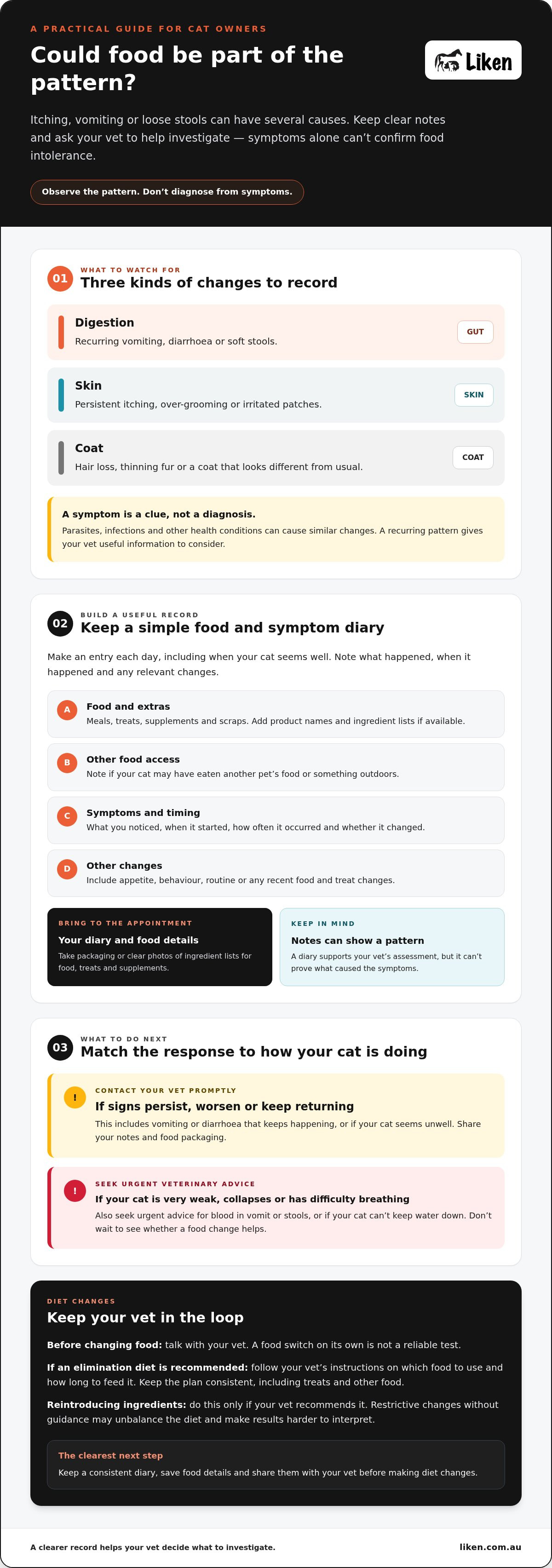
Changes to your cat’s digestion, skin or coat are worth recording, particularly if they keep returning. Look out for:
- Digestive changes: recurring vomiting, diarrhoea or soft stools.
- Skin changes: persistent itching, over-grooming or irritated patches.
- Coat changes: hair loss, thinning fur or a coat that looks different from usual.
These signs may occur with food-related reactions, but they can also have other causes. Parasites, infections and other health conditions may lead to similar changes, so symptoms alone can’t confirm food intolerance. For general background on feline allergies and possible symptoms, see this overview of cat food allergies.
Which digestive and skin changes should you note?
Record when symptoms happen, how often they recur and whether they’re getting worse. Include changes in appetite or behaviour, along with any recent changes to food or treats. A single episode can have many explanations, but a recurring pattern gives your vet useful information to consider.
Symptoms are clues to discuss with a vet, not a diagnosis. Contact your veterinary practice promptly if vomiting or diarrhoea keeps happening, symptoms worsen, or your cat seems unwell. Seek urgent veterinary advice if your cat is very weak, has blood in vomit or stools, or can’t keep water down. Don’t wait to see whether a food change fixes the problem.
How to track possible food intolerance symptoms in your cat
A simple diary can turn scattered observations into a clearer record for your vet. Make an entry each day, including when your cat seems well. Consistent notes can help show whether symptoms recur or appear alongside a particular food, though they won’t prove what caused them.
What to include in a cat food and symptom diary
Use a notebook or phone note and capture the details you can. Include:
- Food and extras: meals, treats, supplements and any scraps. Note the product name and, if available, the ingredient list.
- Other food access: record if your cat may have eaten another pet’s food or something outdoors.
- Symptoms and timing: what you noticed, when it started, how often it occurred and whether it changed.
- Other changes: note anything relevant, such as a new food, treat or routine.
Bring the diary to your appointment, along with packaging or clear photos of ingredient lists for your cat’s food, treats and supplements. These details give your vet something specific to review. A symptom diary can support a vet’s assessment, but it can’t diagnose intolerance. The Cornell Feline Health Center also outlines how food allergies may be investigated.
For general food-selection context, see this cat nutrition and food guide. If your vet recommends reviewing food choices, you can also explore cat food options through Liken. Keep any diet changes guided by your vet rather than using a new food as a test.
What to do next if your cat may have a food intolerance
If symptoms keep returning, share your diary and food packaging with your vet before changing your cat’s diet. Digestive and skin changes can have several causes, so a veterinary assessment can help decide what to investigate and whether a diet trial is appropriate. Don’t treat a food switch as a test on its own.
When to contact a vet and how food changes fit in
Contact a veterinary practice promptly if signs persist or worsen. Seek urgent advice if your cat becomes very weak, collapses or has difficulty breathing. Don’t wait for a suspected food link to become clearer if your cat seems seriously unwell.
If your vet recommends an elimination diet, follow their instructions closely. They’ll advise which food to use and how long to feed it. Keep the plan consistent, including treats and any other food, and only reintroduce ingredients if your vet recommends it. Starting a restrictive diet or removing nutrients without guidance may leave your cat’s diet unbalanced and make the results harder to interpret.
Once your vet has advised what food is suitable, you can read more in this ADVANCE pet food information guide. It provides background on a food brand, not a diagnosis or treatment for intolerance. For a broader look at available options, explore Liken’s pet nutrition range after discussing suitable choices with your vet.
Take a clear next step for your cat
The signs of food intolerance in cats can include changes to digestion, skin or coat, but they don’t confirm food is the cause. Keep a consistent food and symptom diary, then share it with your vet before making diet changes. If an elimination diet is recommended, follow the plan closely and check with your vet before reintroducing foods.
After your vet has advised on suitable food, Liken’s online range includes ADVANCE and other pet food brands. Check current product availability and delivery terms when considering what suits your household.
A careful record and your vet’s guidance can make the next steps feel more manageable. You’re taking a thoughtful approach to your cat’s wellbeing.
Frequently Asked Questions
What are the most common signs of food intolerance in cats?
Common signs may include recurring digestive upset, such as vomiting, diarrhoea or soft stools, and sometimes itching or skin changes. These signs aren’t specific to food intolerance and can have other causes. Note what happens and when, including how often symptoms occur, then discuss persistent or concerning changes with your vet rather than trying to diagnose from a checklist.
Can food intolerance in cats cause itchy skin?
Itching can occur alongside a suspected food-related reaction, but it can also have causes unrelated to food. Scratching alone can’t identify the cause. Note where your cat seems itchy, when it happens and whether you notice other changes, such as irritated skin or digestive upset. Ask your vet to assess the symptoms before changing food or starting a diet trial.
How can I tell if my cat has a food intolerance or an allergy?
You generally can’t tell intolerance and allergy apart by appearance alone, as their signs can overlap. Your vet can assess your cat’s history and symptoms, then advise whether a controlled diet trial is appropriate. Avoid guessing based on an ingredient or changing several foods at once. Those changes can make it harder to work out what may be linked to the symptoms.
Should I change my cat’s food if I suspect an intolerance?
Speak with your vet before making a major or restrictive diet change, especially if symptoms persist or your cat seems unwell. Your vet can recommend a suitable approach and explain how to monitor it. Keep details of your cat’s current food and treats handy. A food change shouldn’t replace veterinary assessment, and restrictive diets need professional guidance.
Once you’ve discussed suitable food with your vet, explore Liken’s cat food range and check current product availability and delivery terms.


