


Did you know that tender wool measuring under 30 N/ktex can trigger auction price discounts of up to 25%? It is a tough result for any grower, especially when inconsistent pastures or a "hunger break" mid-season messes with your staple strength. We understand that keeping a steady micron profile across the whole mob is a constant challenge, and lugging heavy bags from town is a hassle you just don't need.
Investing in targeted sheep feed pellets for wool growth is the most reliable way to secure a premium clip. By providing a steady plane of nutrition, you can protect your fibre strength and maximise your yield per head. In this 2026 guide, we will look at the science of sulfur-rich proteins, the importance of the 10:1 nitrogen-to-sulfur ratio, and how to get high-quality feed delivered right to your gate without the stress.
Key Takeaways
- Understand why wool is almost entirely protein and how sulfur-rich amino acids help you avoid "tender wool" price discounts.
- Learn how to select the best sheep feed pellets for wool growth by matching crude protein and energy levels to your mob’s specific needs.
- Master the "lead-in" feeding strategy to maintain a consistent micron profile and prevent follicle shock when your pastures begin to dry off.
- Explore how direct-to-gate delivery of premium brands like Stockman & Paddock can streamline your seasonal wool programme and save you time.
The Science of Wool Growth: Why Pellets Beat Straight Grain
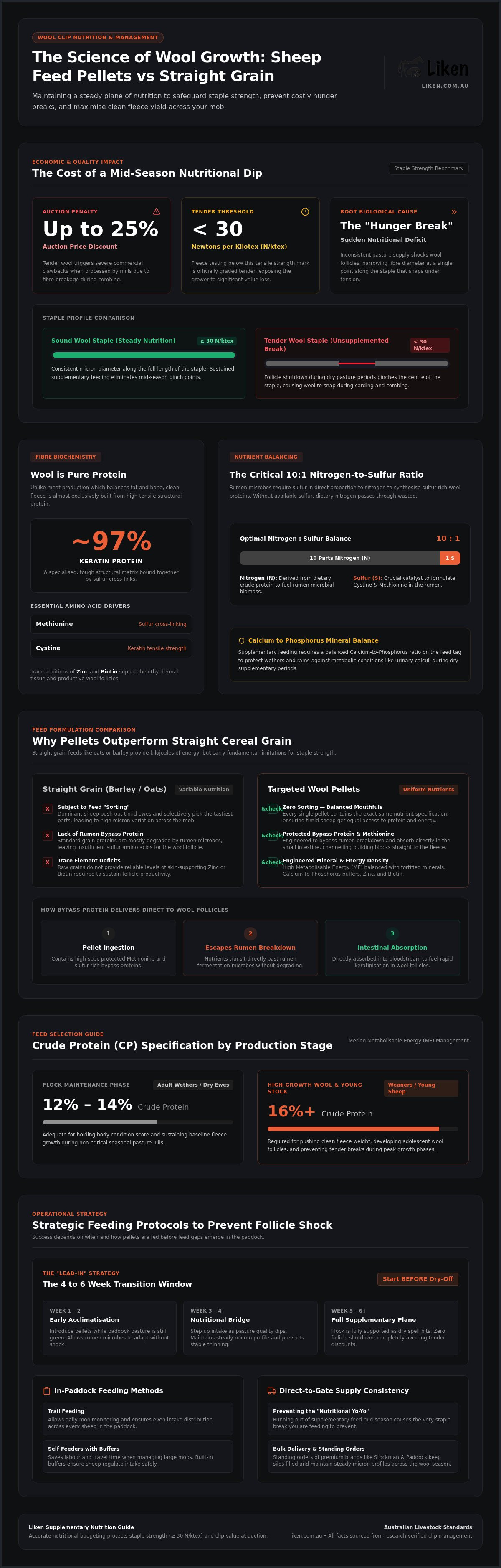
Wool is a specialised protein product. In fact, it is approximately 97% protein, specifically a tough material called keratin. To grow a premium clip, your sheep need a constant supply of sulfur-containing amino acids. While straight grains like barley or oats provide energy, they often lack the precise protein balance required for elite wool production. Using sheep feed pellets for wool growth ensures every mouthful contains a balanced nutrient profile. This stops dominant sheep from "sorting" through the feed and picking out only the tasty bits, which keeps the whole mob's nutrition consistent.
A major benefit of pellets is the inclusion of rumen bypass protein. This is protein that escapes breakdown in the rumen and travels straight to the small intestine for absorption. This direct delivery is vital for the biological structure and properties of wool, as it sends essential building blocks right to the wool follicles. You can see how specific additives further support these pathways in our animal supplements australia guide.
Essential Nutrients for Fibre Diameter and Tensile Strength
Methionine and Cystine are the primary building blocks of high-quality wool. These amino acids create the strong cross-links in keratin that give wool its tensile strength. When nutrition dips, the fibre thins out, creating a "break" or tender wool that loses value at auction. Pellets provide a stable energy level that prevents these costly defects during seasonal shifts. Many premium formulations also include Zinc and Biotin. These minerals maintain healthy skin and productive follicles, ensuring your sheep can reach their full genetic potential for clean fleece weight and consistent micron diameter.
Choosing the Right Pellet: Protein, Energy, and Mineral Profiles
Selecting the right sheep feed pellets for wool growth depends on your mob's current life stage. For simple maintenance, a pellet with 12% to 14% crude protein (CP) is usually enough. However, if you're pushing for high-growth wool phases or managing young sheep, you should look for 16% CP or higher. Merinos have high metabolisable energy (ME) requirements, and balancing this with protein is key to keeping body condition scores high. You can find detailed supplementary feeding and budgeting guidelines to help calculate exactly how much your flock needs based on available paddock feed.
Don't forget the minerals. A correct Calcium to Phosphorus ratio is vital during supplementary feeding to prevent metabolic issues like urinary calculi. If you need a hand picking a blend that fits your local conditions, you can browse our premium livestock range to find the right match for your property. We always recommend checking the back of the bag for specific trace elements like Zinc, which support skin health.
Evaluating Methionine and Bypass Protein in Sheep Feed
High-spec pellets are designed to protect sensitive nutrients from being wasted. Rumen microbes often break down standard proteins before they reach the sheep's system. When reading feed labels, look for specifically formulated wool-growth additives like protected Methionine. Bypass protein is the protein that escapes rumen fermentation to be absorbed directly for wool production. By choosing sheep feed pellets for wool growth that prioritise these protected ingredients, you ensure your investment goes into the wool clip rather than just feeding the rumen bacteria. It's a smarter way to manage your feed budget while keeping your wool quality high.
Optimising Your Wool Clip with Smart Feeding Strategies
Maintaining a steady plane of nutrition is the secret to a premium clip. You shouldn't wait until the paddock is bare to start supplementary feeding. A lead-in period of four to six weeks before pasture disappears helps your mob transition smoothly, keeping micron diameters consistent. Sudden changes in diet can shock the follicle, leading to a break in the wool. For the best results, follow Penn State Extension's sheep flock nutrition recommendations to balance energy and protein across different production stages.
When using high-performance sheep feed pellets for wool growth, you need to choose between trail feeding and self-feeders. Trail feeding lets you check every sheep daily and ensures even intake across the mob. However, if you're tight on time, self-feeders with built-in buffers are a lifesaver. To make sure you never hit a feed gap during a dry spell, check out our guide on bulk animal feed delivery australia. Truckload deliveries ensure you always have a buffer against seasonal shifts.
Bulk Delivery and Standing Orders: Keeping Nutrition Consistent
Liken’s digital standing order system is designed to take the guesswork out of your season. It prevents the nutritional yo-yo effect that causes wool breaks by ensuring your silos stay full. Whether you need a few bags of Stockman & Paddock for ram preparation or full truckloads for the whole mob, we've got you covered. We encourage you to use the technical expertise available through our supplier links to match your specific paddock deficiencies with the right pellet. By getting the right feed delivered straight to your gate, you can focus on the flock while we handle the logistics.
Secure Your Premium Wool Clip This Season
Growing an elite wool clip is all about consistency. By switching to high-performance sheep feed pellets for wool growth, you provide the sulfur-rich proteins and bypass nutrients your flock needs to stay sound. You've seen how a steady plane of nutrition prevents those costly breaks in the fibre and keeps your micron profile stable across the whole mob. It's about working smarter, not harder, to hit those 2026 market premiums.
At Liken, we make the logistics easy with 100% online ordering and national delivery from single bags to full truckloads. You can also access expert technical advice to match supplements to your specific paddock conditions. Ready to streamline your seasonal plan? Organise your bulk sheep feed delivery with Liken today and give your sheep the support they deserve. We're here to help you get the best result at the shearing shed.
Frequently Asked Questions
How much sheep feed pellet should I give per day for wool growth?
The daily amount depends on your mob's condition and how much paddock feed is left. Most growers start with a supplementary ration of 200g to 500g per head. If you are using sheep feed pellets for wool growth during a drought, you may need to increase this amount to meet energy targets. Always introduce new pellets gradually over two weeks to avoid rumen upset.
Can I feed sheep pellets to pregnant ewes to improve lamb wool quality?
Feeding pregnant ewes is a smart move for future fleece quality. The lamb’s secondary wool follicles develop during the final stages of pregnancy and early lactation. By providing a steady nutritional plane now, you help the lamb reach its maximum genetic follicle density. This investment leads to a more productive adult sheep and protects the ewe from developing tender wool during the stress of lambing.
Will feeding pellets make my wool coarser (increase micron)?
Not if it is managed correctly. While a better diet can slightly increase fibre diameter, it prevents the "hunger fine" dip that leads to weak wool. The goal is to avoid a mid-staple break by keeping nutrition consistent. Most modern growers use genetics to lower micron while using pellets to maintain a sound staple strength of 35 N/ktex or better for premium prices.
What is the best protein percentage for Merino wool growth?
For standard maintenance, a protein level of 12% to 14% is usually sufficient. If you want to maximise production, look for pellets with 16% crude protein or higher. It's also vital to check the nitrogen-to-sulfur ratio. A 10:1 ratio is ideal for synthesising the keratin protein found in wool. High-quality sheep feed pellets for wool growth ensure your sheep have the specific amino acids needed for a heavy, clean clip.


