


Could a cow looking off-colour be short of nutrients, or could something else be going on? Poor growth, low body condition or reduced fertility can raise concern, but these signs are not a diagnosis. Parasites, illness, feed quality and other factors may cause similar changes. Common nutritional deficiencies in cattle can vary with feed, pasture, soil and season across Australian properties, so a supplement that suits one situation may not address another.
It’s understandable to want to act quickly when cattle aren’t thriving. Confirming what may be missing first can help avoid wasted effort and unsuitable ration changes. This guide covers nutrient shortfalls producers commonly investigate, signs to note, and how reviewing feed and pasture alongside appropriate testing can help narrow down the cause. It also explains when to involve a veterinarian or qualified livestock nutrition adviser before changing supplementation.
Key Takeaways
- Learn which common nutritional deficiencies in cattle may be worth investigating, while treating visible signs as clues, not a diagnosis.
- Review the ration, pasture and feed conditions. Record which animals are affected and what has changed.
- Choose samples and tests based on the suspected nutrient, with qualified guidance to help interpret the results.
- Check the whole ration and confirm the need before selecting a supplement or changing how it’s fed.
Common nutritional deficiencies in cattle: nutrients and warning signs
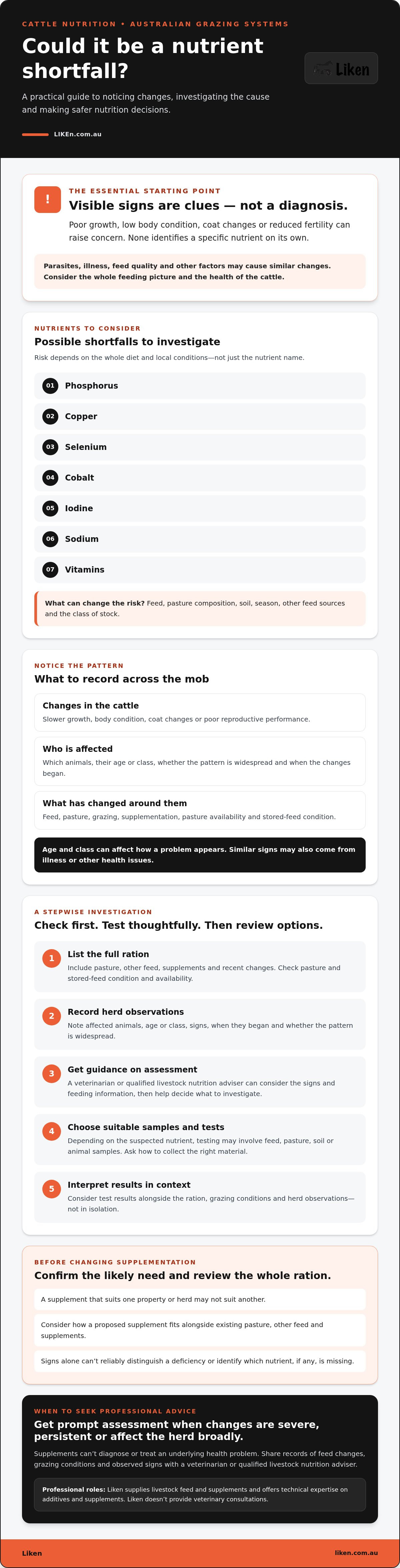
Phosphorus, copper, selenium, cobalt, iodine, sodium and vitamins may all need attention in Australian cattle. The risk depends on the whole diet and local conditions, including pasture composition, other feed sources and the class of stock. A useful starting point is understanding how diets differ: Cattle feeding outlines the broad distinction between pasture-based and feedlot systems. Neither system, by itself, confirms a deficiency.
Treat common nutritional deficiencies in cattle as possibilities to investigate, not a checklist for choosing supplements. Several nutrients may be involved, and similar signs can also have non-nutritional causes.
Which deficiency signs should cattle producers notice?
Look for patterns across the mob and over time. Slower growth or changes in body condition may point to a problem with the ration or broader health. Coat changes can also be a reason to investigate, while poor reproductive performance may warrant a wider nutritional and veterinary review. None of these signs identifies a specific nutrient on its own.
Signs alone can’t identify which nutrient, if any, is deficient. Age and class of cattle can affect how a problem appears, and illness or other health issues may look similar. Record which animals are affected, when changes began and whether the pattern is widespread. Also note any recent changes to feed, pasture or supplementation. This context can help guide the next investigation.
Resist the urge to match one symptom to one mineral. A qualified livestock nutrition adviser or veterinarian can interpret the signs alongside feed and pasture information, then help decide whether testing is appropriate. This is especially useful before changing the ration, as adding an unsuitable supplement may not address the underlying issue.
How to investigate a suspected cattle nutrient deficiency
Take a stepwise approach before changing the ration. Start by listing what cattle receive, including pasture, other feed, supplements and any recent changes. Check the condition and availability of pasture and stored feed. Then record which animals are affected, their age or class, the signs observed and when they began. This overview helps a veterinarian or qualified livestock nutrition adviser decide what to investigate next.
A suspected deficiency is a possibility. Confirmation requires appropriate assessment of the cattle and their feed. Avoid choosing a supplement based on one sign alone. Common nutritional deficiencies in cattle can’t be distinguished reliably by appearance without considering other causes and the full feeding picture.
Can pasture, feed or animal samples confirm the cause?
Samples can help, but no single sample suits every question. Depending on the suspected nutrient, a professional may recommend testing feed, pasture, soil or animal samples. Ask for guidance before collecting anything, as the appropriate material and collection method vary. Results need to be interpreted alongside the ration, grazing conditions and herd observations, not in isolation.
For Australian grazing context, FutureBeef’s Managing breeder nutrition discusses nutrition considerations for breeders, including dry-season challenges. Liken’s livestock supplements and nutrition guide offers further general reading. Once the likely need is clearer, Liken can supply livestock supplements and offer technical expertise on additives and supplements. Liken doesn’t provide veterinary consultations, so seek diagnostic advice from a veterinarian or qualified nutrition professional.
Managing cattle nutrition safely across Australian grazing systems
Pasture supply and quality can shift with seasonal conditions, while dry periods may reduce feed availability. Purchased feed or a change in grazing can also alter what cattle receive. Keep track of these changes and review the whole ration, including pasture, other feed and supplements, rather than focusing on one nutrient. Common nutritional deficiencies in cattle depend on the diet and circumstances on your property, so a supplement that suits one herd may not suit another.
Before adding anything, confirm the likely need through suitable assessment and discuss the ration with a veterinarian or qualified livestock nutrition adviser. Consider how a proposed supplement fits alongside existing feed, and follow qualified advice on selection and use. This helps avoid unnecessary or unsuitable changes.
When should producers seek veterinary or nutrition advice?
Seek prompt professional assessment if health or performance changes are severe, persistent or affecting the herd broadly. Supplements can’t diagnose or treat an underlying health problem, and delaying assessment may leave the real cause unaddressed. Share your records of feed changes, grazing conditions and observed signs to help guide the discussion.
Liken supplies livestock feed and supplements and offers technical expertise on additives and supplements. This can help with product information, but it isn’t veterinary diagnosis or clinical care. Once you’ve established what your cattle need, explore Liken’s livestock feed and supplement range as one option to consider alongside qualified advice.
Make your next nutrition decision with confidence
Recognising common nutritional deficiencies in cattle is a useful starting point, but visible signs can’t confirm what’s wrong. Review the full ration, note changes in pasture and feed, and seek qualified advice before adding a supplement. This helps keep decisions grounded in your herd’s needs.
Once you’ve established what you’re looking for, Liken offers online supply of livestock feed and supplements across Australia, technical expertise on additives, and flexible ordering options. This product guidance can support purchasing decisions, but it doesn’t replace veterinary assessment or nutrition advice.
When you’re ready to consider suitable options, explore Liken’s livestock feed and supplements.
Frequently Asked Questions
Is poor growth always a sign of nutritional deficiency?
No. Poor growth can result from insufficient feed intake, parasites, disease, management factors or other causes, as well as an inadequate diet. Look at the whole herd picture: note which animals are affected, check for changes in feed and grazing, and consider their general health. Seek veterinary or qualified livestock nutrition advice rather than assuming one nutrient is responsible.
What are the most common nutritional deficiencies in cattle?
Phosphorus, copper, selenium, cobalt, iodine and sodium are among the nutrients considered in cattle nutrition. Common nutritional deficiencies in cattle vary with the feed and pasture available, as well as the animals’ needs and class. There’s no single national ranking that applies to every herd. Review the ration and seek suitable assessment before choosing a supplement.
Can I give cattle supplements without confirming a deficiency?
It’s better to review the animals’ actual ration and needs before changing supplementation. Too little of a needed nutrient may not address the issue, while an unsuitable supplement can be ineffective or harmful. Check what cattle receive from pasture, feed and existing supplements, then discuss any proposed change with a veterinarian or qualified livestock nutrition adviser.
How do I find out whether cattle have a nutrient deficiency?
Start with herd observations and a review of the ration, pasture and other feed. A veterinarian or qualified nutrition professional can help decide whether feed, pasture, soil or animal testing is suitable. No single sign or test should be read in isolation. Interpret results alongside grazing conditions, feed intake, animal class and broader health to guide the next step.


