


Did you know a high-producing dairy doe can consume up to 6.5% of her body weight in dry matter every day? Finding the best goat feed for milk production is a massive task when Aussie dry spells start biting and forage becomes scarce. We understand the frustration of watching milk yields fluctuate or feeling confused by technical talk around protein and energy. It's tough sourcing premium supplies in regional areas too. You deserve a straightforward way to keep your herd thriving.
This guide explores the ideal balance of quality forage, energy-dense concentrates, and the specific minerals your girls need to recover quickly after kidding. We cover everything from the 2026 lucerne market to keeping your farm dogs fit with brands like Cobber. You will discover how to boost butterfat and maintain high daily volumes. Let's get your dairy operation humming with energetic, healthy does.
Key Takeaways
- Learn why high protein isn't enough to boost yield without the right energy density to bridge the lactation gap.
- Explore how precision-engineered dairy pellets provide a balanced diet and stop your does from picking out only the "tasty" bits.
- Identify the best goat feed for milk production by combining high-quality Aussie forage with the right concentrate-to-yield ratios.
- Discover which mineral supplements and trace elements are vital for preventing milk fever and keeping your herd energetic throughout the season.
Understanding the Nutritional Foundations for Dairy Goats
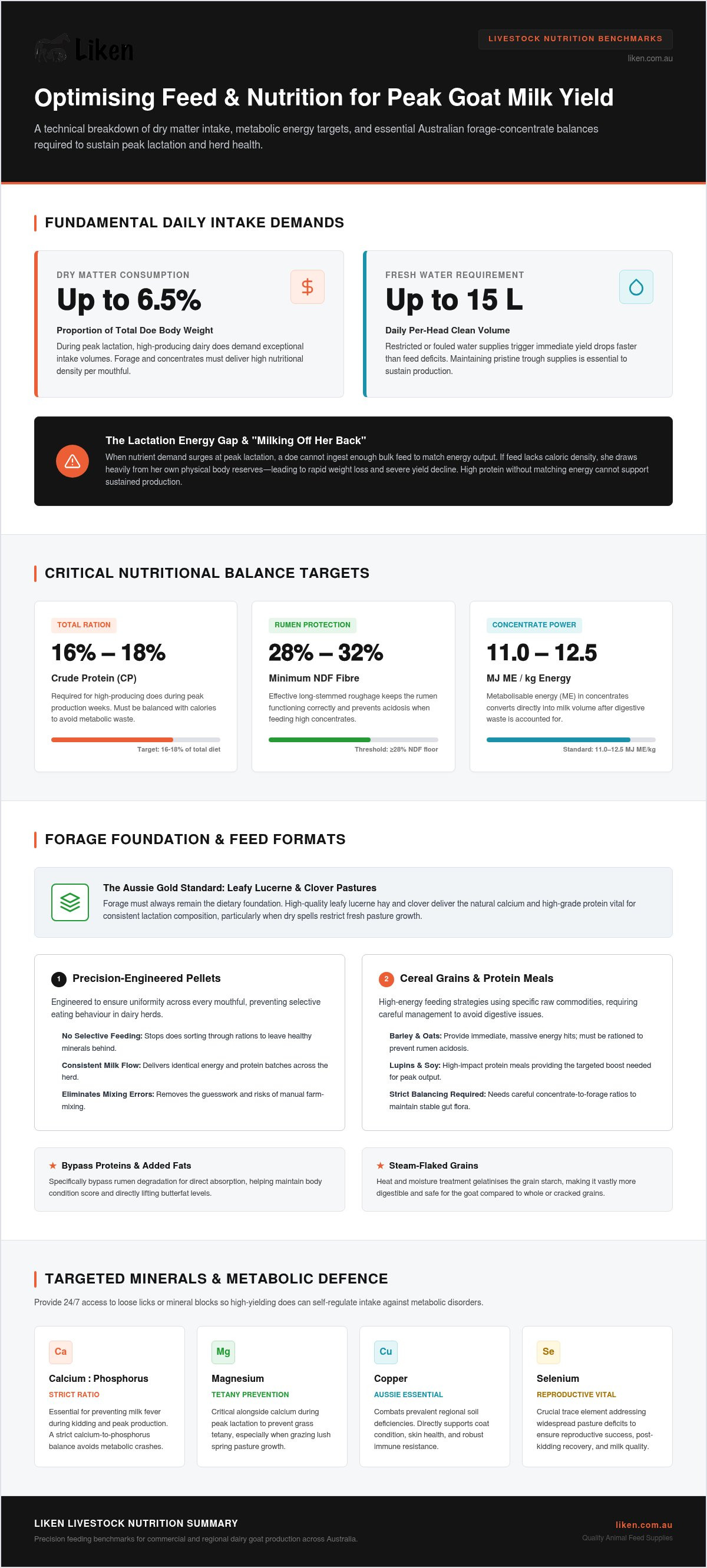
Dairy goats are high-performance athletes. During peak lactation, their nutrient demand skyrockets, creating what we call the "energy gap." This occurs because a doe simply can't eat enough volume to keep up with the calories she's pumping into the bucket. If you don't bridge this gap with the best goat feed for milk production, she'll start "milking off her back." This means she draws from her own body reserves, leading to weight loss and a swift drop in yield.
While protein often gets the most attention, energy is the real engine of production. Think of it this way: high protein without enough calories is like putting premium petrol in a car with no oil. It just won't run. Forage should always be your foundation. In our Australian climate, leafy lucerne hay and clover-based pastures are gold standards. They provide the calcium and protein essential for goat milk composition and lactation to stay at peak levels even when the weather turns dry.
Never overlook water intake. A milking doe can drink up to 15 litres of fresh, clean water every single day. If her water trough is dirty or empty, your milk volume will plummet faster than any grain shortage could cause. It's the simplest way to support the best goat feed for milk production and keep your girls happy.
The Critical Balance of Crude Protein and Fibre
Aim for a total ration of 16-18% crude protein for your high-producing does during their peak weeks. While you want that protein high, you must balance it with effective fibre. Long-stemmed roughage keeps the rumen moving and prevents acidosis, which is a common risk when feeding heavy concentrates. Metabolisable energy is the specific amount of energy from feed that a goat's body actually uses to produce milk after accounting for digestive waste.
- Peak Protein: 16% to 18% for top yielders.
- Minimum NDF: 28% to 32% to maintain rumen health.
- Target Energy: 11.0 to 12.5 MJ ME/kg for concentrates.
Comparing the Best Goat Feed Formats and Concentrates
Choosing between pellets and raw grains is a big decision for any dairy owner. Pelleted rations are often the best goat feed for milk production because they're precision-engineered. Every mouthful contains a balanced mix of minerals and energy, which stops your does from sorting through their bowl and leaving the "boring" healthy bits behind. This consistency is vital for maintaining steady milk flow across the whole herd without the guesswork of home-mixing.
If you prefer mixing your own, cereal grains like barley and oats provide a massive energy hit. However, you must manage these carefully to prevent rumen acidosis. Adding protein meals like lupins or soy can give your does that extra boost needed for peak yield. For a deeper dive into managing these ratios, the Penn State Extension dairy goat production guide offers excellent benchmarks for concentrate-to-forage balancing. Keeping your supply consistent with premium Aussie-made feed ensures your girls don't face sudden dietary shifts that can upset their digestion.
Identifying High-Performance Ingredients in Commercial Feed
Check your feed labels for bypass proteins and added fats. These specific ingredients bypass the rumen to be absorbed directly, which helps maintain body condition and increase butterfat levels. Steam-flaked grains are another winner; the heat treatment makes the starch much easier for the goat to digest compared to whole or cracked grain. Managing these bulky supplies is easy with bulk animal feed delivery australia options. While you're looking after the herd, keeping your farm dogs in top shape with brands like Cobber ensures every part of your operation stays productive. You can check out our full range of quality supplies to keep your regional dairy operation running smoothly all year round.
Boosting Yield with Targeted Supplements and Additives
Even the best goat feed for milk production needs a little help from minerals to keep the metabolic engine running. High-producing does have massive nutritional demands that forage alone can't always meet. Providing 24/7 access to mineral blocks or loose licks allows your herd to self-regulate their intake as needed. Magnesium and calcium are your best friends during peak lactation. They're essential for preventing milk fever and grass tetany, especially when your girls are grazing on lush, spring pastures.
In Australia, we often deal with specific soil deficiencies that impact our livestock. Copper and selenium are our "Aussie Essentials." Copper supports a healthy coat and strong immunity, while selenium is vital for reproductive success and milk quality. The Merck Veterinary Manual on goat nutritional requirements highlights how crucial it is to maintain a strict calcium-to-phosphorus ratio to avoid metabolic crashes. Getting these micro-nutrients right makes a visible difference in your daily milk volume and overall herd energy.
Don't let a busy week lead to "empty bin" syndrome. Organising your supplies through a digital standing order system ensures you always have what you need on hand. It's a simple way to keep your nutrition plan on track without the stress of last-minute trips to town or forgotten orders.
Streamlining Your Dairy Supply with Bulk Digital Ordering
Liken simplifies your life by delivering everything from single bags to full truckloads directly to your property. Setting up a recurring delivery for your dairy concentrates and animal supplements australia saves you both time and money. While you're looking after the girls in the dairy, we can also help with the rest of the farm. We stock premium brands like Stockman & Paddock and Cobber to keep your farm dogs fit and ready for work. Explore our range and let us help you build a more efficient dairy operation today.
Start Boosting Your Herd's Production
Maintaining a high-yielding dairy herd doesn't have to be a guessing game. By bridging the energy gap with precision-timed concentrates and supporting your does with essential Aussie minerals like selenium, you're setting your farm up for success. We've seen how the best goat feed for milk production combines quality forage with a consistent nutritional routine. It's about keeping those butterfat levels high and your does energetic throughout their entire lactation cycle.
At Liken, we're here to help you get every detail right. Whether you need expert technical advice on specific additives or a massive internal stock ready for immediate dispatch, we've got you covered. We offer flexible delivery from single bags to full truckloads to suit any regional operation. Browse our range of premium stockfeed and supplements at Liken and let's get your dairy humming. You've got this, and your herd will thank you for it.
Frequently Asked Questions
Can I feed my dairy goats only on pasture for milk production?
It is rarely possible to maintain high yields on pasture alone because milking does have a massive metabolic demand. While goats are excellent browsers, the "energy gap" during peak lactation means they simply cannot eat enough grass to keep up. To achieve the best goat feed for milk production, you must supplement pasture with energy-dense concentrates to prevent your does from losing body condition.
How much grain should a milking goat get per day?
A standard guide for Australian dairies is to feed 1kg of balanced concentrate for every 2.0 to 2.5 litres of milk produced. This amount is offered on top of their daily maintenance roughage like hay or pasture. Always introduce grain slowly over 10 to 14 days to allow the rumen to adapt. This gradual change helps you avoid serious digestive issues like acidosis or bloat.
What is the best hay for goats producing milk in Australia?
Lucerne hay is the gold standard for milking goats in Australia due to its high protein and calcium content. These nutrients are essential for sustaining high milk volumes and supporting bone health in heavy producers. If lucerne is scarce, high-quality clover hay is a great alternative. Aim for leafy, green hay rather than stemmy varieties to ensure your herd gets the most nutrition out of every mouthful.
Do dairy goats need specific supplements for butterfat production?
Yes, targeted supplements like bypass fats and magnesium can help maintain high butterfat levels during peak season. Providing the best goat feed for milk production often involves using rumen buffers to keep their digestion stable when grain intake is high. Don't forget that adequate long-stemmed fibre is also vital; without enough roughage, you'll see a noticeable drop in milk solids and overall quality.


