


The best food for a diabetic cat isn’t always the one with “diabetic” on the label. If you’re weighing up conflicting advice about carbohydrates, wet versus dry food, or whether a diet change could affect insulin, it’s easy to feel unsure. The best diet for a diabetic cat australia depends on your cat’s health and treatment plan, not a one-size-fits-all ranking.
This guide explains how to compare everyday and veterinary-prescribed foods, check nutrition details and prepare useful questions for your vet. You’ll also learn what to discuss before changing food alongside insulin or other treatment, and how to find a reliable Australian source once your vet has approved the choice. Use the food format, label information and supply options as part of your decision, with your vet guiding what is suitable for your cat.
Key Takeaways
- The best diet for a diabetic cat australia is the one that fits your cat’s veterinary plan, health needs and routine, not a universal food ranking.
- Compare labels for complete-and-balanced status, then check the food’s format and suitability with your vet before choosing.
- Ask your vet what to feed and how to manage any change alongside insulin or other treatment.
- Once the exact food is approved, check current product details and plan how to keep it in stock.
Best diet for a diabetic cat in Australia: start with the vet’s plan
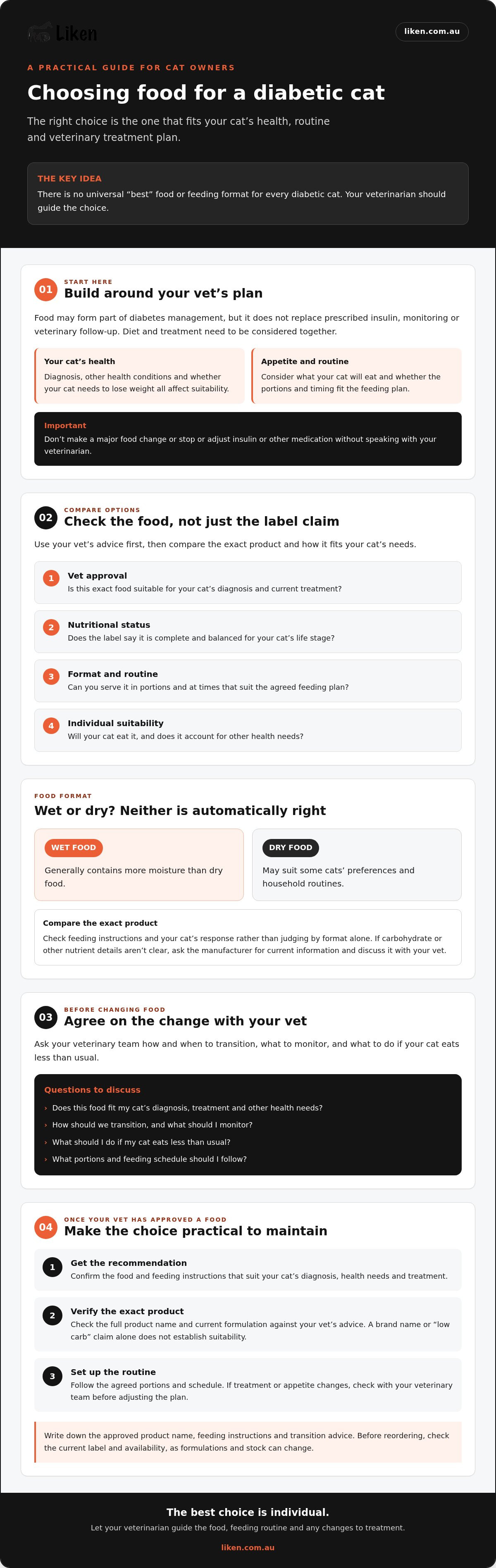
Food choices matter, but they need to fit your cat’s veterinary treatment plan. The best diet for a diabetic cat australia isn’t one product or feeding style for every household. It’s an individual approach shaped by your cat’s diagnosis, health needs, appetite and professional advice.
Diet may form part of diabetes management, but it doesn’t replace prescribed insulin, monitoring or veterinary follow-up. Don’t stop or adjust treatment, or make a major food change, without speaking with your vet. For background on the condition and its management, read this overview of Feline diabetes mellitus, then discuss what applies to your cat with a veterinary professional.
Why one “best” diabetic cat food does not suit every cat
A cat who needs to lose weight may have different feeding needs from one with a poor appetite. Other health conditions can also affect which food is appropriate. Your cat’s current treatment matters too, particularly if they receive insulin, because changes to food or eating habits may need to be considered as part of the treatment plan.
Online nutrition tips can help you prepare questions, but they aren’t a prescription or an individual treatment recommendation. Ask your vet which food, portion and routine suit your cat, and what to do if they eat less than usual.
Your veterinarian should guide diet changes so the food and feeding routine can be matched to your cat’s health and current diabetes treatment.
How to compare food for a diabetic cat: labels, format and routine
Start with your vet’s advice, then check what the food offers and whether it suits your cat’s needs. The Cornell Feline Health Center guide provides background on feline diabetes, while your vet can help apply nutrition information to your cat’s treatment. If you’re searching for the “best diet for a diabetic cat australia”, use this checklist to compare options:
- Vet approval: Is this exact food suitable for your cat’s diagnosis and treatment?
- Nutritional status: Is it labelled as complete and balanced for your cat’s life stage?
- Format and routine: Can you serve it in portions and at times that fit your cat’s feeding plan?
- Individual suitability: Will your cat eat it, and does it account for other health needs?
Wet food generally contains more moisture than dry food. Dry food may suit some cats’ preferences and household routines. Neither format is automatically right for every diabetic cat. Compare the exact product, its feeding instructions and your cat’s response rather than judging by format alone. If carbohydrate or other nutrient details aren’t clear on the label, ask the manufacturer for current information and discuss it with your vet; clinics such as Peakhurst Veterinary Clinic and Small Animal Hospital can help assess nutritional profiles against your pet’s individual health needs.
Questions to ask before changing a diabetic cat’s food
Check whether the proposed food fits your cat’s diagnosis, current treatment and any other health concerns. Ask your vet how and when to transition, what to monitor, and what to do if your cat eats less than usual. Agree on the approach before switching, as a change in meals may need to be considered as part of the treatment plan.
Don’t change insulin or other medication because you’ve changed food unless your veterinarian directs you to. Once your vet has confirmed the exact food, you can check current options through Liken’s online pet food range.
Choosing and sourcing a vet-approved diabetic cat diet in Australia
Once you’ve discussed food with your veterinarian, keep the next steps straightforward. Finding the best diet for a diabetic cat australia means confirming the exact food and feeding plan, then making it practical to maintain. A brand name or phrase such as “low carb” on a pack doesn’t prove that a food is suitable for your cat or their treatment.
Use this three-step process:
- Get the recommendation: Ask your vet which food and feeding instructions suit your cat’s diagnosis, health needs and treatment. The University of Sydney’s expert veterinary diabetes management resource reflects the specialist knowledge behind veterinary-led care.
- Verify the exact product: Confirm the full product name and current formulation against your vet’s advice. Don’t assume that a stocked brand or marketing claim makes it a diabetic diet.
- Set up the routine: Follow the agreed portions and feeding schedule. If treatment or appetite changes, check with your veterinary team before adjusting the plan.
Behind the scenes, effective chronic care management relies on consistent clinic coordination; veterinary professionals looking to streamline daily operations and practice performance can explore interactive tools from Helpful.vet.
How to keep the food choice and supply routine on track
Write down the approved product name, feeding instructions and any transition advice from your veterinary team. Before reordering, check the current label and availability, as formulations and stock can change. Once the food is confirmed, Liken’s national online supply and digital standing orders can help make repeat orders more convenient.
For general shopping information, see the Australian cat food buying guide or ADVANCE pet food guide. These resources can help with product research, but neither replaces veterinary advice about your cat’s diet or treatment.
Make your cat’s food plan easier to follow
The best diet for a diabetic cat australia is the one your veterinarian confirms suits your cat’s health and treatment. Check the exact food and label, consider whether its format works for your cat, and agree on portions and feeding times before making a change. Keep your veterinary team informed, especially if your cat’s appetite or treatment changes.
Once the right food is confirmed, a reliable supply can help you stick with the routine. Liken is an Australian online pet food retailer operating since 2016, with national delivery and a digital standing-order option for repeat supplies. Explore Liken’s cat food range and check the current product details against your vet’s recommendation.
Start by confirming the food and feeding plan with your vet, then explore Liken’s cat food range to check current options and arrange repeat supplies.
Frequently Asked Questions
Is wet food better for a diabetic cat?
Not automatically. Wet food provides more moisture, while dry food may suit some cats’ preferences and household routines. The format alone doesn’t determine whether a food is appropriate. Ask your vet to assess the exact product in light of your cat’s health, treatment and feeding routine. Your cat’s willingness to eat the food matters too.
Can I change my diabetic cat’s food while they are using insulin?
Yes, but talk to your vet before changing the food. A diet change may affect diabetes management, so ask when to transition and what to monitor. Keep giving insulin as prescribed unless your vet advises otherwise. If your cat eats less than usual or refuses a meal, contact your veterinary team for instructions rather than changing or skipping a dose yourself.
How much should I feed a diabetic cat?
There’s no single portion that suits every diabetic cat. The right amount depends on your cat’s weight, health, activity and the food’s energy content. Ask your vet to recommend a daily amount and feeding schedule. Use the packet’s feeding guide as general information, measure portions consistently, and tell your vet if your cat’s appetite or weight changes.
What should I look for on food labels for a diabetic cat in Australia?
If you’ve searched “best diet for a diabetic cat australia”, start by checking whether the food is labelled complete and balanced for your cat’s life stage. Review the exact product’s feeding directions and available nutrient information. If carbohydrate details aren’t listed, ask the manufacturer for current information, then discuss it with your vet. Marketing claims alone don’t confirm suitability.


